

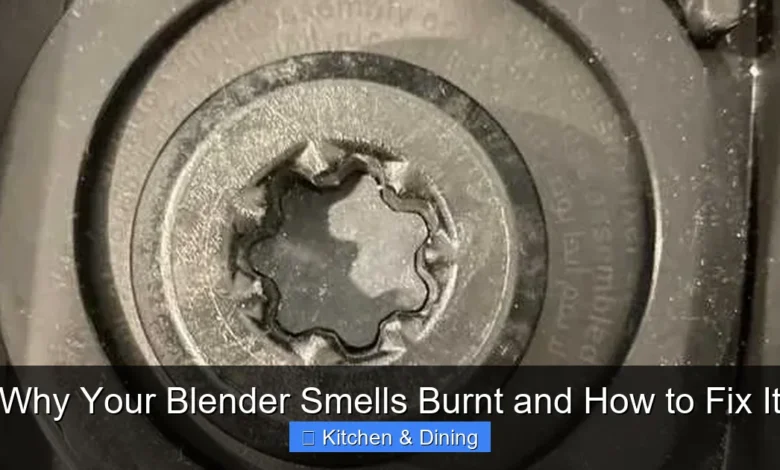
If your blender is emitting a burnt smell, it’s a sign of potential issues. This guide explains the common culprits, from overloaded motors to worn-out parts, and provides clear, step-by-step solutions. Don’t panic! With a little troubleshooting, you can often revive your blender and ensure it’s safe to use again.
## Why Your Blender Smells Burnt and How to Fix It
That distinct, acrid smell of burning plastic or electrical components wafting from your blender is never a good sign. It can be alarming, making you wonder if your kitchen is about to go up in smoke. But before you toss your trusty kitchen gadget, take a deep breath. Most of the time, a burnt smell from your blender is a solvable problem.
This comprehensive guide will walk you through the common reasons why your blender might smell burnt and, more importantly, how to fix it. We’ll cover everything from simple cleaning tips to identifying more serious mechanical or electrical issues. By the end, you’ll have the knowledge to diagnose the problem and get your blender back to its smoothie-making, sauce-blending glory.
### Understanding the Smells: What’s Burning?
The “burnt” smell can vary. Sometimes it’s like burning plastic, other times it’s more of an oily or electrical scent. Understanding the type of smell can sometimes give you a clue about the source.
* **Plastic/Rubbery Smell:** This often indicates that plastic components are overheating. This could be the motor housing, seals, or even parts of the blade assembly if they’re grinding against something they shouldn’t be.
* **Electrical Smell:** This is more serious. It suggests that electrical wiring, components within the motor, or the power cord might be overheating or short-circuiting.
* **Oily/Acrid Smell:** This can sometimes come from lubricant in the motor that’s overheated or from food residue that has cooked onto hot motor parts.
### Common Causes of a Burnt Smell and How to Fix Them
Let’s dive into the most frequent reasons your blender is acting up and how to bring it back to life.
#### 1. Overheated Motor
This is by far the most common culprit. Blenders have motors that can generate a lot of heat, especially during prolonged use or when tackling tough ingredients.
##### Why it happens:
* Overloading: You’ve put too many ingredients in the blender, or ingredients are too thick, forcing the motor to work harder than it’s designed to.
* Prolonged Use: Running the blender continuously for extended periods without giving it a break.
* Blocked Air Vents: Most blender bases have small vents to allow air circulation and keep the motor cool. If these are blocked, the motor can’t dissipate heat effectively.
* Worn-Out Motor: Like any mechanical component, a blender motor can wear down over time. Older motors might be less efficient and prone to overheating.
##### How to fix it:
* Give it a Break: The simplest fix! If you detect a burnt smell, immediately turn off and unplug your blender. Let it cool down completely. This might take 30 minutes to an hour, or even longer.
* Reduce Load: When you restart, use less ingredients, or cut tougher ingredients into smaller pieces. For very thick mixtures, add more liquid.
* Breaks are Crucial: For recipes that require longer blending times (like making nut butter or grinding grains), blend in short bursts (30-60 seconds) and allow the blender to cool down between bursts.
* Clean the Vents: Regularly check the vents on the base of your blender. Use a soft brush (like an old toothbrush) or a vacuum cleaner with a brush attachment to gently remove any dust, debris, or food particles that might be blocking them.
* Inspect for Damage: While unplugged, carefully inspect the base for any signs of melting or discolored plastic around the motor housing, which could indicate severe overheating.
#### 2. Worn-Out Blades or Bearings
The blade assembly is a critical part of your blender. If the blades are dull, damaged, or the bearings that allow them to spin smoothly are worn, friction can increase dramatically, generating heat and that unpleasant burnt smell.
##### Why it happens:
* Dull Blades: Over time, blades can lose their sharpness. This makes them less efficient and requires the motor to work harder, leading to overheating.
* Worn Bearings: The small bearings at the base of the blade assembly allow the blades to rotate at high speeds. If these are dry, corroded, or worn out, they can cause friction and heat.
* Loose Blade Assembly: If the blade assembly isn’t screwed in tightly, it can wobble, leading to increased friction and wear.
##### How to fix it:
* Inspect the Blades: Carefully remove the blade assembly (usually by unscrewing it from the bottom of the jar). Check the blades for any signs of damage, nicks, or dullness. If they look worn, it might be time to replace the blade assembly. Many manufacturers sell replacement parts.
* Check for Smooth Rotation: With the blade assembly removed from the jar, try to spin the blades with your fingers (carefully!). They should spin smoothly and freely. If you feel any grinding, resistance, or hear squeaking, the bearings might be the problem.
* Tighten the Assembly: Ensure the blade assembly is screwed on securely to the jar. Hand-tight is usually sufficient, but check your blender’s manual for specific instructions.
* Lubrication (Rarely Applicable): Some high-end blenders might have components that require occasional lubrication. However, for most standard blenders, if the bearings are worn, replacement is the only solution. Do not attempt to lubricate bearings on your own unless your manual explicitly instructs you to do so, as the wrong lubricant can cause further damage.
#### 3. Food Buildup and Gunk
It might seem minor, but even small amounts of dried-on food residue can cause big problems. This residue can get into the motor housing or around the blade assembly and overheat, leading to a burnt smell.
##### Why it happens:
* Incomplete Cleaning: Not thoroughly cleaning the blender jar, lid, and blade assembly after each use.
* Sticky Ingredients: Ingredients like honey, sugar, or dried fruits can leave sticky residues that are hard to remove if left for too long.
* Leaky Seals: If the seal between the blade assembly and the jar is compromised, liquid can seep into the base and onto motor components.
##### How to fix it:
* Deep Clean Your Blender: This is essential. Always unplug your blender before cleaning.
* Jar and Lid: Wash the jar and lid thoroughly with warm, soapy water. For stubborn residue, you can use a bottle brush.
* Blade Assembly: If your blade assembly is removable, carefully wash it separately. Many are dishwasher safe, but check your manual. Be very careful when handling sharp blades.
* Base: Never immerse the blender base in water. Wipe it down with a damp cloth. For any dried-on food that might have splashed onto the base or near the motor, use a slightly damp cloth. A soft brush can help dislodge stubborn bits.
* The “Self-Clean” Method (with caution): For cleaning the jar and blade assembly, you can fill the jar halfway with warm water, add a drop of dish soap, and then blend on low speed for about 30 seconds. Rinse thoroughly. This is excellent for general maintenance but may not be enough for heavy buildup.
* Check Seals: When cleaning the blade assembly, inspect the rubber or silicone seal for cracks or wear. If it’s damaged, it needs to be replaced to prevent leaks.
#### 4. Electrical Issues
This is the most concerning cause. A burning smell can indicate problems with the electrical components within the blender’s base.
##### Why it happens:
* Loose Wiring: Internal wires can become loose over time, especially with frequent use and vibration.
* Failing Motor Components: The motor contains various electrical parts like windings and capacitors. If these fail, they can overheat and burn.
* Damaged Power Cord: A frayed or damaged power cord can cause electrical issues and a burning smell.
* Overloaded Circuit: While less common for a blender itself, plugging a high-power appliance into an overloaded electrical circuit can sometimes cause unusual smells from appliances.
##### How to fix it:
* Inspect the Power Cord: Unplug the blender and carefully examine the entire length of the power cord. Look for any signs of fraying, cuts, or exposed wires. If the cord is damaged, do not use the blender.
* Listen and Look for Sparks: When you plug in the blender (and before you turn it on), listen for any unusual buzzing or crackling sounds. If you see any sparks, immediately unplug it.
* Professional Repair or Replacement: If you suspect an electrical issue, it’s best not to attempt repairs yourself unless you have significant electrical knowledge and experience. The safest course of action is to consult the manufacturer for repair options or consider replacing the blender. Electrical faults can be a fire hazard.
#### 5. Using the Wrong Blender for the Job
Sometimes, the issue isn’t with the blender’s condition but with how it’s being used. Using a lightweight personal blender for tasks meant for a heavy-duty professional model can quickly lead to the motor overheating and producing a burnt smell.
##### Why it happens:
* Overestimating Capacity: Trying to blend ice cubes in a blender not designed for them.
* Tackling Tough Ingredients: Blending hard nuts, seeds, or fibrous vegetables in a blender that isn’t powerful enough.
* Not Following Manufacturer Guidelines: Every blender has a recommended maximum fill line and duty cycle.
##### How to fix it:
* Know Your Blender’s Limits: Read your blender’s manual thoroughly. It will specify what ingredients it can handle, maximum run times, and recommended breaks. For tasks like making nut butter or grinding coffee beans, a high-powered blender or food processor is often necessary. If you frequently make these items, consider investing in a more robust appliance, like a high-performance model or perhaps a dedicated food processor. You can explore options like the best blender food processor combinations if you need versatility.
* Choose Wisely: If you’re in the market for a new blender, consider your typical usage. For everyday smoothies, a standard household blender might suffice. For tougher tasks, look for blenders with more powerful motors and robust construction. The best household blender might not be the best for making thick dips repeatedly.
### Troubleshooting Checklist
When your blender smells burnt, follow these steps systematically:
1. **Unplug Immediately:** Safety first!
2. **Allow to Cool:** Give the blender ample time to cool down completely.
3. **Inspect the Cord:** Check for any damage. If damaged, do not use.
4. **Clean Thoroughly:** Wash the jar, lid, and blade assembly. Wipe down the base and ensure vents are clear.
5. **Check Blade Assembly:** Ensure it’s tight and the blades spin freely. Inspect for wear.
6. **Consider Usage:** Were you pushing the blender too hard? Did you blend for too long?
7. **Test Carefully:** After cooling and cleaning, try blending a simple, small batch of liquid (like water). Listen for unusual noises and watch for any signs of trouble.
8. **If the Smell Returns:** If the burnt smell reappears during the test blend, even with a simple task, it’s a strong indicator of a more serious internal problem.
### When to Call It Quits
Sometimes, despite your best efforts, a blender is beyond repair. If you experience any of the following, it’s likely time to consider replacing your blender:
* **Persistent Burnt Smell:** If the smell returns immediately after cooling and cleaning, or during a simple test blend.
* **Visible Damage:** Melted plastic, scorch marks on the motor housing, or frayed internal wires.
* **Strange Noises:** Grinding, squealing, or clicking sounds that weren’t there before.
* **Sparks or Smoke:** Any sign of electrical arcing or smoke.
* **No Power:** If the blender simply stops working after the smell.
While it’s sad to say goodbye to a kitchen appliance, your safety and the prevention of a fire hazard are paramount.
### Conclusion
A burnt smell from your blender is a warning sign, but it doesn’t always mean the end of its life. By understanding the common causes and following these troubleshooting steps, you can often diagnose and fix the problem yourself. Regular cleaning, mindful usage, and paying attention to your blender’s performance are key to preventing these issues in the first place. So, next time that concerning smell appears, don’t despair! You’re now equipped to tackle it head-on and hopefully enjoy many more blended creations.
Key Takeaways
- Overheating Motor: The most common cause of a burnt smell is the motor struggling due to overwork, lack of ventilation, or prolonged use.
- Worn-Out Blades or Bearings: Friction from dull blades or worn bearings can generate heat and a burnt odor.
- Electrical Issues: Loose wires or failing components within the blender’s base can produce a burning smell.
- Food Buildup: Accumulated residue around the blade assembly or motor can overheat and burn.
- Improper Usage: Blending overly thick mixtures or running the blender for too long without breaks can cause overheating.
- Troubleshooting Steps: Always unplug the blender before inspecting. Clean thoroughly, check blade assembly, and allow for cooldown periods.
- When to Seek Professional Help: If the smell persists after cleaning and basic troubleshooting, or if you see visible damage, it may be time for professional repair or replacement.