

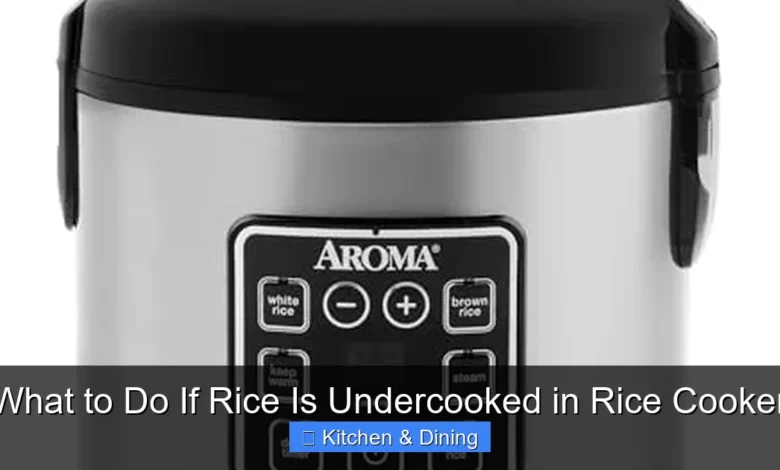
Discover how to rescue undercooked rice from your rice cooker with simple, effective methods. This guide provides straightforward solutions, from adding more water to using the “keep warm” function. You’ll learn to fix your rice disaster quickly and ensure perfectly cooked grains for your next meal.
## What to Do If Rice Is Undercooked in Rice Cooker
Ah, the humble rice cooker. It’s a kitchen marvel, promising perfectly fluffy rice with minimal effort. But what happens when that promise turns into a disappointing crunch? You open the lid, expecting tender grains, only to find they’re still hard and chalky in the middle. Don’t panic! An undercooked rice situation is not a culinary catastrophe. With a few simple steps, you can easily salvage your rice and enjoy a delicious meal. This guide will walk you through exactly what to do if your rice comes out undercooked from your rice cooker, ensuring you’re never left with a disappointing bowl again. We’ll cover the most effective solutions, troubleshoot common issues, and offer tips to prevent this from happening in the future.
### Understanding Why Rice Might Be Undercooked
Before we dive into solutions, it’s helpful to understand why your rice might be undercooked in the first place. Several factors can contribute to this common kitchen mishap:
* **Incorrect Water Ratio:** This is by far the most frequent culprit. Using too little water means there isn’t enough liquid for the rice to absorb and steam properly.
* **Washing the Rice Too Much:** While washing rice is important to remove excess starch, over-washing can strip away some of the natural moisture the rice needs.
* **Type of Rice:** Different types of rice (like brown rice or wild rice) have different water absorption rates and cooking times. Not adjusting the water or cooking time for these varieties can lead to undercooking.
* **Rice Cooker Malfunction or Age:** Older or malfunctioning rice cookers might not heat evenly or might not complete their full cooking cycle correctly.
* **Too Much Rice for the Cooker:** Overloading the rice cooker can prevent the heat and steam from circulating evenly, leading to some grains being undercooked.
* **Lid Not Sealed Properly:** If the lid isn’t closed securely, steam can escape, preventing the rice from cooking properly.
Now, let’s get to the good stuff: how to fix it!
## The Quick Fix: Adding More Water
This is the go-to method for most undercooked rice situations, and it’s usually very successful. The key here is to add just enough water to allow the rice to finish cooking without becoming mushy.
### Step 1: Assess the Situation
Open the lid of your rice cooker and take a look. How undercooked is the rice? Are the grains just a little firm, or are they still noticeably hard and dry? This assessment will help you determine how much water to add.
### Step 2: Add a Small Amount of Water
* **For slightly undercooked rice:** Add about 1/4 cup of water for every 1-2 cups of uncooked rice.
* **For significantly undercooked rice:** Add about 1/2 cup of water for every 1-2 cups of uncooked rice.
Use the measuring cup that came with your rice cooker or a standard liquid measuring cup. Pour the water gently over the rice, trying to distribute it evenly without stirring too much. You don’t want to mash the rice.
### Step 3: Restart or Continue the Cooking Cycle
This is where things can vary slightly depending on your rice cooker model.
* **If your rice cooker has a “Cook” or “Start” button:** Simply press it again. The cooker should resume its cooking cycle.
* **If your rice cooker has an “On” switch and a “Keep Warm” setting:** You might need to physically switch it from “Keep Warm” back to “Cook” or “On.” Some older models might not have a clear “restart” function, but turning it back to the cooking mode usually works.
* **If your rice cooker has a “Reheat” or “Steam” function:** These can sometimes be used as a substitute for the cook function in a pinch, but the regular cook cycle is ideal.
### Step 4: Be Patient
This is crucial. The rice cooker needs time to heat the new water and steam the rice. Allow it to run through a full cooking cycle, or at least for 10-15 minutes. Resist the urge to open the lid and check too early.
### Step 5: Check for Doneness
Once the cooking cycle has finished (or after 10-15 minutes if you’re unsure), carefully open the lid. Gently stir the rice and check a few grains from the bottom and sides of the cooker. They should be tender and fully cooked. If they are still a bit firm, repeat the process of adding a small amount of water and running the cooker again. However, be cautious about repeating this too many times, as it can lead to mushy rice.
## The Stovetop Rescue Mission
If your rice cooker isn’t cooperating, or if you’re concerned about adding more water directly to the cooker, you can always take your undercooked rice to the stovetop for a reliable rescue. This method is very effective for ensuring even cooking.
### Step 1: Transfer the Rice to a Pot
Carefully scoop the undercooked rice and any remaining water from your rice cooker into a heavy-bottomed saucepan or pot.
### Step 2: Add More Water
Add additional water to the pot. The amount will depend on how undercooked the rice is. A good starting point is to add about 1/4 to 1/2 cup of water per cup of uncooked rice. You want enough water to cover the rice by about a quarter inch.
### Step 3: Season (Optional but Recommended)
While you’re rescuing your rice, you can add a pinch of salt or a little butter or oil to enhance the flavor. This is also a good time to add any herbs or spices you might want.
### Step 4: Bring to a Simmer
Place the pot on the stove over medium-high heat. Bring the water to a gentle simmer.
### Step 5: Cover and Cook on Low Heat
Once the water is simmering, reduce the heat to low, cover the pot tightly with a lid, and let it cook.
### Step 6: Cook Until Tender
Let the rice cook for about 10-20 minutes, or until all the water is absorbed and the rice is tender. You can check by gently lifting the lid and tasting a few grains. Avoid stirring too much during this process, as it can make the rice gummy.
### Step 7: Rest the Rice
Once the rice is cooked through, remove the pot from the heat and let it sit, covered, for another 5-10 minutes. This resting period allows the steam to distribute evenly, ensuring all grains are perfectly cooked.
## Troubleshooting Common Undercooked Rice Issues
Sometimes, the problem isn’t just about adding water. Here are a few things to consider if your rice keeps coming out undercooked:
### My Rice is Still Hard After Adding Water Twice
If you’ve added water and run the cooker more than once, and the rice is still not quite right, it might be time to consider a different approach.
* Over-washing: If you wash your rice extensively, you might be removing too much of its natural moisture. Try rinsing it just once or twice next time.
* Old Rice: Older bags of rice can sometimes be drier and require a little more water.
* Water Quality: While less common, using very hard water could potentially affect cooking.
### My Rice is Undercooked But I Don’t Want to Add More Water
If you’re worried about adding too much water and making the rice mushy, or if your cooker has a history of producing gummy rice when you add liquid, the stovetop method is your best bet. It gives you more control over the cooking process.
### My Rice Cooker Seems to Be Stuck on “Keep Warm”
Some rice cookers have a sensor that detects moisture. If the rice is too dry, the cooker might mistakenly think it’s done and switch to “Keep Warm” prematurely. In this case, gently fluff the rice, add a tablespoon or two of water, and try to press the “Cook” button again.
### I Have Different Types of Rice
Always check the packaging for specific instructions when cooking different types of rice, especially brown rice, wild rice, or specialty grains. These often require more water and longer cooking times than white rice. For example, brown rice might need an extra 1/2 cup of water and a longer cooking cycle. If you’re looking for options, explore the best brown rice cookers designed to handle these grains.
## Prevention is Better Than Cure: Avoiding Undercooked Rice
The best way to deal with undercooked rice is, of course, to avoid it altogether! Here are some tips to ensure perfectly cooked rice every time:
### Measure Accurately
Always use the measuring cup that came with your rice cooker. If you don’t have it, use a standard liquid measuring cup. Measure both the rice and the water precisely according to the instructions for your rice cooker and the type of rice you are using. Rice cooker markings on the inner pot are also your best friend here; ensure you fill the rice and water to the corresponding lines.
### Rinse Your Rice Properly
Rinsing rice removes excess starch, which prevents it from becoming clumpy or sticky. Place the rice in a fine-mesh sieve and rinse under cold running water until the water runs mostly clear. Don’t over-rinse, though, as you don’t want to strip all the natural moisture.
### Know Your Rice
Different types of rice have different cooking requirements. White rice generally needs a 1:1.5 or 1:2 ratio of rice to water. Brown rice often needs more water, perhaps 1:2 or 1:2.5. Always consult the package directions for your specific rice. If you frequently cook brown rice, investing in a good brown rice cooker can make a huge difference.
### Don’t Overload the Cooker
Respect the capacity of your rice cooker. Overfilling it can lead to uneven cooking and potential overflow. Check the maximum fill line inside your cooker’s pot.
### Ensure a Good Seal
Make sure the lid of your rice cooker is closed securely. You should hear a click or feel it lock into place. This seals in the steam, which is essential for proper cooking.
### Understand Your Rice Cooker
Familiarize yourself with your specific rice cooker model. Does it have different settings for white rice, brown rice, or quick cook? Using the correct setting can optimize the cooking process. If you’re in the market for a new one, check out reviews of the best rice cookers reviews to find one that suits your needs. Some advanced models even have specific programs for different rice types.
### The “Doneness” Test
If you’re unsure about whether the rice is cooked, it’s better to check a little early than to overcook it. After the cooker switches to “Keep Warm,” let it sit for at least 10 minutes before opening the lid. Then, carefully taste a few grains. If they’re still a bit firm, you can add a touch more water and run the cooker again, but be mindful of the risk of mushiness.
## Conclusion
Finding undercooked rice in your rice cooker can be frustrating, but it’s a fixable problem. By understanding the common causes and applying the simple techniques outlined in this guide—adding a little more water or transferring to the stovetop—you can rescue your meal. Remember that patience and accurate measurements are your allies in the kitchen. With these tips, you’ll be back to enjoying perfectly cooked rice with every use of your rice cooker, turning potential kitchen mishaps into minor detours on the road to a delicious meal. Happy cooking!
Key Takeaways
- The Water Trick: Adding a small amount of extra water is the most common and effective fix for undercooked rice.
- Patience is Key: Allow the rice cooker sufficient time to finish the cooking cycle after adding more water.
- Stovetop Alternative: If your rice cooker fails, you can transfer the undercooked rice to a pot on the stove to finish cooking.
- Don’t Overdo It: Adding too much water can turn your rice mushy, so start with small amounts.
- Check Rice Type: Different rice varieties may require slightly different approaches, but the basic principles remain the same.
- Preventative Measures: Always follow the rice cooker’s instructions and water ratios for your specific type of rice to avoid this issue in the future.