

The chef’s knife is overwhelmingly the most common and versatile knife used in the kitchen. Its design makes it ideal for a wide range of tasks, from chopping vegetables to slicing meat. Understanding its features and how to use it properly will significantly enhance your cooking experience.
# What Is the Most Common Knife Used in the Kitchen
Welcome to the heart of the kitchen! Every home cook, from the absolute beginner to the seasoned pro, relies on a few key tools to make culinary magic happen. Among these essential implements, one stands head and shoulders above the rest: the chef’s knife. If you’ve ever wondered which knife is truly the workhorse of the kitchen, you’ve come to the right place. In this comprehensive guide, we’ll delve into why the chef’s knife is so prevalent, explore its anatomy, understand its many uses, and offer practical tips to help you choose and care for your own.
By the end of this guide, you’ll have a clear understanding of what makes the chef’s knife the most common kitchen companion and how you can leverage its power to make your time in the kitchen more enjoyable and efficient.
## The Reign of the Chef’s Knife: Why It’s the Most Common
So, what makes one knife more common than another? It boils down to versatility, efficiency, and adaptability. The chef’s knife, also known as a cook’s knife, excels in all these areas. Unlike specialized knives designed for very specific tasks, the chef’s knife is an all-rounder. It can chop, dice, mince, slice, and even crush garlic. This remarkable adaptability means that for many everyday cooking tasks, you don’t need to reach for another blade.
Think about the most common activities in your kitchen: preparing vegetables for a salad, dicing onions for a sauce, slicing chicken for stir-fry, or even carving a roasted chicken. A good chef’s knife can handle all of these with relative ease. This ability to perform a multitude of jobs makes it an indispensable tool, and therefore, the most commonly found knife in kitchens worldwide. Many people might own a few specialized knives, but the chef’s knife is the one they will reach for time and time again.
## Understanding the Anatomy of a Chef’s Knife
To truly appreciate the chef’s knife, let’s break down its key components:
### The Blade
This is the business end of the knife, and its design is crucial to its function.
* **Length:** Most chef’s knives range from 6 to 12 inches, with 8 inches being the most popular and standard length. The length you choose often depends on your hand size and the types of tasks you perform most frequently.
* **Width:** Chef’s knives have a broad blade that tapers to a point. The width provides stability and allows for scooping ingredients off the cutting board.
* **Curvature (the “Rocking Edge”):** This is perhaps the most defining feature. The blade has a distinct curve, often called a “belly.” This curve is designed to facilitate a rocking motion on the cutting board, allowing for efficient chopping and mincing, especially of softer ingredients like herbs and onions.
* **Tip:** The pointed tip is useful for precision work, such as deboning or trimming.
* **Heel:** The widest part of the blade, closest to the handle. It’s ideal for chopping through tougher ingredients.
* **Spine:** The top edge of the blade, opposite the cutting edge. It’s thicker than the cutting edge, providing strength and durability.
### The Handle
The handle is just as important as the blade for control and comfort.
* **Material:** Handles can be made from various materials, including wood, plastic, composite materials, and even metal. The material affects grip, durability, and aesthetics.
* **Ergonomics:** A well-designed handle should feel comfortable and secure in your hand, providing a good grip even when wet.
* **Tang:** The tang is the part of the blade that extends into the handle. A “full tang” knife, where the metal of the blade runs the entire length of the handle, is generally considered more durable and balanced than a “partial tang” knife.
## The Many Talents of the Chef’s Knife: Tasks It Excels At
The chef’s knife is a true multi-tasker. Here are some of the primary jobs it’s designed to handle:
### Chopping and Dicing
This is the bread and butter of the chef’s knife. Its curved edge allows you to use a rocking motion, where the tip of the knife stays in contact with the cutting board, and the blade rocks up and down to chop through ingredients. This is particularly effective for dicing onions, celery, carrots, and other vegetables.
### Mincing
For finely mincing herbs, garlic, or shallots, the rocking motion is indispensable. It allows you to quickly and efficiently reduce ingredients to a very fine consistency without having to repeatedly lift and reposition the knife.
### Slicing
While dedicated slicing knives exist, a chef’s knife can handle most slicing tasks, from thinly slicing cooked meats to portioning fruits and vegetables. For larger cuts of meat, a longer blade might be preferred, but for everyday slicing, the chef’s knife is more than capable.
### Julienne
Creating thin, matchstick-like strips of vegetables for salads or garnishes is another task easily accomplished with a chef’s knife. The precision of the blade allows for uniform cuts.
### Crushing Garlic
The broad, flat side of the chef’s knife blade can be used to gently crush garlic cloves. Place the flat side of the blade on top of the clove and give it a firm press with the heel of your hand. This not only crushes the garlic but also helps to loosen its skin, making it easier to peel.
### Transferring Ingredients
After chopping ingredients, the broad blade of the chef’s knife is perfect for sweeping the cut food directly from your cutting board into a pan or bowl. This saves time and reduces mess.
## Choosing Your Chef’s Knife: A Practical Guide
With so many options available, choosing the right chef’s knife can feel overwhelming. Here’s what to consider:
### Blade Length: Finding Your Perfect Fit
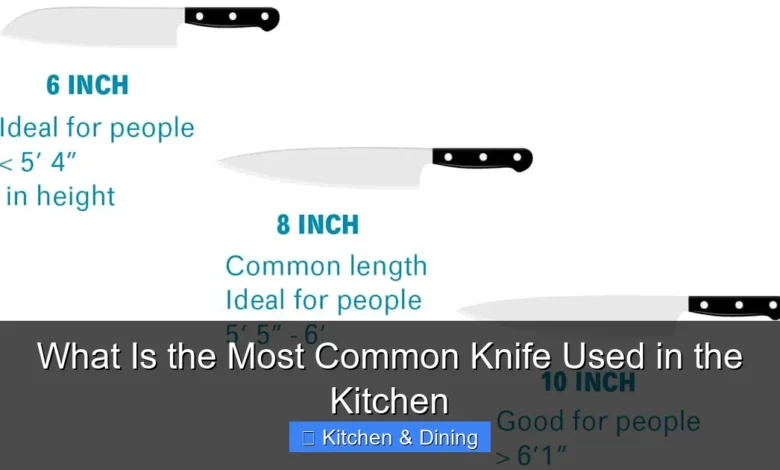
As mentioned, 8 inches is the most common length.
* **6-inch Chef’s Knife:** Ideal for those with smaller hands or for those who primarily work with smaller ingredients or in tighter kitchen spaces. They offer greater maneuverability.
* **8-inch Chef’s Knife:** The standard and a great all-around choice for most cooks. It balances power and control well. If you’re unsure, start here.
* **10-inch Chef’s Knife:** Better suited for larger hands or for those who frequently tackle large roasts or extensive vegetable prep. They offer more cutting power.
### Blade Material: Steel Matters
The quality of the steel significantly impacts the knife’s performance, durability, and edge retention.
* **High-Carbon Stainless Steel:** This is the most common and often the best choice for home cooks. It offers a good balance of sharpness, durability, and resistance to rust and corrosion.
* **Carbon Steel:** This type of steel can achieve an incredibly sharp edge and holds it well, but it requires more care as it can rust and stain if not properly maintained.
* **Ceramic:** Extremely sharp and lightweight, ceramic blades hold their edge for a long time. However, they are brittle and can chip or break if dropped or used on hard surfaces.
### Handle Comfort and Grip
This is purely subjective, but crucial for safe and effective use.
* **Try before you buy:** If possible, hold the knife. Does it feel balanced in your hand? Is the grip comfortable and secure?
* **Material:** Wood offers a classic look and feel but can be porous. Composites and plastics offer durability and often better grip, especially when wet.
### Brand and Price Point
There are excellent chef’s knives at various price points. While you don’t need to break the bank, investing in a quality knife from a reputable brand will likely offer better performance and longevity. Brands like Wüsthof, Henckels, Shun, and Victorinox are known for producing high-quality knives. For those looking for a starting point or a budget-friendly option, Victorinox often receives high marks.
If you’re looking to equip your entire kitchen, exploring a quality cooking knife set or considering a knife block set can be a good investment to ensure you have a range of suitable tools.
## Mastering the Chef’s Knife: Technique and Care
Owning a great chef’s knife is only half the battle. Proper technique and care will ensure it serves you well for years.
### The Proper Grip
A good grip is essential for control and safety.
* **Pinch Grip:** The most common and recommended grip. Pinch the blade between your thumb and index finger, just in front of the handle. Your other fingers wrap around the handle. This provides the most control.
* **Handle Grip:** Some people prefer to wrap all fingers around the handle, but this offers less control.
### The Rocking Motion: Unleashing its Potential
As discussed, the curved edge is designed for a rocking motion.
1. Place the tip of the knife on the cutting board.
2. As you bring the blade down through the ingredient, lift the heel of the blade.
3. Continue the motion, lowering the heel as you bring the tip back down.
4. This continuous, smooth rocking action allows for quick and efficient chopping and mincing.
### Knife Care: Keeping It Sharp and Clean
A dull knife is a dangerous knife. Sharpening and proper cleaning are non-negotiable.
#### Sharpening
* **Honing:** A honing steel (often included with knife sets) doesn’t actually sharpen the blade but realigns the microscopic teeth of the edge, keeping it sharp between sharpenings. Use it regularly, even daily, before or after cooking.
* **Sharpening:** Over time, the edge will dull. You’ll need to sharpen it using a whetstone, electric sharpener, or a pull-through sharpener. For the best results and to maintain the blade’s integrity, professional sharpening is also an option, or consider investing in a good electric knife sharpener.
#### Cleaning
* **Hand Wash Only:** Never put your chef’s knife in the dishwasher. The harsh detergents, high heat, and jostling can damage the blade, dull the edge, and degrade the handle material.
* **Wash Immediately:** Wash the knife by hand with warm, soapy water immediately after use.
* **Dry Thoroughly:** Dry the blade completely with a clean towel before storing it. This prevents rust and corrosion.
#### Storage
Proper storage protects the blade and prevents accidents.
* **Knife Block:** A kitchen knife block is a classic and effective way to store knives safely.
* **Magnetic Strip:** A magnetic strip mounted on the wall keeps knives accessible and visible, while also protecting the blades from damage. Explore options for a good magnetic knife strip.
* **Blade Guards:** If you store knives in a drawer, use blade guards to protect the edges and prevent accidents.
## Troubleshooting Common Chef’s Knife Issues
### My knife feels dull.
This is the most common issue. Your knife needs sharpening. If you have a honing steel, use it first. If that doesn’t restore sharpness, it’s time for proper sharpening.
### My chef’s knife is rusting.
This usually happens if the knife wasn’t dried thoroughly after washing or if it’s made of carbon steel and not properly maintained. Wash and dry it again immediately. For minor rust spots, you can often use a bit of baking soda paste. For persistent rust or if the blade is significantly damaged, consider professional restoration.
### The handle feels loose.
This is more likely to happen with lower-quality knives or knives with partial tangs. It’s a safety hazard. If the handle is significantly loose, it might be time to replace the knife. Some minor loosening might be addressable by a qualified repair person, but it’s often not worth the cost.
### I’m not getting clean cuts.
Ensure your knife is sharp and that you are using the appropriate technique. For vegetables, the rocking motion is key. For meats, a smooth, decisive slicing motion works best. The type of cutting board you use can also make a difference; softer materials like wood or plastic are generally preferred over glass or stone, which can dull blades quickly.
## Conclusion: The Indispensable Chef’s Knife
The answer to “What is the most common knife used in the kitchen?” is unequivocally the chef’s knife. Its ingenious design, remarkable versatility, and ability to handle a vast array of culinary tasks make it the undisputed king of kitchen cutlery. Whether you are a novice cook learning the ropes or an experienced chef fine-tuning your skills, a well-chosen and well-maintained chef’s knife will be your most trusted companion.
Investing in a good chef’s knife is an investment in your cooking. It will make your prep work faster, more enjoyable, and ultimately, lead to better-tasting meals. So, embrace the power of the chef’s knife, learn its nuances, and watch your kitchen confidence soar.
Key Takeaways
- The Chef’s Knife Reigns Supreme: The chef’s knife is the undisputed champion of kitchen cutlery due to its versatility and efficiency in handling most common kitchen tasks.
- Design for Versatility: Its broad blade, curved edge, and substantial handle are specifically engineered to facilitate a variety of cutting techniques, from chopping and dicing to mincing and slicing.
- Mastering the Rocking Motion: Proper technique involves a “rocking motion” using the curve of the blade, allowing for precise and effortless cutting, especially for softer ingredients.
- Choosing the Right Size: While 8-inch chef’s knives are most common, personal preference and hand size play a crucial role. Shorter blades (6-inch) or longer blades (10-inch) might be better suited for some individuals.
- Essential for Every Cook: Whether you’re a beginner or a seasoned home cook, a good chef’s knife is a foundational tool that simplifies meal preparation and elevates your culinary skills.