

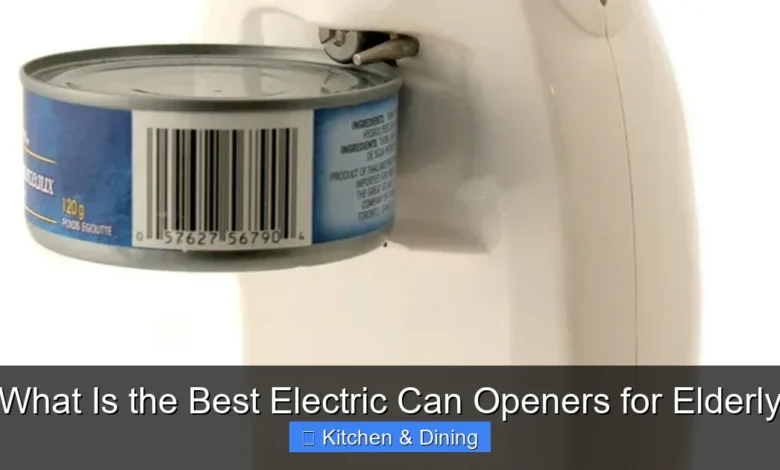
Opening cans can be a challenge, especially for seniors. This guide explores the best electric can openers designed for elderly individuals. We’ll cover key features like ease of use, safety, and power, helping you choose an opener that makes kitchen tasks simpler and more enjoyable. Discover options that offer independence and convenience.
# What Is the Best Electric Can Opener for Elderly?
Cooking and preparing meals should be a joy, not a struggle. For many elderly individuals, everyday kitchen tasks can become challenging due to reduced hand strength, arthritis, or other mobility issues. Opening a stubborn can can lead to frustration and even injury. Fortunately, technology offers a wonderful solution: the electric can opener. These devices are designed to make opening cans effortless, restoring independence and ease in the kitchen.
In this comprehensive guide, we’ll walk you through everything you need to know to find the best electric can opener for the elderly. We’ll explore the crucial features to consider, the different types available, and provide practical tips to ensure you or your loved one can enjoy hassle-free meal preparation.
## Understanding the Needs of Elderly Users
Before diving into specific models, it’s important to understand why electric can openers are such a valuable tool for seniors. Many traditional manual can openers require significant grip strength and wrist motion to operate. This can be particularly difficult for individuals with conditions like:
* **Arthritis:** Inflammation and stiffness in the joints make gripping and twisting painful and difficult.
* **Reduced Hand Strength:** Age-related muscle loss can decrease the ability to apply the force needed for manual openers.
* **Limited Dexterity:** Conditions affecting fine motor skills can make precise movements challenging.
* **Vision Impairments:** Difficulty seeing the can’s edge or the opener’s mechanism can lead to errors and potential accidents.
An electric can opener takes the strain out of the process, transforming a difficult task into a simple push of a button or a gentle placement.
## Key Features to Look for in an Electric Can Opener for the Elderly
When choosing an electric can opener, certain features are more important than others for elderly users. Prioritizing these will ensure you select a device that is both effective and user-friendly.
### 1. Ease of Operation
This is the most critical factor. The best electric can openers for seniors should be incredibly simple to use.
* **One-Touch Activation:** Many models start automatically when you press a button or place the can. This eliminates the need for manual cranking or complex steps.
* **Ergonomic Design:** Look for openers with comfortable, easy-to-grip levers or buttons. The overall design should feel natural and secure in the hand, even for those with smaller hands or reduced grip.
* **Automatic Shut-Off:** The opener should stop on its own once the can is opened, preventing over-operation or potential damage.
### 2. Safety Mechanisms
Safety is paramount, especially when dealing with sharp edges and moving parts.
* **Magnetic Lid Holder:** This is a fantastic feature that securely holds the cut lid in place after opening. It prevents the lid from falling into the can or dropping onto the counter, reducing the risk of cuts.
* **Smooth-Edge Cutting:** Many modern electric can openers cut along the side seam of the can rather than the top. This results in a can with a smooth edge, making it much safer to handle.
* **Stable Base:** A sturdy, non-slip base prevents the opener from moving around on the countertop during operation, which could lead to accidents.
### 3. Power and Performance
While ease of use is key, the opener still needs to be powerful enough to handle various types of cans.
* **Motor Strength:** A sufficiently powerful motor ensures that the opener can cut through various can materials and thicknesses without getting stuck.
* **Consistent Performance:** The opener should reliably open cans every time, without requiring multiple attempts.
* **Blade Quality:** Sharp, durable blades made from good quality material will ensure a clean cut and longevity.
### 4. Can Size and Shape Compatibility
Not all cans are created equal. The ideal electric can opener should be versatile.
* **Adjustable Guide:** Some openers have an adjustable guide that allows them to accommodate different can heights and diameters.
* **Standard Can Sizes:** Ensure the opener can comfortably fit and open common can sizes, from small 4-ounce cans to larger 28-ounce cans.
### 5. Cleaning and Maintenance
Kitchen tools need to be easy to clean to maintain hygiene and prevent the buildup of food particles.
* **Detachable Blades:** Openers with blades or cutting mechanisms that can be easily removed for washing are a huge plus.
* **Wipeable Surfaces:** The exterior should be easy to wipe down with a damp cloth. Avoid models with too many nooks and crannies where food can accumulate.
### 6. Power Source: Corded vs. Cordless
The choice between a corded and cordless electric can opener depends on personal preference and kitchen setup.
* **Corded Electric Can Openers:** These typically offer more consistent power and don’t require battery replacements. However, they are limited by the length of the cord and the availability of an electrical outlet. This can be an issue if the user has limited mobility to reach outlets or navigate cords.
* **Cordless (Battery-Operated) Electric Can Openers:** These offer greater flexibility and portability. They can be used anywhere in the kitchen and are often easier to store. The main drawback is the need to replace or recharge batteries periodically. For seniors, a model that uses readily available AA or AAA batteries might be more convenient than one with a proprietary rechargeable battery.
### 7. Storage and Counter Space
For seniors, keeping the kitchen clutter-free and organized is often a priority.
* **Compact Design:** Smaller models take up less counter space and are easier to store in cabinets or drawers.
* **Vertical Storage:** Some openers are designed to stand upright, minimizing their footprint.
* **Mountable Options:** A few models can be mounted under cabinets, freeing up valuable counter space.
## Types of Electric Can Openers for Elderly
There are a few main types of electric can openers, each with its own advantages for elderly users.
### 1. Countertop Electric Can Openers
These are the most common type. They sit on the countertop and are plugged into an outlet (corded) or powered by batteries (cordless).
* **Pros:** Generally robust, powerful, and often feature magnetic lid holders and smooth-edge cutting. They are designed for frequent use.
* **Cons:** Can take up counter space. Corded models have the limitation of cord length.
### 2. Handheld Electric Can Openers
These are more compact and portable, designed to be held in one hand while operating.
* **Pros:** Excellent for those with limited space or who prefer a more direct feel. Many are battery-operated, offering great flexibility.
* **Cons:** May require slightly more manual guidance than countertop models. Their power might be less than larger countertop versions, and they may not always have magnetic lid holders.
### 3. Side-Cutting Electric Can Openers
This is more of a feature than a type, but it’s worth highlighting. These openers cut the can from the side, along the seam, leaving no sharp edges on either the can or the lid.
* **Pros:** Significantly safer than traditional openers. Lids are often easier to remove and dispose of.
* **Cons:** Some models might be slightly more expensive.
## Top Considerations for Specific Needs
Beyond the general features, consider these specific points based on the user’s situation:
### For Arthritis and Hand Weakness
* **Prioritize one-touch operation:** Absolutely essential.
* **Look for a comfortable, non-slip grip on any buttons or levers.**
* **Avoid openers that require significant pressure to engage.**
* **Magnetic lid holders are a must.**
### For Limited Dexterity
* **Models with a clear, simple mechanism are best.**
* **Avoid openers with too many small parts or intricate steps.**
* **A stable base helps prevent fumbling.**
### For Vision Impairments
* **Auditory cues:** Some openers might make a distinct sound when finished.
* **Clear visual indicators:** A light that illuminates when operating can be helpful.
* **Easy-to-feel buttons:** Raised buttons or distinct textures can aid operation.
## How to Use an Electric Can Opener: A Step-by-Step Guide
Using an electric can opener is generally straightforward, but here’s a breakdown to ensure smooth operation for anyone, especially seniors.
### Step 1: Prepare the Can and Opener
* **Place the opener on a stable, flat surface.** If it’s a countertop model, ensure it’s near an outlet if corded.
* **Ensure the can is clean and dry.** This helps the opener grip it properly.
* **Remove any plastic wrap or labels from the can.**
### Step 2: Position the Can
* **Align the can’s rim with the cutting mechanism.** On most models, the rim of the can will rest against the roller or blade guide.
* **For countertop models, place the can directly in front of the unit.** The opener’s arm will often swing down to engage the can.
* **For handheld models, position the cutting wheel on the outer rim of the can’s lid.**
### Step 3: Activate the Opener
* **Press the start button or lever.** For many countertop models, this is a single touch.
* **For handheld models, you might need to press and hold a button** while guiding the opener around the can’s rim.
* **The opener will begin to spin the can and cut the lid.**
### Step 4: Completion and Lid Removal
* **The opener will typically stop automatically** once it has completed a full circle. Some may beep or have a light to indicate completion.
* **Carefully remove the can from the opener.**
* **If your opener has a magnetic lid holder, it will likely still be attached to the lid.** Gently detach the lid and dispose of it. Be mindful of any residual sharpness, even with smooth-edge openers.
### Step 5: Cleaning Up
* **Wipe down the cutting blade and any food-contact surfaces** with a damp cloth.
* **If the blade is detachable, remove it and wash it according to the manufacturer’s instructions.**
* **Wipe the exterior of the opener.**
* **Store the opener in a clean, dry place.**
## Practical Tips for Choosing and Using
* **Read Reviews:** Before buying, check online reviews from other users, particularly those who mention ease of use for seniors.
* **Consider Brand Reputation:** Well-known kitchen appliance brands often offer more reliable products and better customer support.
* **Demonstrate Usage:** If you’re buying for someone else, take the time to show them exactly how to use it. Label buttons if necessary.
* **Keep Instructions Handy:** Store the user manual in a visible place for easy reference.
* **Test Different Cans:** Try opening a few different types and sizes of cans to ensure the opener performs well across the board. For example, test with a smaller tuna can and a larger soup or vegetable can.
* **Think About Battery Life:** If choosing a cordless model, consider how often batteries will need replacing and if they are standard or proprietary. For convenience, standard AA batteries are often preferred.
## Troubleshooting Common Issues
Even the best electric can openers can sometimes encounter minor issues. Here are a few common problems and their solutions:
### The Opener Isn’t Starting
* **Check the power source:** Ensure it’s plugged in (for corded) or that the batteries are fresh and correctly inserted (for cordless).
* **Inspect the safety lock:** Some models have a safety feature that prevents them from operating if not positioned correctly.
* **Clean the contacts:** For battery-operated models, ensure the battery contacts are clean and free of corrosion.
### The Opener Stops Mid-Cycle
* **The can might be stuck or jammed.** Carefully disengage the opener and try to reposition the can.
* **The motor might be overheating.** Allow the opener to cool down for a few minutes before trying again.
* **Check for obstructions** around the blade or roller.
### The Opener Isn’t Cutting Properly
* **The blade might be dull or damaged.** If the blade is removable, check it for wear. It might be time for a replacement blade or a new opener.
* **The can rim might be dented or uneven.** Try a different can.
* **Ensure the can is positioned correctly.** The rim needs to be properly aligned with the cutting mechanism.
### The Lid Doesn’t Detach Fully
* **You might need to finish the cut manually.** Some openers require a small nudge to fully detach the lid, especially on thicker cans.
* **Clean the magnetic holder.** A clean magnet ensures a secure hold.
## Conclusion: Reclaiming Independence in the Kitchen
Choosing the right electric can opener can make a significant difference in the daily life of an elderly individual. By prioritizing ease of use, safety features like magnetic lid holders and smooth-edge cutting, and reliable performance, you can find a kitchen companion that simplifies meal preparation and fosters independence. Whether you opt for a compact handheld model or a robust countertop appliance, the goal is to make opening cans an effortless task. This guide has provided you with the knowledge to navigate the options and select an electric can opener that truly serves its purpose: making life easier and more enjoyable.
Key Takeaways
- Ease of Use is Paramount: Look for electric can openers with simple, one-touch operation and comfortable grip handles for those with limited hand strength.
- Safety Features Matter: Models with magnetic lid holders and smooth-edge cutting mechanisms reduce the risk of cuts and injuries.
- Cordless vs. Corded: Consider battery-operated models for portability and easier storage, or corded versions for consistent power.
- Versatility in Can Sizes: Ensure the opener can handle various can sizes and shapes, from small tuna cans to larger soup cans.
- Cleaning and Maintenance: Opt for openers with detachable or easy-to-wipe blades for simple cleanup to maintain hygiene.
- Storage Considerations: Compact designs or those that can mount under cabinets are ideal for kitchens with limited counter space.
- Budget and Durability: Balance cost with the build quality and brand reputation for a long-lasting and reliable kitchen tool.