

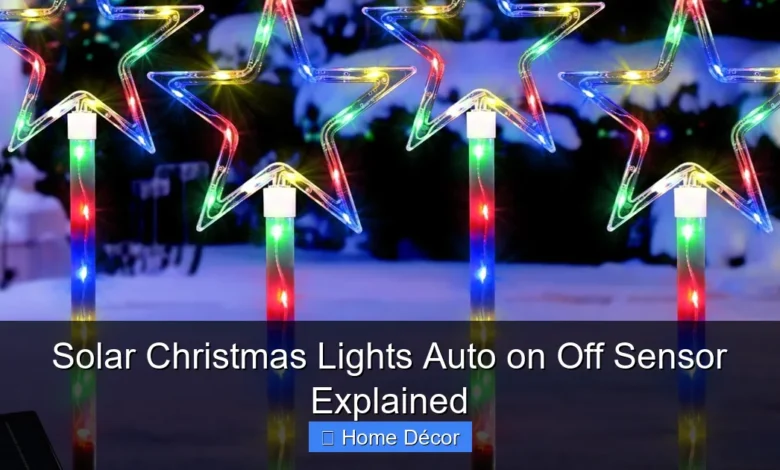
This guide explains the magic behind solar Christmas lights with auto on/off sensors. We’ll delve into how these eco-friendly lights harness the sun’s power and use built-in sensors to automatically illuminate your home at dusk and switch off at dawn. Learn about their benefits, installation, and basic troubleshooting for a hassle-free, festive glow. Enjoy bright, automated holiday décor without the electricity bill!
Solar Christmas Lights Auto on Off Sensor Explained
The holiday season is a magical time, and one of the most cherished traditions is decorating our homes with twinkling lights. For years, this meant dealing with tangled cords, endless extension cords, and the worry of forgetting to turn them off before bed. But thanks to innovation, especially in solar technology, a simpler, more eco-friendly solution has emerged: solar Christmas lights with auto on/off sensors.
If you’ve ever wondered how these magical lights seem to appear as darkness falls and disappear with the morning sun, you’re in the right place. This comprehensive guide will break down the technology behind solar Christmas lights, focusing specifically on their automatic on/off sensors. We’ll walk you through how they work, how to set them up, and how to keep them shining bright throughout the holiday season. Prepare to embrace effortless, sustainable holiday décor!
Key Takeaways
- Understanding the Sensor: Solar Christmas lights use a light-dependent resistor (LDR) or photocell to detect ambient light levels, triggering the on/off function.
- Solar Panel Functionality: The solar panel is crucial for charging the internal battery during daylight hours, providing the power for nighttime illumination.
- Battery Power is Key: The integrated rechargeable battery stores solar energy, enabling the lights to operate after sunset. Battery performance is vital for longevity.
- Simple Installation for Convenience: These lights require minimal setup; position the solar panel in direct sunlight, and the sensor does the rest.
- Maintenance for Optimal Performance: Keeping the solar panel clean and ensuring it receives adequate sunlight are key maintenance tasks for consistent operation.
- Troubleshooting Common Issues: Simple fixes like checking sunlight exposure, cleaning the panel, and verifying battery charge can resolve most common problems.
- Eco-Friendly and Cost-Effective: Solar Christmas lights offer an environmentally friendly and budget-conscious way to add sparkle to your holiday decorations.
What Exactly Are Solar Christmas Lights?
Before we dive into the sensors, let’s quickly define what solar Christmas lights are. These are decorative lights that run on energy captured from the sun. They typically consist of LED bulbs, a small solar panel, a rechargeable battery, and an integrated control unit. The beauty of these lights lies in their independence from your home’s electrical outlet. This makes them incredibly versatile for decorating anywhere, from your garden and porch to trees and fences, without adding to your electricity bill. They are a fantastic example of how renewable energy can be seamlessly integrated into our daily lives, much like other best off-grid solar and wind power kits can power remote locations.
The Brains of the Operation: The Auto On/Off Sensor
The “auto on/off” feature is what truly sets these lights apart and makes them so convenient. This smart functionality is managed by a small, yet vital component: the light sensor.
How the Light Sensor Works: The Photocell Explained
At the heart of the auto on/off system is a light sensor, often referred to as a photocell or a light-dependent resistor (LDR). This component is designed to detect the level of ambient light in its surroundings.
*
Detecting Darkness: When the natural light level drops below a certain threshold (i.e., as dusk approaches), the photocell registers this change. It sends a signal to the control unit within the light string.
*
Activating the Lights: Upon receiving the “darkness detected” signal, the control unit then draws power from the rechargeable battery and illuminates the LED bulbs.
*
Detecting Daylight: Conversely, as dawn breaks and the natural light level increases, the photocell detects this. It signals the control unit to stop drawing power from the battery and turn off the lights.
*
Conserving Energy: This automatic process is crucial for conserving the battery’s stored energy. The lights only operate when they are needed and when they will be visible, ensuring the battery is used efficiently.
Think of it like a tiny guardian of your festive lights, diligently watching the sky and deciding when it’s time for the show to begin and when it’s time to rest. This same principle of light detection is also vital in other solar-powered devices, such as how solar flood lights work and even some best solar powered flagpole lights.
The Power Source: Solar Panels and Batteries
While the sensor tells the lights when to turn on and off, it’s the solar panel and battery that provide the actual power.
The Role of the Solar Panel
The solar panel is the energy collector. It’s typically a small, dark-colored panel that’s integrated into the light string or mounted on a separate stake.
*
Capturing Sunlight: During the day, the solar panel absorbs sunlight. The photovoltaic cells within the panel convert this sunlight directly into electrical energy.
*
Charging the Battery: This generated electricity is then used to charge the internal rechargeable battery. The more direct sunlight the panel receives, the more efficiently it charges.
*
Panel Placement is Crucial: For optimal charging, the solar panel needs to be positioned in an area that receives at least 6-8 hours of direct sunlight per day. Shading from trees, buildings, or even prolonged cloudy weather can significantly impact charging efficiency.
Choosing the right location for your solar panel is perhaps the most critical step in ensuring your solar Christmas lights function correctly. For more insights on solar power components, understanding solar battery basics for beginners can be very helpful.
The Rechargeable Battery: Storing the Energy
The rechargeable battery is the energy reserve. It stores the electricity generated by the solar panel throughout the day, so it can be used to power the lights when it gets dark.
*
Types of Batteries: Most solar Christmas lights use NiMH (Nickel-Metal Hydride) or Lithium-ion batteries. These are designed to withstand multiple charge and discharge cycles.
*
Battery Performance: The capacity of the battery directly affects how long the lights can stay on. Higher capacity batteries will generally allow for longer illumination times. Factors like temperature and battery age can also influence performance, which is a key consideration in solar Christmas lights battery performance.
*
Battery Lifespan: Like all rechargeable batteries, they have a finite lifespan. Over time, their ability to hold a charge may diminish. Many units allow for battery replacement, which can extend the life of your lights.
Step-by-Step: Installing Your Solar Christmas Lights
Setting up solar Christmas lights with auto on/off sensors is refreshingly simple. There are no complex wiring diagrams or electrical outlets to worry about.
Step 1: Unboxing and Inspection
*
Carefully unpack your solar Christmas lights. Check for any visible damage to the lights, wires, solar panel, or stake (if included).
*
Ensure all components are present as per the manufacturer’s instructions.
Step 2: Choosing the Perfect Location for the Solar Panel
This is the most important step for successful operation.
*
Sunlight is Key: Identify a spot that receives unobstructed direct sunlight for the majority of the day, ideally 6-8 hours or more.
*
South-facing is Best: In the Northern Hemisphere, a south-facing location generally provides the most consistent sunlight throughout the day.
*
Avoid Shade: Be mindful of trees, shrubs, eaves, or any other structures that might cast shadows on the panel, especially during peak sunlight hours (typically 10 am to 3 pm).
*
Consider Aesthetics: While functionality is paramount, also think about where the panel will be least conspicuous if that’s a concern for your décor.
Step 3: Positioning the Solar Panel
*
Using the Stake: Most solar lights come with a stake. Insert the stake firmly into the ground in your chosen sunny location. Ensure it’s stable enough to withstand wind.
*
Mounting Options: Some lights might offer clips or screws for mounting the panel on a fence, wall, or railing. Follow the manufacturer’s specific instructions for these methods.
*
Angle Matters: For optimal sun absorption, especially during winter months when the sun is lower in the sky, angle the panel slightly upwards. You can often adjust the angle of the panel on its stake or mount.
Step 4: Placing the Lights
*
Once the solar panel is securely in place, carefully uncoil the light string.
*
Drape, wrap, or hang the lights around your chosen decorating area – trees, bushes, fences, doorways, windows, or railings.
*
Ensure the wires are positioned to avoid tripping hazards and are neatly arranged.
Step 5: Initial Activation and Charging
*
Look for an On/Off Switch: Many solar lights have a physical on/off switch, often located on the back of the solar panel unit. This switch might be in the “off” position by default.
*
Turn to “On”: If there’s a switch, turn it to the “on” position. You might need to cover the solar panel with your hand or a dark cloth for a few seconds to trigger the lights to turn on manually, confirming they are working.
*
First Charge: Allow the lights to charge for a full day (at least 6-8 hours) in direct sunlight before expecting them to illuminate at night. The first night’s performance might be slightly less than subsequent nights as the battery fully establishes its charge cycle.
Maintaining Your Solar Christmas Lights for Longevity
Keeping your solar Christmas lights in top condition is simple and ensures they perform beautifully year after year.
Keeping the Solar Panel Clean
*
Regular Wiping: Dust, pollen, bird droppings, and grime can accumulate on the solar panel, reducing its efficiency. Gently wipe the panel with a soft, damp cloth periodically.
*
Avoid Abrasives: Never use abrasive cleaners or materials, as they can scratch the panel’s surface and hinder its ability to absorb sunlight.
Ensuring Adequate Sunlight
*
Trim Overhanging Branches: As seasons change, trees can grow. Periodically check that no new branches are shading your solar panel.
*
Reposition if Necessary: If you notice a consistent lack of performance, it might be time to re-evaluate the panel’s location. Sometimes, a slight adjustment can make a big difference.
Battery Care and Replacement
*
Check the Manual: Refer to your user manual for guidance on battery replacement. Most units will have a battery compartment that can be opened with a small screwdriver.
*
Use Compatible Batteries: Always use the correct type and size of rechargeable batteries specified by the manufacturer. Using incorrect batteries can damage the unit.
*
Store Properly: If you’re storing the lights for the off-season, it’s often recommended to turn them off and remove the batteries to prevent any potential leakage or damage. Store them in a cool, dry place. Understanding solar battery lifespan and maintenance is crucial for long-term use.
Troubleshooting Common Solar Light Issues
Even with the best intentions, sometimes solar lights don’t perform as expected. Here are a few common issues and how to fix them:
Problem: Lights Not Turning On at All
*
Check the On/Off Switch: Ensure the unit is switched to the “on” position.
*
Verify Sunlight Exposure: The solar panel may not have received enough direct sunlight to charge the battery. Move the panel to a sunnier spot or wait for clearer weather.
*
Initial Charge Time: If the lights are brand new, they might need a full day’s charge before the first use.
*
Battery Issue: The rechargeable battery might be depleted or faulty. Try replacing it with a new, compatible rechargeable battery.
Problem: Lights Turn On, But Not Very Bright or Don’t Last Long
*
Insufficient Sunlight: The panel is likely not getting enough direct sunlight to fully charge the battery. Reassess the panel’s location and ensure it’s free from shade.
*
Dirty Solar Panel: Clean the solar panel thoroughly as described in the maintenance section.
*
Aging Battery: The rechargeable battery may be nearing the end of its lifespan and can no longer hold a sufficient charge. Consider replacing it.
*
Environmental Factors: Extreme cold temperatures can temporarily reduce battery performance. While best indoor swamp cooler on the market 2025 might seem unrelated, think about how temperature impacts devices; similar principles apply to solar batteries.
Problem: Lights Turn On Too Early or Too Late
*
Sensor Sensitivity: The sensitivity of the light sensor can vary between models. If your lights are coming on during twilight, it might be normal for that particular unit.
*
Obstructions Near Panel: Even small reflections or changes in light intensity around the panel can sometimes confuse the sensor. Ensure the area around the panel is clear.
*
Faulty Sensor: In rare cases, the light sensor itself might be faulty, requiring replacement of the unit or at least the control module.
The Benefits of Auto On/Off Solar Christmas Lights
*
Energy Efficiency: They use renewable solar energy, significantly reducing or eliminating electricity costs.
*
Environmental Friendliness: By harnessing solar power, you reduce your carbon footprint.
*
Convenience: The auto on/off feature means you never have to worry about manually switching them on or off, saving time and effort.
*
Versatility: Their independence from power outlets allows for decorating in remote areas, such as gardens, patios, or balconies without easy access to electricity.
*
Safety: Eliminates the need for extension cords running across walkways, reducing tripping hazards.
Conclusion
Solar Christmas lights with auto on/off sensors are a brilliant fusion of technology and festive tradition. They offer a simple, sustainable, and incredibly convenient way to illuminate your home during the holidays. By understanding how the light sensor, solar panel, and battery work together, you can confidently install, maintain, and enjoy your twinkling displays.
The magic of these lights lies in their self-sufficiency. Position the panel correctly, keep it clean, and let the sun do the rest. You’ll be treated to a beautiful ambiance each evening without lifting a finger, all while contributing to a greener planet. So this holiday season, consider making the switch to solar and experience the effortless glow of illuminated cheer. For those looking for the latest in these products, exploring best solar powered Christmas lights is a great next step.