

Using a gas power washer effectively requires careful preparation and execution to avoid costly damage. This guide provides comprehensive steps for safe operation, from choosing the right nozzle to maintaining your equipment. Learn to protect surfaces like wood, paint, and concrete and ensure a clean, damage-free finish every time. With these tips, you’ll gain the confidence to tackle any cleaning project.
How to Prevent Damage When Using Gas Power Washer
A gas power washer is a powerful tool for tackling tough cleaning jobs around your home. From grimy driveways and dirty siding to neglected decks and patios, it can make surfaces look like new. However, this power comes with a responsibility. Improper use of a gas power washer can lead to significant damage to your property, including stripped paint, etched wood, broken concrete, and even damaged siding. This guide is designed to equip you with the knowledge and techniques to use your gas power washer safely and effectively, preventing any unwanted harm to your home’s exterior.
You’ll learn everything from understanding your power washer’s capabilities to selecting the right cleaning accessories and mastering the correct operating procedures. We’ll walk you through pre-cleaning checks, essential safety precautions, and the best practices for cleaning various surfaces. By the end of this guide, you’ll have the confidence to achieve sparkling clean results without causing any damage.
Key Takeaways
- Proper Surface Assessment is Crucial: Always identify the material you’re cleaning and its condition before starting to avoid abrasion or deterioration.
- Nozzle Selection Matters Significantly: Using the correct nozzle size and spray pattern is vital for controlling pressure and preventing surface damage.
- Maintain a Safe Distance: Holding the wand at an appropriate distance from the surface protects it from excessive force and potential gouging.
- Test on an Inconspicuous Area: Always test your power washer on a small, hidden spot to gauge its impact before cleaning the main area.
- Regular Maintenance is Key: Keeping your gas power washer in good working order, including fuel and oil levels, ensures optimal performance and reduces the risk of malfunction.
- Understand Pressure Settings: Be aware of the PSI (pounds per square inch) your power washer produces and adjust your technique accordingly for different surfaces.
- Wear Protective Gear: Safety isn’t just about the equipment; protecting yourself with gloves, eye protection, and appropriate footwear is essential for a safe operation.
Understanding Your Gas Power Washer
Before you even think about pulling the trigger, it’s crucial to understand the machine itself. Gas power washers are rated by PSI (pounds per square inch) and GPM (gallons per minute). PSI dictates the force of the water spray, while GPM refers to the volume of water delivered. Higher PSI means more cleaning power, but also a greater risk of damage. Familiarize yourself with your specific model’s specifications and its recommended operating procedures. Always consult your owner’s manual for detailed information.
Pre-Operation Checks and Preparation
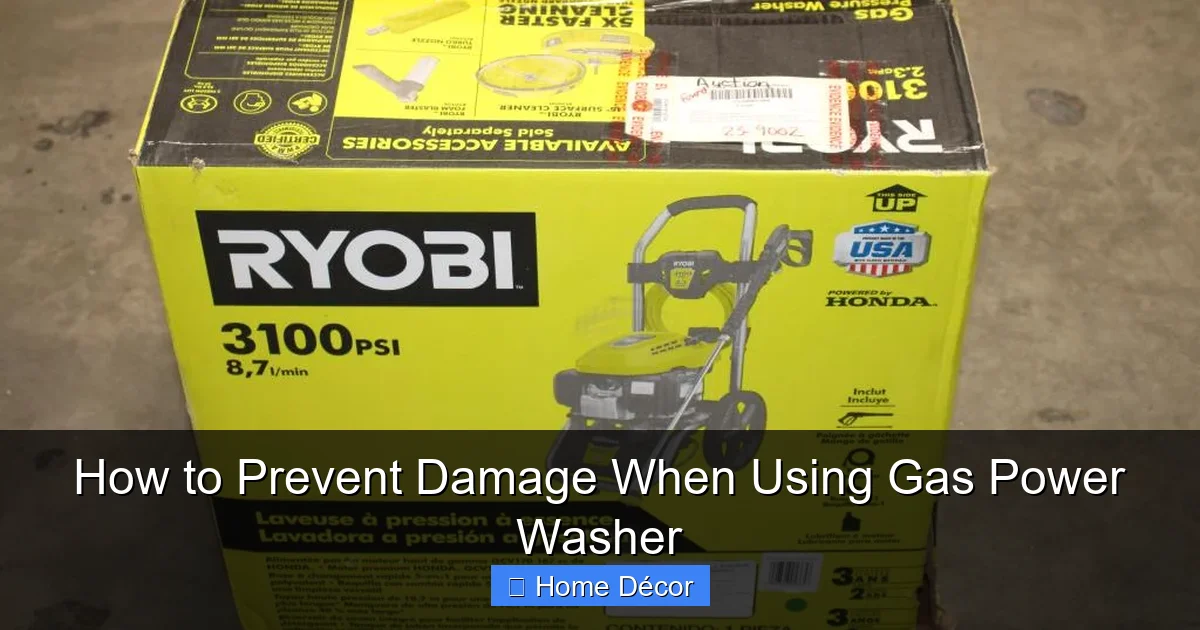
Visual guide about How to Prevent Damage When Using Gas Power Washer
Image source: content.propertyroom.com
Thorough preparation is the first line of defense against power washer damage. Skipping these steps is a common mistake that can lead to accidents and property damage.
Inspect the Power Washer
Before each use, perform a visual inspection of your power washer.
- Check for leaks: Look for any signs of fuel or oil leaks. Ensure all connections are tight and secure.
- Fuel and Oil Levels: Make sure the fuel tank is filled with fresh gasoline appropriate for your machine. Check the oil level and top it off if necessary. Using old fuel can cause engine problems and affect performance.
- Air Filter: Ensure the air filter is clean. A clogged filter can reduce engine power and lead to overheating.
- Hoses and Connectors: Inspect the high-pressure hose for any cracks, kinks, or abrasions. Ensure all connectors are securely fastened. A damaged hose can burst under pressure, causing injury and damage.
Prepare the Cleaning Area
Clear the area you intend to clean.
- Remove Obstacles: Move furniture, planters, grills, and any other items away from the cleaning zone. This not only protects your belongings but also ensures unobstructed access for the power washer.
- Protect Sensitive Items: Cover or move any delicate plants, electrical outlets, light fixtures, or vents that could be damaged by the water spray or debris.
- Assess the Surface: Take a moment to examine the surface you’re about to clean. Is it old and brittle? Is the paint peeling? Understanding the surface’s condition will guide your approach.
Choosing the Right Nozzle

Visual guide about How to Prevent Damage When Using Gas Power Washer
Image source: i.ytimg.com
The nozzle is arguably the most critical component for controlling the power washer’s impact. Power washer nozzles vary in color and spray pattern, each designed for different applications. Using the wrong nozzle is a primary cause of damage.
Understanding Nozzle Types
Most gas power washers come with a set of interchangeable nozzles. They typically include:
- Red (0-degree): This nozzle produces a pinpoint, high-impact stream. It’s extremely powerful and should be used with extreme caution, if at all, on most surfaces. It’s primarily for removing stubborn, caked-on dirt in very specific, durable areas. Never use this on painted surfaces, wood, or siding.
- Yellow (15-degree): This nozzle provides a narrower fan spray. It’s more versatile than the red nozzle but still quite powerful. It can be effective for cleaning concrete or tough stains but requires a careful hand and appropriate distance.
- Green (25-degree): This is a common choice for general cleaning tasks. The wider fan spray distributes the pressure over a larger area, making it safer for most surfaces like decks, siding, and fences.
- White (40-degree): This nozzle offers the widest fan spray. It’s ideal for rinsing and cleaning lighter dirt and grime from more delicate surfaces or when you need to cover a large area quickly without intense pressure.
- Black (Soap Nozzle): This nozzle is designed to draw detergent into the water stream. It operates at a much lower pressure and is used for applying cleaning solutions.
Selecting the Appropriate Nozzle for the Job
When in doubt, always start with the widest angle nozzle (white or green) and a longer distance. You can always move closer or switch to a more concentrated nozzle if needed.
- For concrete driveways or stubborn grime: A 15-degree or 25-degree nozzle might be suitable, but start at a safe distance and test a small area.
- For decks, fences, and siding: A 25-degree or 40-degree nozzle is generally recommended. Always start at a distance and move closer only if necessary.
- For vehicles or delicate surfaces: Use the widest fan (40-degree) or even a specialized low-pressure car wash attachment.
Remember, even with the correct nozzle, excessive pressure can still cause damage.
Safe Operating Techniques

Visual guide about How to Prevent Damage When Using Gas Power Washer
Image source: m.media-amazon.com
Once your power washer is prepped and you have the right nozzle, it’s time to operate it safely. This involves understanding how to handle the wand and control the spray.
Maintain a Safe Distance
This is a fundamental rule. Holding the power washer wand too close to the surface concentrates the force, which can easily etch, gouge, or strip paint.
- Start further away: Begin by holding the wand at least 18-24 inches away from the surface.
- Gradually move closer: If the cleaning isn’t effective, slowly decrease the distance while observing the surface’s reaction. Stop if you see any signs of damage.
- Consistent distance: Try to maintain a consistent distance while sweeping the spray across the surface. Avoid lingering in one spot.
Use Sweeping Motions
Never aim the spray directly at one spot for an extended period.
- Even coverage: Employ smooth, overlapping, sweeping motions. Imagine you are painting with the spray, ensuring even coverage.
- Work systematically: Tackle the cleaning job in manageable sections, working from top to bottom. This prevents streaking and ensures you don’t miss any spots.
- Rinsing is key: After applying detergent or scrubbing, use the power washer to rinse thoroughly with clean water, again using sweeping motions.
Test on an Inconspicuous Area
Before you tackle the main area, always test your chosen nozzle and distance on a small, hidden spot. This could be a corner of the deck, the back of a siding panel, or an area of the driveway that isn’t easily visible. This allows you to see how the surface reacts to the water pressure without risking widespread damage. If the test area shows signs of etching, discoloration, or stripping, you need to adjust your technique or use a gentler nozzle and greater distance.
Cleaning Specific Surfaces Safely
Different materials require different approaches. Understanding the nuances of cleaning various surfaces will prevent damage.
Wood (Decks, Fences, Patios)
Wood is porous and can be easily damaged by high pressure.
- Low Pressure is Best: Always use a wider nozzle (25-degree or 40-degree) and a longer distance.
- Soften the Dirt: For stubborn grime, consider pre-treating the wood with a wood cleaner or deck wash. Let it sit for the recommended time before power washing.
- Follow the Grain: When power washing wood, sweep the spray in the direction of the wood grain. This helps prevent splintering and gouging.
- Avoid Stripping: Be extremely careful not to over-wash or hold the nozzle too close, as this can remove the wood’s natural fibers, making it appear fuzzy or damaged.
- Aftercare: Once clean and dry, consider applying a sealant or stain to protect the wood and restore its appearance.
Concrete (Driveways, Patios, Sidewalks)
Concrete is generally durable, but it can still be etched or stained by aggressive cleaning.
- Choose the Right Nozzle: A 15-degree or 25-degree nozzle is often effective for concrete.
- Avoid Over-Spraying: While concrete is tough, prolonged exposure to the same spot with a high-pressure stream can still cause pitting or create uneven wear.
- Detergents for Stains: For oil stains or other tough spots, use a concrete-specific cleaner. Apply it, let it dwell, and then power wash.
- Rinse Thoroughly: Ensure all cleaning residue is washed away to prevent the concrete from becoming discolored or slippery.
Painted Surfaces (Siding, Trim, Exterior Walls)
Paint is particularly vulnerable to high-pressure water.
- Use Wide Nozzles and Distance: Always opt for the 40-degree nozzle and maintain a significant distance (at least 2 feet).
- Test Paint Adhesion: Before you start, gently spray a small area to ensure the paint is securely adhered. If the paint is peeling or chalky, power washing is likely to worsen the problem. In such cases, manual cleaning might be a better option.
- Work Gently: Focus on rinsing away dirt and grime rather than blasting it off.
- Avoid Direct Spray on Edges and Trim: Be extra cautious around window frames, door frames, and painted trim, as these areas are often more susceptible to damage.
- Consider Low-Pressure Washing: If your siding is vinyl, a lower pressure setting and wider nozzle are usually sufficient.
Brick and Masonry
Brick can be porous and the mortar between bricks can be weakened by high pressure.
- Gentle Approach: Use a 25-degree or 40-degree nozzle and maintain a good distance.
- Protect Mortar: Be especially careful not to blast directly at the mortar lines, as this can erode them over time.
- Test for Porosity: Some older bricks are very porous and can absorb water, leading to potential frost damage in colder climates.
- Specialty Cleaners: For stubborn stains, use masonry-specific cleaners and rinse thoroughly.
Using Detergents and Cleaning Solutions Safely
Detergents can boost cleaning power, but they also need to be used correctly to avoid damage and ensure safety.
Choose the Right Detergent
Use detergents specifically designed for power washers and the surface you are cleaning. Household cleaners might be too harsh or not compatible with your power washer’s system.
- Surface Compatibility: Ensure the detergent is safe for wood, vinyl, concrete, or whatever material you’re cleaning.
- Environmentally Friendly Options: Consider biodegradable and eco-friendly detergents.
Proper Application and Rinsing
Most power washers have a detergent tank or siphon tube.
- Apply at Low Pressure: Use the black soap nozzle (or follow your machine’s instructions) to apply the detergent. This is done at a lower pressure.
- Allow Dwell Time: Let the detergent sit on the surface for the time recommended by the manufacturer to break down dirt and grime. Don’t let it dry.
- Rinse Thoroughly: After the dwell time, switch to a higher pressure nozzle and rinse the surface completely. Ensure no detergent residue remains, as it can damage surfaces or leave streaks.
Maintenance and Storage
Proper maintenance ensures your power washer runs efficiently and safely, reducing the risk of damage caused by equipment malfunction.
Post-Use Cleaning and Flushing
After each use, it’s essential to clean and flush the system.
- Flush with Clean Water: Run clean water through the power washer for a few minutes to flush out any detergent or debris from the pump and hose.
- Clean the Filter: Remove and clean the inlet water filter.
- Wipe Down: Wipe down the exterior of the power washer to remove dirt and grime.
Winterization
If you live in a climate where temperatures drop below freezing, proper winterization is crucial.
- Run Antifreeze: Use a pump protector or power washer antifreeze to prevent water inside the pump from freezing and cracking it. Follow the manufacturer’s instructions carefully.
- Drain Fuel: Drain the fuel tank or add a fuel stabilizer if you plan to store the power washer for an extended period.
- Store Properly: Store the power washer in a dry, protected location, away from extreme temperatures.
Troubleshooting Common Issues
Sometimes, despite best efforts, you might encounter problems.
Low Pressure
This can be due to several reasons:
- Clogged Nozzle: Check and clean the nozzle.
- Kinked Hose: Ensure the high-pressure hose is not kinked.
- Low Water Supply: Make sure your water source is providing adequate flow.
- Air in the System: Run the power washer for a minute with the spray gun engaged (but not squeezing the trigger) to purge air.
Engine Problems
If the engine won’t start or runs poorly:
- Check Fuel: Ensure you have fresh gasoline.
- Check Oil: Verify the oil level.
- Check Spark Plug: Inspect the spark plug for fouling or damage.
Always refer to your owner’s manual for specific troubleshooting steps related to your engine model.
Conclusion
A gas power washer is an incredibly useful tool for home maintenance, capable of transforming dull surfaces into something spectacular. However, its power demands respect and careful handling. By understanding your equipment, preparing diligently, choosing the right accessories, employing safe operating techniques, and maintaining your machine, you can effectively prevent damage and achieve professional-looking results. Always prioritize safety, test your approach, and remember that a little caution goes a long way in protecting your valuable property. With these guidelines, you’re well on your way to becoming a power washing pro!