
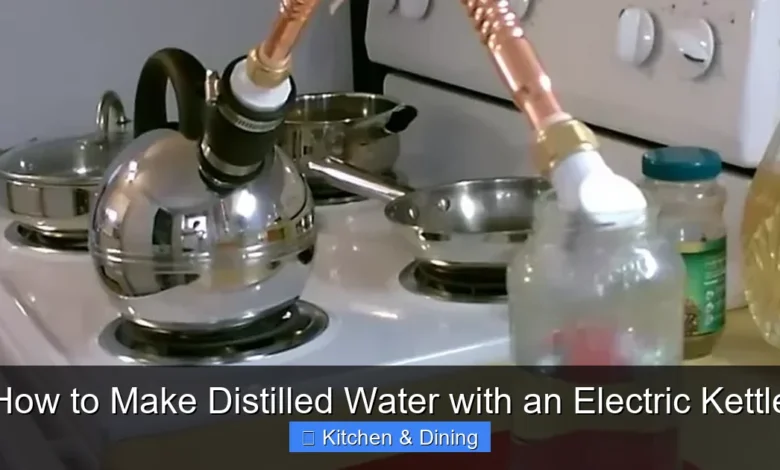
Discover how to create pure distilled water right in your kitchen using an electric kettle. This method involves a simple distillation process, separating pure water from impurities. It’s an accessible way to get distilled water for various household needs, without specialized equipment.
Making distilled water at home might sound like a complicated scientific experiment, but it’s actually quite achievable with a common kitchen appliance: your electric kettle! If you’ve ever wondered how to get your hands on pure, demineralized water without a trip to the store or a costly specialized machine, this guide is for you. We’ll walk you through a simple yet effective method to create distilled water using an electric kettle, perfect for a variety of uses around your home.
Why would you need distilled water? It’s incredibly useful. For instance, it’s the best water for your CPAP machine, preventing mineral buildup that can damage the device and affect its performance. Many people use it for their houseplants, as tap water can contain chemicals harmful to sensitive plants. It’s also essential for certain appliances like steam irons and humidifiers, as it prevents the dreaded scale and mineral deposits that shorten their lifespan. Even in the kitchen, some recipes call for distilled water for clarity and purity. So, let’s dive into how you can easily make this pure form of water at home.
Key Takeaways
- Simple Setup: You can distill water using just an electric kettle, a lid, a bowl, and ice.
- Pure Water: This process effectively removes minerals, impurities, and contaminants, leaving you with pure H2O.
- Versatile Uses: Distilled water is ideal for appliances, CPAP machines, plants, and even certain culinary applications.
- Safety First: Always handle hot water and steam with extreme caution to prevent burns.
- Cost-Effective: Making your own distilled water is generally cheaper than buying it regularly.
- Accessibility: This method doesn’t require expensive or complex distillation apparatus.
Understanding the Distillation Process
Distillation is a process of separating components or substances from a liquid mixture by selective boiling and condensation. In simpler terms, you’re boiling water, capturing the steam, and then cooling that steam back into liquid water. When water boils, impurities like minerals, salts, and other dissolved solids are left behind in the boiling pot. The steam that rises is essentially pure water vapor. When this vapor cools, it condenses into pure liquid water, free from those contaminants. It’s a natural purification method used for centuries.
Gathering Your Supplies
Before you begin, ensure you have everything you need. This method is designed to be straightforward and uses items you likely already have in your kitchen.
Essential Equipment
- Electric Kettle: Your primary tool. Ensure it’s clean and in good working order. For those interested in specific types, you might find our guide on the best electric tea kettle for pour over coffee helpful, though any standard electric kettle will suffice for this purpose.
- Lid for the Kettle: A lid is crucial for trapping the steam. If your kettle lid has a hole, you might need to improvise to seal it.
- Heat-Resistant Bowl or Container: This will collect the distilled water. It needs to be large enough to fit inside the kettle’s spout area (or positioned to catch steam) and be able to withstand heat. A glass or ceramic bowl is ideal.
- Ice Cubes: These are essential for the condensation process.
- Oven Mitts or Pot Holders: For safely handling hot items.
- Another Bowl or Tray: To place beneath the collection bowl to catch any drips or overflow.
- Water Source: Tap water is fine for starting.
Step-by-Step Guide to Making Distilled Water
This process requires careful attention, especially when dealing with hot water and steam. Safety should always be your top priority.
Step 1: Prepare the Kettle and Water
The first step is to get your kettle ready.
H2: Fill the Kettle
Pour regular tap water into your electric kettle. Don’t overfill it; leave enough space so that when it boils, the water doesn’t splash into the collection area. About half to two-thirds full is usually a good amount.
H2: Add Water to the Collection Bowl
Take your heat-resistant bowl and fill it with cool water. This bowl will sit inside the kettle’s spout area to catch the condensed steam. It’s important that this bowl has cool water initially to help start the condensation process efficiently.
Step 2: Position the Collection Bowl
This is where the magic happens. You need to set up the collection bowl to catch the steam.
H2: Invert the Kettle Lid (Optional but Recommended)
This is a clever trick to direct the steam towards your collection bowl. Invert the lid of your electric kettle so that the handle points downwards. This way, when steam condenses on the lid, the water droplets will run down the underside of the lid towards the handle and drip off.
H2: Position for Steam Capture
Carefully place the inverted lid onto the kettle. You want the lid to sit in such a way that the condensed water dripping from its underside will fall into the heat-resistant bowl you’ve placed strategically. Some kettles have spouts that are easier to work with than others. You might need to experiment slightly with the positioning of the bowl and lid to ensure maximum steam capture and minimal loss.
Tip: If your kettle lid has a large opening or vent, you might need to cover it with a heat-resistant material like aluminum foil, leaving just a small opening for steam to escape towards your collection bowl. Be careful not to create a completely sealed system, as pressure could build up.
Step 3: Begin the Boiling and Condensation Process
Now it’s time to start the distillation.
H2: Activate the Kettle
Plug in your electric kettle and turn it on. Let the water come to a boil. As the water heats up, steam will begin to rise.
H2: Add Ice to the Lid
Once the water is boiling and steam is actively being produced, you’ll place ice cubes on top of the inverted kettle lid. The cold ice will chill the underside of the lid, causing the hot steam that comes into contact with it to condense rapidly into liquid water. The steam rises, hits the cold lid, turns back into water, and drips into your collection bowl.
Important Safety Note: Steam is extremely hot and can cause severe burns. Be very careful when placing the ice and collecting the water. Do not touch the steam or the hot lid directly.
H2: Maintain the Ice Supply
As the ice melts, you’ll need to periodically replenish it to keep the condensation process going efficiently. Continue adding ice cubes to the top of the lid as needed. You might also want to empty the melted ice water from the inverted lid occasionally to ensure it remains cold.
Step 4: Collect the Distilled Water
The waiting game begins!
H2: Monitor the Collection Bowl
Watch as pure water droplets begin to form inside your collection bowl. This process takes time. The amount of distilled water you collect will depend on the size of your kettle, how long you let it run, and the efficiency of your setup.
H2: Replenish Bowl Water (If Needed)
The water in the collection bowl will also heat up over time. If it gets too warm, condensation will slow down. You may need to carefully remove the hot bowl (using oven mitts!) and replace the warm water with fresh cold water. This step is crucial for maintaining an effective temperature gradient for condensation.
Step 5: Turn Off and Cool Down
Once you’ve collected a sufficient amount of distilled water, or your kettle has boiled dry, it’s time to stop the process.
H2: Turn Off the Kettle
Switch off your electric kettle and unplug it. Allow the kettle to cool down for at least 15-20 minutes before attempting to move or handle it. This is essential to avoid steam burns or accidental contact with hot surfaces.
H2: Carefully Remove Components
Once cooled, carefully remove the collection bowl filled with distilled water. Use oven mitts. You may also need to carefully remove the lid. Be mindful of any remaining hot water or steam inside the kettle.
Step 6: Strain and Store Your Distilled Water
Your pure distilled water is almost ready for use!
H2: Strain the Water
Pour the collected water from the bowl through a fine-mesh sieve or cheesecloth into a clean storage container. This step helps catch any tiny particles that might have accidentally fallen in, though ideally, the process should yield very pure water.
H2: Store Properly
Transfer your distilled water into clean, airtight containers. Glass or food-grade plastic containers are best. Store the distilled water in a cool, dark place. Properly stored distilled water can last for a long time.
Tips for Success and Better Yield
* Efficiency is Key: The better you can seal the kettle lid and direct steam into the collection bowl, the more water you’ll collect.
* Kettle Type Matters: Some electric kettles might be easier to adapt than others. Kettles with wider spouts or those designed to be more open might require more improvisation to direct steam effectively.
* Patience is a Virtue: Distilling water this way is not a rapid process. It requires time and consistent effort to collect a significant amount.
* Experiment with Lid Modifications: If your lid has a large opening, consider using a small, heat-resistant funnel or a piece of food-grade silicone to direct the steam more precisely.
* Cleanliness is Crucial: Ensure all your equipment, especially the collection bowl and storage containers, are thoroughly cleaned before use to prevent contamination.
Practical Uses for Your Homemade Distilled Water
Now that you’ve made your own distilled water, what can you do with it?
- Appliances: Fill your steam iron, humidifier, or even your car’s radiator (if recommended) with distilled water to prevent mineral buildup and extend their life. This is especially important if you have hard water in your area.
- Medical Devices: Use it for your CPAP machine’s humidifier chamber. It’s vital for the longevity of the equipment and your health.
- Gardening: Many sensitive houseplants, like carnivorous plants or orchids, thrive with distilled water as it lacks the minerals and chlorine found in tap water, which can be detrimental to their delicate root systems.
- Batteries: Distilled water is often used to top up lead-acid batteries in cars, RVs, and boats.
- Aquariums: In certain specific aquarium setups, especially those requiring highly controlled water parameters, distilled water can be used as a base, though it typically needs to be remineralized.
- Cleaning: Distilled water can be great for cleaning windows, mirrors, and even electronics screens as it won’t leave behind water spots.
Troubleshooting Common Issues
* No Water Collecting:
* Cause: Kettle not boiling enough, or steam is escaping elsewhere.
* Solution: Ensure the kettle is fully heated. Check that your lid and collection bowl setup is as sealed as possible to direct all steam. You might need more ice on the lid.
* Slow Condensation:
* Cause: Collection bowl is too warm, or not enough ice.
* Solution: Replace the warm water in the collection bowl with fresh cold water. Add more ice to the lid.
* Low Yield:
* Cause: Inefficient steam capture, short boiling time, or small kettle capacity.
* Solution: Refine your lid and bowl setup for better steam direction. Let the kettle run for longer periods. Consider that this method is best for small quantities.
* Contamination in Collected Water:
* Cause: Dirty equipment, or accidental splash-over from the kettle’s boiling water.
* Solution: Ensure all equipment is spotlessly clean. Adjust the collection bowl position to avoid direct splashes. Re-filter the collected water.
Conclusion
Making distilled water with an electric kettle is a testament to resourcefulness. It’s a practical, DIY solution that bypasses the need for specialized equipment and costly purchases. By understanding the simple principles of boiling and condensation, you can transform ordinary tap water into pure, demineralized water. This process, while requiring a bit of patience and careful handling, opens up a world of uses for your home, from maintaining appliances and medical devices to nurturing your plants. So next time you need a supply of distilled water, you know you have a reliable method right at your fingertips, powered by your trusty electric kettle. Enjoy the purity!