

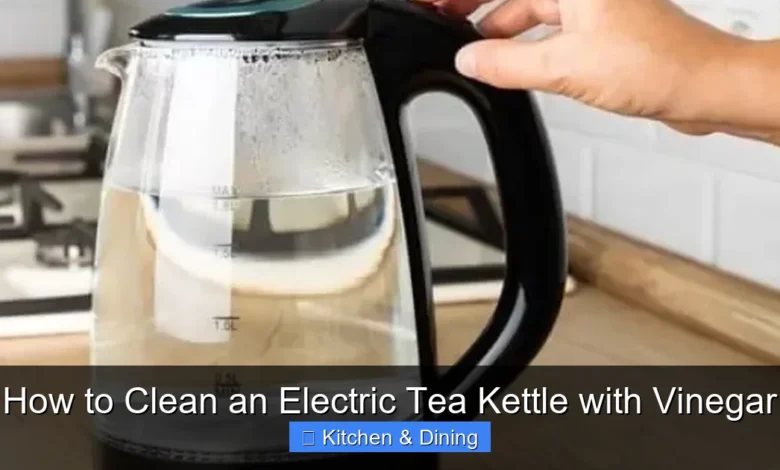
Over time, mineral deposits can build up inside your electric tea kettle, affecting its performance and the taste of your beverages. Fortunately, cleaning an electric tea kettle with vinegar is a simple and effective solution. This guide provides step-by-step instructions to restore your kettle to its pristine condition, ensuring you enjoy pure-tasting tea and coffee every time.
Are you noticing a white, chalky buildup inside your electric tea kettle? Does your morning brew taste a little… off? These are common signs of limescale, also known as mineral deposits, that accumulate over time from the water you use. Hard water, rich in calcium and magnesium, is the culprit. While it’s harmless to drink, this buildup can make your electric tea kettle less efficient, take longer to boil water, and, most importantly, affect the flavor of your beloved tea and coffee.
But don’t worry! You don’t need harsh chemicals to get your electric tea kettle sparkling clean again. A simple, natural, and incredibly effective solution is hiding in your pantry: **vinegar**. This humble kitchen staple is a powerhouse when it comes to breaking down those stubborn mineral deposits.
In this comprehensive guide, we’ll walk you through exactly how to clean your electric tea kettle with vinegar. You’ll learn the easy steps to tackle limescale, ensure your water boils efficiently, and most importantly, enjoy the pure, unadulterated taste of your favorite hot beverages. Get ready to give your electric tea kettle a new lease on life!
## Why Clean Your Electric Tea Kettle with Vinegar?
Before we dive into the “how,” let’s talk about the “why.” Why is vinegar such a fantastic choice for cleaning your electric tea kettle?
* **Natural Descaler:** Vinegar contains acetic acid. This natural acid is brilliant at dissolving the mineral deposits (limescale) that cling to the heating element and the interior walls of your kettle.
* **Safe and Non-Toxic:** Unlike many commercial cleaning products, vinegar is food-safe. Once thoroughly rinsed, there are no harmful residues left behind. This is crucial for an appliance that heats water for consumption.
* **Cost-Effective:** A bottle of white vinegar is very inexpensive. It’s a much more budget-friendly option compared to specialized descaling solutions.
* **Readily Available:** Most households already have white vinegar on hand, making it a convenient cleaning choice.
* **Effective:** It works! You’ll be amazed at how well vinegar can cut through tough limescale buildup.
## Understanding Limescale
Limescale is essentially a hard, chalky deposit made primarily of calcium carbonate and magnesium carbonate. These minerals are naturally present in hard water. When you heat water in your kettle, these minerals are left behind as the water evaporates. Over time, these deposits build up on the heating element and the inner surfaces of the kettle.
This buildup isn’t just unsightly; it’s also a performance killer. A kettle with a thick layer of limescale will take longer to heat water because the mineral layer acts as an insulator, preventing efficient heat transfer from the heating element to the water. This means wasted energy and longer waits for your cuppa. Plus, as mentioned, these deposits can leach into your water, giving your tea or coffee an unpleasant, mineral-y taste.
## How to Clean an Electric Tea Kettle with Vinegar: Step-by-Step
Cleaning your electric tea kettle with vinegar is a straightforward process. Follow these steps carefully for the best results.
### Step 1: Gather Your Supplies
Before you begin, make sure you have everything you need. This will ensure a smooth and efficient cleaning process.
* White Vinegar: Standard white distilled vinegar is perfect for this job. Avoid apple cider vinegar or other flavored vinegars, as they might leave their own scent or residue.
* Water: You’ll need regular tap water.
* Measuring Cup: To get the right ratio of vinegar to water.
* Soft Cloth or Sponge: For wiping down the exterior and, if necessary, gently scrubbing stubborn spots. Avoid abrasive scrubbers that could scratch the interior surfaces.
* Dish Soap: For a final rinse.
* Optional: Old Toothbrush: For reaching tight corners or around the spout.
### Step 2: Unplug and Cool Down
This is a crucial safety step. Never attempt to clean an electric appliance while it’s plugged in or still hot.
* Unplug the Kettle: Make sure the power cord is disconnected from the wall socket.
* Allow to Cool: If you’ve recently used the kettle, let it cool down completely. This prevents burns and ensures the vinegar solution won’t evaporate too quickly upon contact with a hot surface.
### Step 3: Prepare the Vinegar Solution
The key to effective descaling is the right mixture of vinegar and water.
* Determine the Ratio: A good starting point is a 1:1 ratio of white vinegar to water. So, if your kettle has a capacity of 1.7 liters, you might use 850 ml of vinegar and 850 ml of water.
* Fill the Kettle: Pour the calculated amount of white vinegar and water directly into the electric tea kettle. Make sure the solution covers the limescale buildup. If the buildup is only in a specific area, you can adjust the water level accordingly, but it’s generally best to fill it to at least the minimum fill line, or enough to cover the heating element.
* Important Note: Do not fill the kettle beyond its maximum capacity.
### Step 4: Let the Solution Work
Now comes the waiting game. The acetic acid in the vinegar needs time to work its magic on the mineral deposits.
* Let it Sit: Let the vinegar and water mixture sit in the kettle for at least 30 minutes to an hour. For very stubborn limescale, you might need to let it soak for a few hours, or even overnight.
* Observe: You might start to see the white deposits begin to loosen and flake away into the solution.
### Step 5: Boil the Solution (Optional, but Recommended for Tough Buildup)
For tougher limescale, boiling the vinegar solution can speed up the process and make it more effective.
* Place Kettle on Base: Ensure the kettle is properly seated on its power base.
* Plug In and Boil: Plug the kettle in and bring the vinegar and water solution to a boil.
* Turn Off Immediately: As soon as the kettle boils and clicks off (or reaches its boiling point), unplug it again.
* Let it Sit Again: Allow the hot solution to sit in the kettle for another 15-30 minutes. The heat helps to further break down the mineral deposits.
* Ventilation: Be aware that boiling vinegar can produce strong fumes. Ensure your kitchen is well-ventilated by opening a window or turning on the range hood.
### Step 6: Empty and Rinse
After the soaking or boiling period, it’s time to get rid of the loosened limescale and vinegar solution.
* Pour Out the Solution: Carefully pour the vinegar and water mixture down the sink. You might see bits of limescale come out with it.
* Initial Rinse: Rinse the inside of the kettle thoroughly with fresh, clean water. Swish the water around to help dislodge any remaining loose deposits. Pour this rinse water down the sink.
* Repeat Rinsing: Repeat the rinsing process several times (at least 2-3 times) until the water looks clear and you can no longer see any visible debris.
### Step 7: Remove Lingering Odors and Tastes
Even after rinsing, a faint smell or taste of vinegar might linger. This step ensures your water is perfectly neutral.
* Fill with Fresh Water: Fill the kettle with fresh, clean water to the maximum fill line.
* Boil and Discard: Place the kettle on its base, plug it in, and bring the water to a full boil.
* Discard the Water: Once it has boiled, unplug the kettle and carefully discard the hot water.
* Final Rinse: Give the kettle one last rinse with clean water.
* Optional: Repeat Boil: For very sensitive palates or persistent odors, you can repeat the boil-and-discard process with fresh water one or two more times.
### Step 8: Clean the Exterior
While the focus is on the inside, don’t forget the outside of your electric tea kettle!
* Unplugged Kettle: Ensure the kettle is unplugged and cool.
* Damp Cloth: Dampen a soft cloth with water and a tiny drop of dish soap.
* Wipe Down: Gently wipe down the exterior surfaces of the kettle. Pay attention to the handle and lid.
* Rinse Cloth: Rinse the cloth thoroughly and wipe down the exterior again to remove any soap residue.
* Dry: Use a dry, soft cloth to buff the exterior and remove any water spots.
## Practical Tips for the Best Results
* Hard Water Areas: If you live in an area with very hard water, you might need to clean your electric tea kettle more frequently – perhaps every 2-4 weeks.
* Stubborn Spots: If you notice a particularly stubborn spot of limescale that won’t come off after the vinegar soak and boil, you can try gently scrubbing it with an old toothbrush or a non-abrasive sponge while the vinegar solution is inside. Be gentle to avoid scratching the kettle’s interior.
* Beyond Vinegar: While vinegar is excellent, for extremely tough limescale, you might consider a dedicated electric kettle descaler, following its instructions carefully. However, vinegar is usually sufficient for regular maintenance.
* Cordless Kettles: For cordless kettles, you’ll detach the kettle from its base for cleaning. Ensure the electrical contacts on the bottom of the kettle are dry before placing it back on the base.
* Glass Kettles: If you have a glass electric tea kettle, like some of the models found in reviews of best electric tea kettles for pour over coffee, the vinegar method works beautifully. You’ll be able to see the limescale dissolve through the glass!
* Stainless Steel Kettles: Vinegar is safe for stainless steel interiors. Just ensure thorough rinsing afterward.
## Troubleshooting Common Issues
Even with the best intentions, you might encounter a few minor hiccups.
* Lingering Vinegar Smell/Taste: This is the most common issue. The key is thorough rinsing and multiple boil-and-discard cycles with fresh water. Make sure you’re using plain white vinegar, not a flavored variety. For very persistent odors, some people recommend adding a teaspoon of baking soda to the final fresh water boil, then discarding. However, be cautious with baking soda as it can sometimes be abrasive.
* Still Not Boiling Efficiently: If your kettle still seems slow to boil after cleaning, there might be a more serious internal issue, or the limescale was extremely thick and may require a second cleaning session. Check the power connection and ensure the kettle is properly seated on its base.
* Exterior Stains: For tough exterior stains on stainless steel, a paste of baking soda and water can sometimes help, followed by a gentle wipe with vinegar and then rinsing. Always test in an inconspicuous area first.
## Conclusion
Keeping your electric tea kettle clean with vinegar is a simple, effective, and eco-friendly way to ensure you always enjoy the best-tasting hot beverages. Limescale buildup is a natural consequence of using water, but with this easy descaling method, you can combat it efficiently.
By following these steps, you’ll not only restore your kettle’s performance and efficiency but also guarantee that your tea and coffee are free from any unwanted mineral flavors. So, grab that bottle of white vinegar, and get ready to enjoy a perfectly brewed cup, every single time! Regular cleaning means a longer lifespan for your kettle and better taste for your drinks. Happy brewing!
Key Takeaways
- Vinegar is a natural, safe, and effective descaler: Its acetic acid breaks down the calcium and magnesium deposits that cause limescale.
- Regular cleaning prevents buildup: Aim to clean your electric tea kettle with vinegar at least once a month, or more often if you have hard water.
- Safety first: Always unplug your electric tea kettle before cleaning and ensure it’s cool to the touch.
- Proper rinsing is crucial: Thoroughly rinse the kettle after descaling to remove any lingering vinegar smell or taste.
- Don’t forget the exterior: While this guide focuses on the interior, a quick wipe-down of the exterior keeps your kettle looking its best.
- Troubleshooting common issues: Learn how to tackle stubborn stains or lingering odors if they arise.