
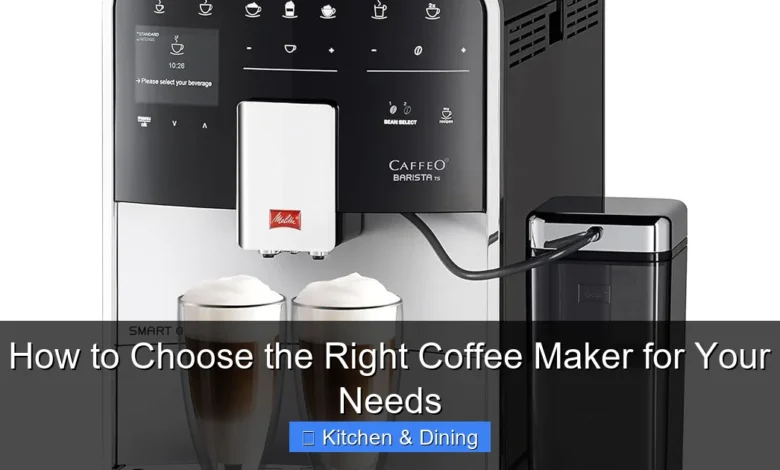
Choosing the right coffee maker can transform your morning routine. This guide breaks down the process, helping you understand different types of coffee makers and what to consider. Discover your ideal brewing companion and enjoy delicious coffee tailored to your taste and lifestyle.
Waking up to a perfectly brewed cup of coffee is a delightful way to start the day. But with so many coffee makers on the market, how do you pick the one that’s just right for you? This comprehensive guide will walk you through everything you need to know to choose the best coffee maker for your needs, budget, and taste. We’ll cover different types of coffee makers, essential features to consider, and how to match a machine to your lifestyle.
Key Takeaways
- Understand Your Coffee Habits: Consider how much coffee you drink, how many people you’re brewing for, and how much time you have each morning.
- Explore Different Brewing Methods: From simple drip machines to sophisticated espresso makers, each method offers a unique taste and experience.
- Factor in Features and Convenience: Think about programmable timers, built-in grinders, milk frothers, and ease of cleaning.
- Budget and Space Constraints: Determine how much you’re willing to spend and measure your kitchen counter space to ensure a good fit.
- Prioritize Quality and Durability: Look for well-made machines from reputable brands that will last and consistently produce great coffee.
Step 1: Assess Your Coffee Consumption and Needs
Before diving into specific machine types, take a moment to think about your daily coffee habits. This is the most crucial step in finding the right coffee maker.
How Much Coffee Do You Drink?
- Single Drinker: If you’re usually the only one enjoying coffee, a single-serve brewer or a small drip coffee maker might be perfect.
- Couple or Small Household: A standard 4-cup or 8-cup drip coffee maker is often sufficient.
- Large Family or Frequent Entertaining: Consider a 10-12 cup drip coffee maker or a machine with a larger carafe.
How Many People Are You Brewing For?
This is similar to consumption but focuses on the number of cups needed simultaneously. If you often have guests over for breakfast, a larger capacity machine is a must.
What’s Your Time Commitment?
Are you a “hit the button and run” kind of person, or do you enjoy the ritual of making coffee?
- Quick and Easy: Pod-based systems or automatic drip machines with programmable timers are ideal.
- Enjoy the Process: Pour-over, French press, or even manual espresso machines might appeal to you.
What Kind of Coffee Do You Prefer?
Do you like a simple black coffee, a creamy latte, or a strong espresso shot? Your preferred drink will heavily influence the type of coffee maker you need.
Step 2: Explore Different Types of Coffee Makers
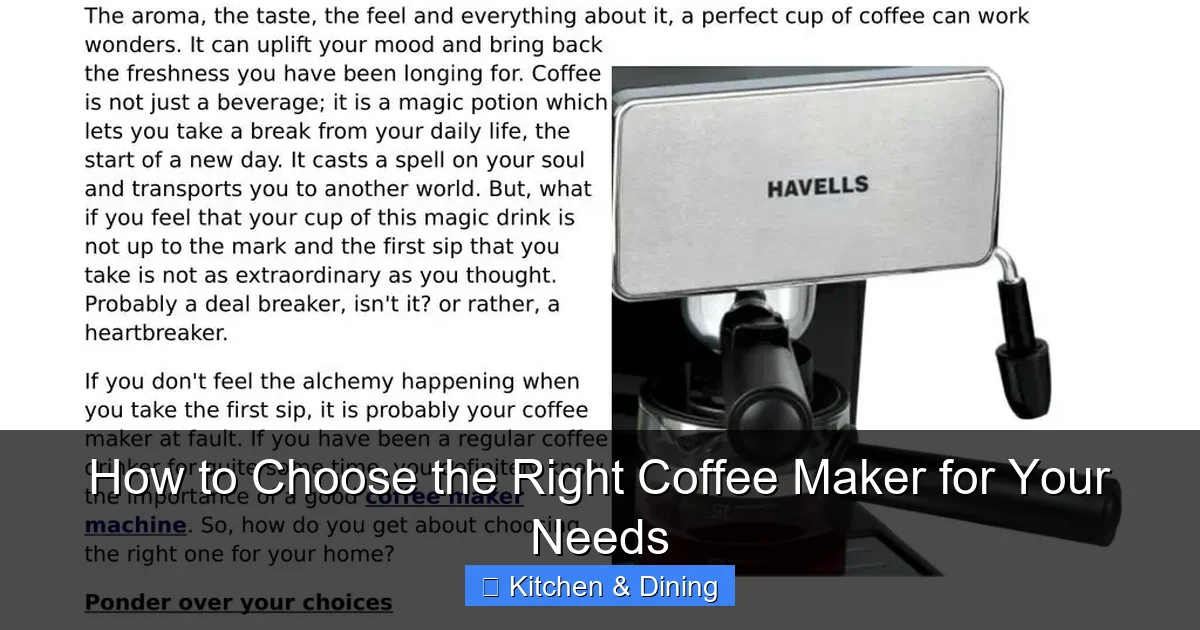
Visual guide about How to Choose the Right Coffee Maker for Your Needs
Image source: image4.slideserve.com
Once you understand your personal needs, it’s time to explore the vast world of coffee makers. Each type offers a unique brewing experience and taste profile.
Automatic Drip Coffee Makers
This is the most common type of coffee maker in many households. You add ground coffee and water, and the machine heats the water and drips it over the grounds into a carafe.
- Pros: Easy to use, can brew large batches, wide range of prices and features, programmable options.
- Cons: Can sometimes produce a less nuanced flavor compared to other methods, cleaning can be a bit tedious for some models.
- Best For: Households that need to brew multiple cups at once, those who want a simple, set-and-forget brewing experience.
Many of these machines come with advanced features like adjustable brew strength, warming plates, and even built-in water filters. For those who appreciate the convenience of drip but want better control over their brew, consider looking into models that allow for temperature control and bloom phases. If you’re interested in maximizing the flavor from your drip machine, a high-quality burr coffee grinder is essential; check out our guide on the best coffee grinders for drip coffee.
Single-Serve Coffee Makers (Pod Machines)
These machines use pre-portioned pods or capsules. Popular brands include Keurig and Nespresso.
- Pros: Extremely convenient, fast brewing, minimal cleanup, wide variety of flavors and brands.
- Cons: Pods can be expensive and generate more waste, flavor may not be as fresh or customizable as whole bean.
- Best For: Individuals or households with diverse coffee preferences, those prioritizing speed and convenience above all else.
While convenient, the environmental impact of single-use pods is a concern for many. Some brands offer reusable pods, allowing you to use your own ground coffee for a more sustainable option.
French Press
This is a manual brewing method that involves steeping coffee grounds in hot water and then pressing down a plunger to separate the grounds from the liquid.
- Pros: Produces a rich, full-bodied coffee, relatively inexpensive, portable, no electricity required.
- Cons: Requires more hands-on effort, can have some sediment in the cup if not filtered well, cleaning can be messy.
- Best For: Coffee enthusiasts who appreciate a bold flavor and don’t mind a more involved brewing process.
The key to a great French press coffee is using a coarse grind. If you’re new to this method, investing in one of the best coffee grinders for French press will make a significant difference.
Pour-Over Coffee Makers
This manual method involves pouring hot water slowly and deliberately over coffee grounds in a filter. It gives you a lot of control over the brewing process.
- Pros: Excellent control over brewing variables (temperature, pour rate), results in a clean, nuanced cup of coffee, aesthetically pleasing.
- Cons: Requires practice and attention, needs specific equipment like a gooseneck kettle and scale, takes longer than automatic methods.
- Best For: Coffee aficionados who enjoy the craft of brewing and want to highlight the subtle flavors of their beans.
A good gooseneck kettle is a game-changer for pour-over. If you’re looking for one, explore the best electric tea kettle for pour-over coffee or the best tea kettle for pour-over coffee for options.
Espresso Machines
These machines force hot water under high pressure through finely ground coffee to produce a concentrated shot of espresso.
- Pros: Ability to make espresso-based drinks like lattes and cappuccinos, produces rich and intense coffee.
- Cons: Can be expensive, often requires a learning curve, needs fine-tuning of grind size and tamping, maintenance is crucial.
- Best For: Those who love espresso and milk-based drinks and are willing to invest time and money.
There are several types of espresso machines, from semi-automatic to super-automatic. A combo machine that also brews regular coffee can be a great way to get the best of both worlds, so check out the best coffee maker and espresso machine combo if this interests you.
Moka Pot
This stovetop brewer uses steam pressure to brew a strong, espresso-like coffee.
- Pros: Inexpensive, compact, produces a strong and rich coffee, durable.
- Cons: Requires stovetop heat, can be tricky to get the perfect brew, requires careful cleaning.
- Best For: Those who want a strong coffee without the expense of an espresso machine.
Cold Brew Makers
These devices are designed to steep coffee grounds in cold water for an extended period (12-24 hours) to create a smooth, low-acid concentrate.
- Pros: Produces a smooth, less acidic coffee concentrate that’s great for iced coffee and cocktails, very easy to use.
- Cons: Takes a long time to brew, requires planning ahead.
- Best For: Iced coffee lovers and those sensitive to coffee acidity.
Step 3: Consider Essential Features
Once you’ve narrowed down the type of coffee maker, think about the features that will enhance your experience.
Programmable Timer
This is a lifesaver for busy mornings. Set it the night before, and your coffee will be ready when you wake up.
Built-in Grinder
Freshly ground coffee makes a huge difference in taste. A machine with a built-in grinder is convenient, but ensure it’s a burr grinder for the best results. Blade grinders can create inconsistent grinds. If you’re considering a separate grinder, our guides on the best coffee grinders for home and specific types like best coffee grinders for pour-over can help.
Carafe Type
- Glass Carafe: Most common, often comes with a warming plate. Can sometimes impart a metallic taste, and the warming plate can burn the coffee if left on too long.
- Thermal Carafe: Insulated to keep coffee hot for hours without a warming plate, preserving the flavor.
Brew Strength Control
Some machines allow you to adjust how strong you want your coffee, giving you more control over the flavor profile.
Water Filtration
A built-in water filter can improve the taste of your coffee by removing impurities from the water.
Milk Frother/Steamer
If you love lattes and cappuccinos, look for a machine with an integrated milk frother or steamer.
Ease of Cleaning
Consider how easy the machine is to clean. Removable parts, dishwasher-safe components, and descaling indicators can make maintenance much simpler. Some parts of your kitchen may require regular cleaning; for instance, learning the best way to clean the inside of a microwave oven is a useful skill.
Step 4: Factor in Budget and Space
Your budget and kitchen space are practical considerations that will influence your final choice.
Budget
Coffee makers range from under $30 for a basic French press to thousands for high-end espresso machines.
- Entry-level (Under $50): Basic drip coffee makers, French presses, Moka pots.
- Mid-range ($50 – $200): Higher-quality drip machines with more features, entry-level espresso machines, good quality pour-over setups.
- High-end ($200+): Advanced espresso machines, super-automatic machines, premium drip brewers.
Kitchen Space
Measure the counter space where you plan to put your coffee maker. Consider its height, width, and depth, as well as clearance needed for opening lids or accessing water reservoirs. If counter space is limited, a compact single-serve machine or a stovetop brewer might be a better fit. You might also be interested in finding the best coffee table for small living room if space is a general concern in your home.
Step 5: Prioritize Quality and Durability
A coffee maker is an investment. Look for brands known for their reliability and the quality of coffee they produce. Read reviews from other users to get an idea of long-term performance and any common issues.
Brand Reputation
Established brands often have better customer support and offer more reliable products.
Materials and Construction
Stainless steel and high-quality plastics generally indicate a more durable machine.
Warranty
A good warranty provides peace of mind and protection against potential defects.
Troubleshooting Common Coffee Maker Issues
Even the best coffee makers can run into minor issues. Here are a few common problems and how to solve them:
Coffee tastes bitter or burnt
- Cause: Water temperature too high, coffee grounds too fine, over-extraction, dirty machine.
- Solution: Ensure correct grind size, clean your machine regularly, adjust brew time if possible.
Coffee tastes weak or watery
- Cause: Not enough coffee grounds, grind size too coarse, under-extraction, water-to-coffee ratio is off.
- Solution: Use more grounds, check grind size, ensure proper brewing time.
Coffee maker won’t turn on
- Cause: Power cord not plugged in, tripped circuit breaker, faulty machine.
- Solution: Check power connection and circuit breaker. If it persists, contact the manufacturer.
Slow brewing
- Cause: Mineral buildup (scale) from hard water, clogged filter basket.
- Solution: Descale your coffee maker regularly with a descaling solution or vinegar. Ensure the filter basket is clean.
Conclusion
Choosing the right coffee maker is a personal journey that balances your preferences, lifestyle, and budget. By carefully considering your coffee consumption, exploring the various brewing methods, and prioritizing essential features, you can find a machine that will consistently deliver your perfect cup. Whether you’re a busy professional needing a quick brew or a coffee connoisseur who savors the brewing ritual, there’s a coffee maker out there waiting to become your morning essential. Happy brewing!