
Choosing the right gas power washer engine is crucial for effective cleaning. This guide breaks down the different engine types, from reliable residential models to powerful commercial options. Understand key differences in power, durability, and maintenance to make an informed purchase. Find the perfect engine for your home improvement projects.
Key Takeaways
- Different engine types power gas pressure washers, each with unique strengths. Understanding these distinctions is key to selecting the right tool for the job.
- Overhead Valve (OHV) engines are the most common and offer a balance of power, efficiency, and durability. They are a great all-around choice for most homeowners.
- Direct Drive engines are simpler and less expensive, but often less powerful and durable than belt-drive systems. They are suitable for lighter, less frequent tasks.
- Belt Drive engines offer superior durability and power transfer, making them ideal for heavy-duty use and professional applications.
- Engine displacement (measured in cubic centimeters or cc) is a primary indicator of an engine’s power and torque. Higher cc generally means more cleaning force.
- Maintenance requirements vary by engine type; OHV engines typically require regular oil changes and air filter cleaning, while belt-drive systems may need periodic belt tension checks.
- Consider your cleaning needs carefully: a small garden shed might only need a lower-powered engine, while a large concrete driveway demands more robust power.
Gas Power Washer Engine Types Explained
A gas power washer is a powerful tool that can transform your home’s exterior. From blasting away grime on your driveway to cleaning siding and decks, the right pressure washer can make a world of difference. But when you start shopping, you’ll quickly realize that not all gas engines are created equal. Understanding the different types of gas power washer engines is essential to picking the one that best suits your needs and budget. This comprehensive guide will walk you through the common engine types, their characteristics, and how to choose the perfect one for your next outdoor cleaning project.
Why Engine Type Matters
The engine is the heart of any gas-powered machine, and a pressure washer is no exception. The engine’s design and specifications directly impact its performance, longevity, and even how easy it is to maintain. A well-chosen engine means more efficient cleaning, less frustration, and a tool that will serve you reliably for years. Conversely, a mismatched engine can lead to underperformance, premature wear, and costly repairs. Let’s dive into what makes these engines tick.
Understanding Engine Classifications
Gas pressure washer engines are generally categorized by their valve placement and how they transfer power to the pump. The two most common classifications you’ll encounter are Overhead Valve (OHV) engines and their less common counterparts, along with how they connect to the pump: Direct Drive and Belt Drive.
Overhead Valve (OHV) Engines
Overhead Valve, or OHV, engines are the dominant force in the gas pressure washer market, and for good reason. You’ll find them in the vast majority of residential and professional-grade pressure washers.
How OHV Engines Work
In an OHV engine, the intake and exhaust valves are located directly above the combustion chamber in the cylinder head. This design offers several significant advantages over older engine designs where valves were in the engine block.
Pros of OHV Engines
- Improved Efficiency: The OHV design allows for better control of the air-fuel mixture and exhaust gases. This leads to more complete combustion, resulting in higher power output for a given engine size and better fuel economy.
- Quieter Operation: Compared to older engine designs, OHV engines tend to run smoother and quieter, making them more pleasant to use for extended periods.
- Lower Emissions: The efficient combustion process also means OHV engines produce fewer harmful emissions, which is better for the environment.
- Increased Durability and Lifespan: The robust design and better cooling capabilities of OHV engines generally translate to a longer lifespan and greater reliability, especially under demanding use.
- Better Cooling: The overhead valve placement allows for more efficient cooling of the engine, reducing the risk of overheating during prolonged operation.
Cons of OHV Engines
- Slightly Higher Cost: While increasingly common, OHV engines can sometimes be slightly more expensive to manufacture than simpler engine designs, which might be reflected in the pressure washer’s price.
- More Complex: The overhead valve train adds a layer of complexity, though modern manufacturing makes this a minimal concern for the end-user in terms of maintenance.
Direct Drive vs. Belt Drive Systems
Beyond the engine type itself, how the engine’s power is transferred to the pressure washer pump is another critical factor. This is where you’ll differentiate between direct drive and belt drive systems.
Direct Drive Engines
Direct drive systems are the most common configuration on many residential-grade pressure washers. In this setup, the engine’s crankshaft is directly coupled to the pump shaft.
How Direct Drive Works
The engine’s rotating shaft is directly attached to the pump’s rotating shaft, meaning they spin at the same speed.
Pros of Direct Drive
- Simplicity: The direct connection means fewer moving parts, making the system simpler and often more affordable.
- Lower Initial Cost: Pressure washers with direct drive systems are typically less expensive than their belt-drive counterparts.
- Lighter Weight: With fewer components, direct drive units are generally lighter, making them easier to maneuver.
Cons of Direct Drive
- Less Durable: Because the engine and pump spin at the same high RPM (Revolutions Per Minute), there’s more stress on both components. This can lead to faster wear and tear, especially during extended use.
- Less Power Transfer Efficiency: The direct, high-speed connection can sometimes lead to less efficient power transfer compared to a belt-driven system.
- Engine Overheating Risk: Running the engine and pump at the same high RPM for long periods can increase the risk of the engine overheating.
- Limited RPM Flexibility: The engine’s RPM is directly tied to the pump’s RPM.
Example: A typical direct drive system might see the engine spinning at 3400 RPM, and the pump will also be spinning at 3400 RPM. This high speed is what generates the water pressure, but it also puts significant strain on the components.
Belt Drive Engines
Belt drive systems are more commonly found on higher-end residential and professional-grade pressure washers. This setup uses a belt and pulleys to connect the engine to the pump.
How Belt Drive Works
A belt runs around a pulley attached to the engine’s crankshaft and another pulley attached to the pump shaft. This belt system allows the engine and pump to spin at different, optimized speeds.
Pros of Belt Drive
- Superior Durability: The belt acts as a shock absorber, reducing the stress on both the engine and the pump. This significantly increases the lifespan of both components, making belt-drive units ideal for heavy-duty and frequent use.
- Better Power Transfer: Belt drives allow for more efficient transfer of power from the engine to the pump. The pulleys can be sized to optimize the pump’s speed for maximum pressure and flow.
- Engine Runs Cooler: In a belt-drive system, the engine can often be run at a slightly lower, more efficient RPM while still driving the pump at its optimal operating speed. This reduces engine strain and heat buildup, leading to longer engine life.
- Pump Protection: If the pump encounters an obstruction or severe load, the belt can slip, protecting the engine from damage.
- Versatility: Different pulley sizes can be used to adjust the pump’s speed, offering more flexibility in tuning the machine’s performance.
Cons of Belt Drive
- Higher Initial Cost: The added components (pulleys, belt) and the more robust construction generally make belt-drive pressure washers more expensive.
- More Maintenance: The belt will eventually need replacement, and its tension may need to be adjusted periodically.
- Heavier Weight: The extra components can make belt-drive units slightly heavier than comparable direct-drive models.
Example: In a belt-drive system, the engine might be running at 2500 RPM, while the pump is driven at its optimal 1400 RPM through the pulley system. This slower, more controlled pump speed is key to its longevity and efficient performance.
Understanding Engine Specifications
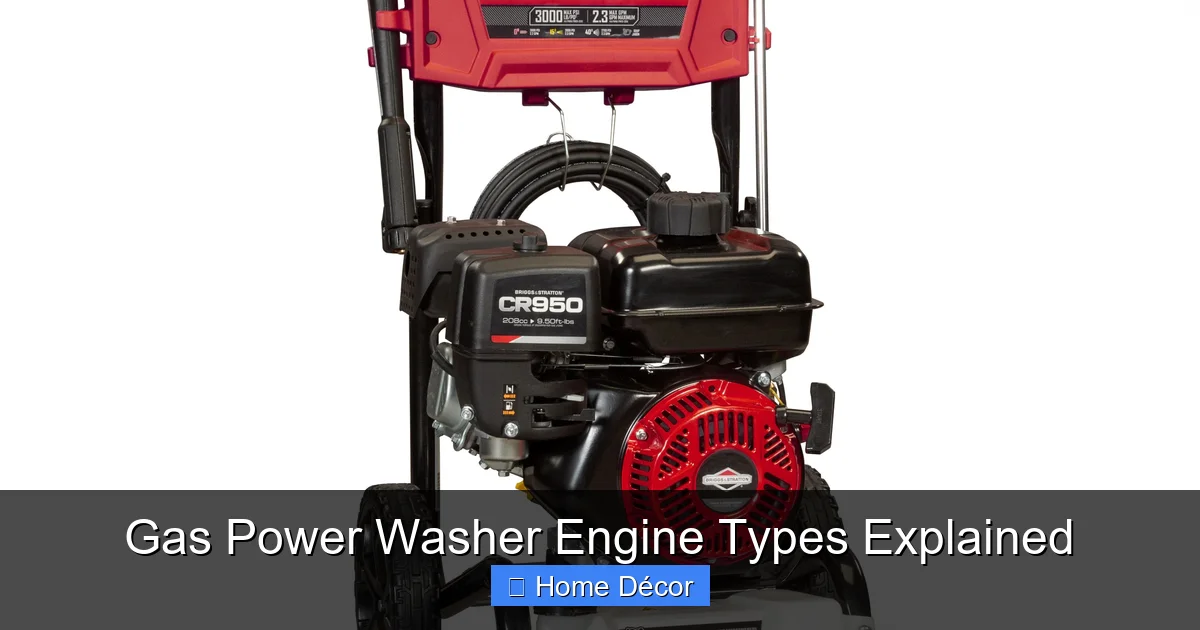
Visual guide about Gas Power Washer Engine Types Explained
Image source: mobileimages.lowes.com
Once you understand the basic engine types, it’s time to look at the numbers. Several specifications will help you gauge an engine’s power and suitability for your needs.
Engine Displacement (CC)
Engine displacement is measured in cubic centimeters (cc) and is a key indicator of an engine’s size and power potential. It refers to the total volume swept by all the pistons in the engine’s cylinders.
* Higher CC = More Power: Generally, a higher displacement means the engine can burn more fuel and air mixture per cycle, resulting in more power and torque.
* What to Look For:
* **140cc – 175cc:** Typically found on smaller, lighter-duty pressure washers. Suitable for occasional use on small patios, cars, or furniture.
* **175cc – 212cc:** A common range for mid-range residential pressure washers. Good for driveways, decks, and general home cleaning.
* **212cc and Above:** Found on heavy-duty residential and commercial-grade pressure washers. Offers maximum cleaning power for tough jobs.
**Practical Tip:** Don’t just look at CC. Consider the other specifications like GPM (Gallons Per Minute) and PSI (Pounds per Square Inch) as they work in tandem with engine power to determine the washer’s cleaning ability. A higher CC engine will generally support higher PSI and GPM ratings.
Horsepower (HP)
Horsepower is another measure of an engine’s power. While CC is a measure of engine size, HP is a measure of its output. Generally, higher HP correlates with higher CC and more overall power. For pressure washers, you’ll often see engines rated in the 5 HP to 15 HP range, with higher numbers indicating more robust cleaning capability.
Torque
Torque is the rotational force an engine produces. In a pressure washer, good torque helps the pump maintain consistent pressure, especially when dealing with stubborn dirt or when the water flow is restricted. Higher CC engines usually provide better torque.
Maintenance Considerations by Engine Type
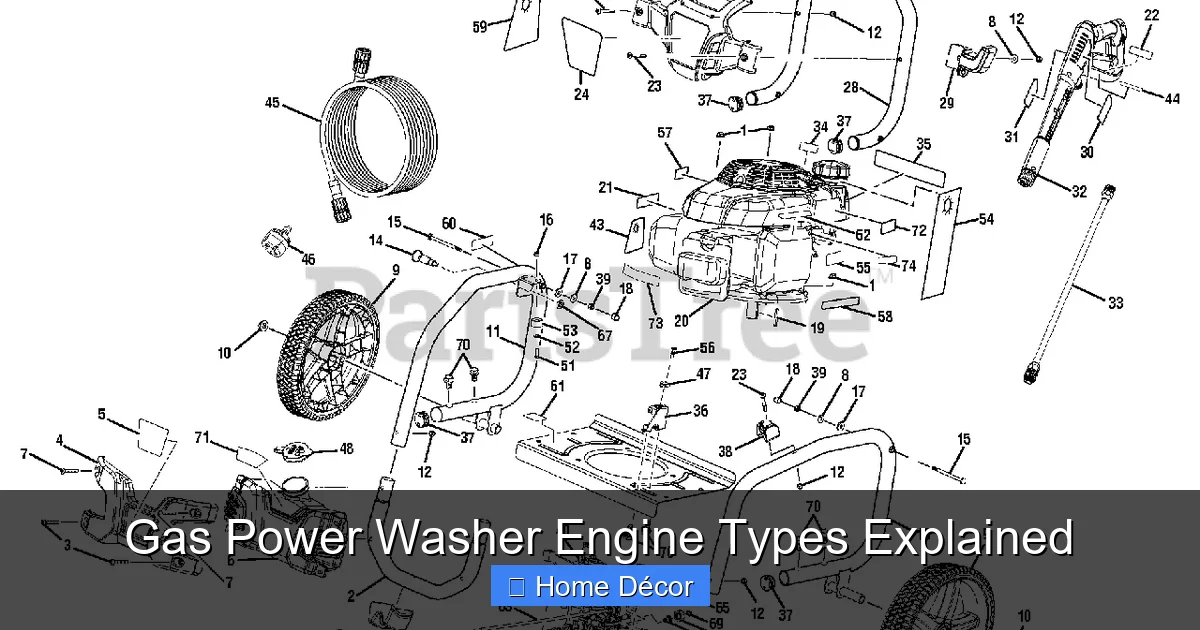
Visual guide about Gas Power Washer Engine Types Explained
Image source: partstree.com
Understanding the maintenance needs of your engine type is crucial for its longevity.
OHV Engine Maintenance
* **Oil Changes:** Like any gasoline engine, OHV engines require regular oil changes. Consult your owner’s manual for the recommended oil type and change interval (typically every 50-100 hours of use).
* **Air Filter:** A clean air filter is vital for optimal engine performance. Check and clean or replace it regularly, especially in dusty conditions.
* **Spark Plug:** Inspect the spark plug periodically for wear or fouling. Replace it if necessary.
* **Fuel System:** Use fresh fuel and consider a fuel stabilizer, especially if the pressure washer will be stored for extended periods.
Direct Drive vs. Belt Drive Maintenance
* **Direct Drive:** Primarily involves maintaining the engine as described above. There are no additional drive components to worry about.
* **Belt Drive:**
* **Belt Inspection:** Regularly check the drive belt for signs of wear, cracking, or fraying.
* **Belt Tension:** Ensure the belt is properly tensioned. An overly loose belt can slip, reducing power and causing premature wear. An overly tight belt can strain the engine and pump bearings. Refer to your manual for the correct tension adjustment procedure.
* **Belt Replacement:** Belts will eventually wear out and need replacement. This is a normal maintenance item for belt-drive systems.
Choosing the Right Engine for Your Needs
The best engine type for you depends entirely on how you plan to use your pressure washer.
For the Average Homeowner
If you’re a homeowner looking to tackle occasional cleaning tasks like washing your car, cleaning patio furniture, or lightly cleaning a small deck or fence, a direct drive OHV engine is likely sufficient. Look for units in the 1700-2500 PSI range and 1.5-2.0 GPM. An engine displacement of 140cc to 190cc will be perfectly adequate.
* **Example Scenario:** Washing muddy garden tools, cleaning outdoor cushions, or rinsing off a moderately dirty car.
For the Enthusiast Homeowner with Larger Projects
If you have a larger home with extensive concrete driveways, a multi-story house with siding that needs regular cleaning, or you plan to tackle more demanding tasks like stripping old paint from a deck, you’ll benefit from more power and durability. A belt-drive OHV engine is a superior choice. Aim for 2800-3500 PSI and 2.5-4.0 GPM. An engine displacement of 190cc to 212cc or higher will provide the necessary grunt.
* **Example Scenario:** Deep cleaning a heavily stained driveway, washing a large wooden deck, or cleaning the entire exterior of your house.
For Professional or Frequent Use
If you’re a professional cleaner, a landscaper, or someone who uses a pressure washer very frequently for demanding tasks, a high-end belt-drive OHV engine is a must. These units are built for continuous, heavy-duty operation and longevity. Look for the highest PSI and GPM ratings you can find, often paired with engines of 212cc and up.
* **Example Scenario:** Commercial building exterior cleaning, large-scale concrete cleaning, or demanding industrial applications.
Troubleshooting Common Engine Issues
Even the best engines can encounter problems. Here are a few common issues and what to do.
Engine Won’t Start
* Check Fuel: Is there enough fresh fuel in the tank? Is the fuel valve open?
* Check Spark Plug: Is it fouled or loose? Remove, clean, and re-gap or replace it.
* Check Air Filter: A clogged air filter can prevent starting. Clean or replace it.
* Check Choke: Ensure the choke is set correctly for starting (usually ‘Choke’ for cold starts, ‘Run’ for warm starts).
* **Primer Bulb (if applicable): If your model has a primer bulb, press it 3-5 times to prime the carburetor.
Engine Runs Rough or Stalls
* Clogged Fuel Filter: If present, it might need cleaning or replacement.
* Dirty Carburetor: This is a common issue, especially with old fuel. You might need to clean the carburetor or seek professional service.
* Blocked Fuel Line: Ensure the fuel line isn’t kinked or obstructed.
* Air Filter Issues: A dirty filter can cause rough running.
Engine Overheating
* Check for Blockages: Ensure the air intake vents are clear of debris.
* **Cooling Fins: Clean the engine’s cooling fins.
* Oil Level: Ensure the oil level is correct. Low oil can cause overheating.
* Prolonged Use: If you’re running the engine for very long periods without breaks, allow it to cool down.
If you’re uncomfortable troubleshooting engine issues, it’s always best to consult your owner’s manual or a qualified service technician.
Conclusion
Choosing the right gas power washer engine is a critical step in ensuring you have the right tool for your cleaning needs. While Overhead Valve (OHV) engines offer a superior combination of efficiency, durability, and performance, the choice between direct drive and belt drive systems hinges on your intended usage. For light, occasional tasks, a direct drive might suffice. However, for any serious cleaning, frequent use, or demanding jobs, a belt drive system is a worthwhile investment that will pay dividends in longevity and performance. By understanding these engine types, their specifications, and maintenance requirements, you can confidently select a gas power washer that will power through your toughest cleaning challenges for years to come.