
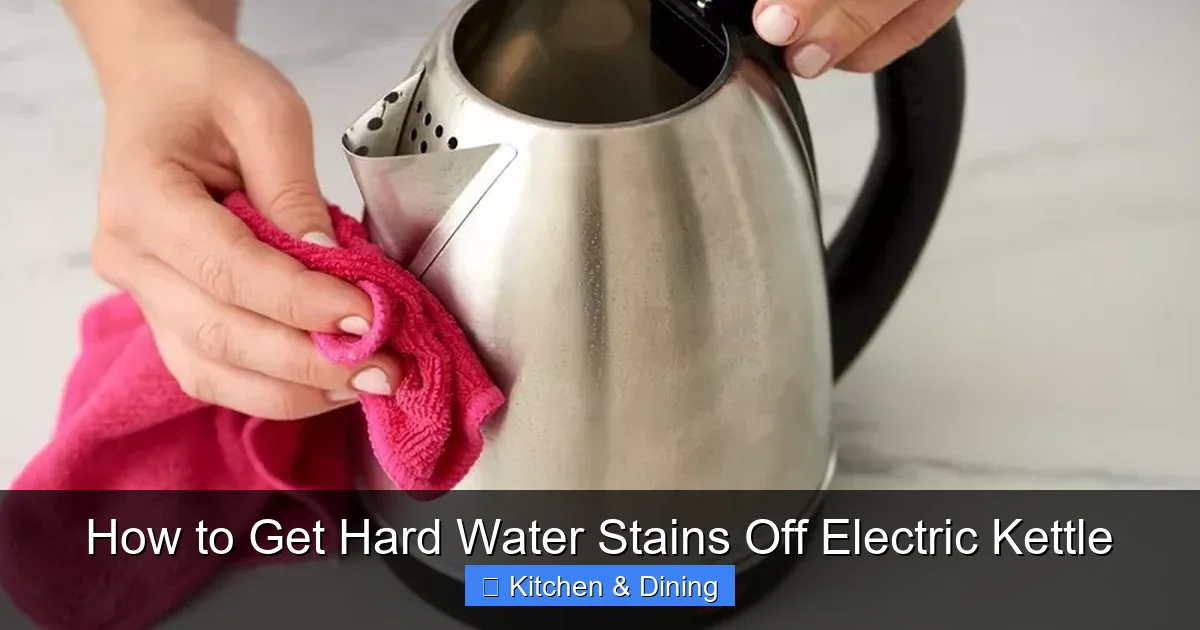
How to Get Hard Water Stains Off Electric Kettle
Hard water stains can make your electric kettle look dull and unappealing. This guide provides simple, effective methods to remove these unsightly mineral deposits. From natural solutions like vinegar and lemon juice to gentle scrubbing techniques, you’ll learn how to restore your kettle to its pristine condition, ensuring you always enjoy clean, great-tasting water.
## How to Get Hard Water Stains Off Electric Kettle
Is your trusty electric kettle looking a little less than its best? Those chalky, white, or sometimes even brownish rings and spots inside your kettle are likely hard water stains. Don’t worry, they’re a common nuisance for anyone with hard water, but they’re also quite manageable. This comprehensive guide will walk you through the simplest and most effective ways to banish these stubborn stains and restore your electric kettle to its sparkling, hygienic glory. You’ll learn about natural cleaning solutions, gentle techniques, and important safety precautions so you can enjoy perfectly heated water every time.
### Understanding Hard Water Stains
Before we dive into cleaning, let’s quickly understand what causes these stains. Hard water contains a high concentration of dissolved minerals, primarily calcium and magnesium. When you boil water in your electric kettle, these minerals are left behind as the water evaporates, forming limescale deposits. Over time, these deposits build up, creating the familiar hard water stains. While they might look unsightly, they can also affect the efficiency of your kettle and, in some cases, the taste of your water. Getting rid of them is not just about aesthetics; it’s about maintaining your appliance and ensuring the best quality water for your drinks.
### Safety First: Unplug and Cool Down
This is the most crucial step before you begin any cleaning process.
Always unplug your electric kettle from the power outlet. Ensure the kettle has cooled down completely. Cleaning a hot kettle is dangerous and can lead to burns. Safety should always be your top priority when working with electrical appliances.
### Method 1: The Classic White Vinegar Soak
White vinegar is a superhero when it comes to tackling limescale. Its acidity is perfect for breaking down mineral deposits. This is often the go-to method because it’s effective, inexpensive, and readily available.
Step 1: Prepare the Vinegar Solution
You’ll need equal parts white vinegar and water. For a standard electric kettle, about 1 cup of vinegar and 1 cup of water should be sufficient. If the stains are particularly stubborn, you can increase the concentration of vinegar slightly, but start with a 1:1 ratio.
Step 2: Fill the Kettle
Pour the vinegar and water mixture into your electric kettle. Make sure the liquid level covers all the stained areas. If the stains are only at the bottom, you don’t need to fill it to the brim.
Step 3: Let it Soak
Let the solution sit in the kettle for at least 30 minutes. For heavily stained kettles, you might want to let it soak for an hour or even overnight. This gives the vinegar ample time to work its magic and dissolve the mineral buildup.
Step 4: Boil (Optional, but Recommended)
For faster results, after the soaking period, you can bring the vinegar solution to a boil. Turn off the kettle and let it sit for another 15-30 minutes. The heat helps to speed up the limescale dissolving process.
Step 5: Empty and Rinse Thoroughly
Carefully discard the vinegar solution. Rinse the inside of the kettle multiple times with clean water. You want to ensure all traces of vinegar are removed to avoid any lingering taste or smell in your next cup of tea or coffee. Fill the kettle with fresh water, boil it, and discard that water as well. Repeat this rinsing process at least twice more.
Step 6: Gentle Scrubbing (If Needed)
If some stubborn spots remain after rinsing, use a soft cloth or a non-scratch sponge to gently scrub the interior. The vinegar should have loosened most of the buildup, making it easy to remove without damaging the kettle’s surface.
### Method 2: The Zesty Lemon Juice Approach
Lemon juice is another fantastic natural cleaner due to its citric acid content, which is also effective at breaking down mineral deposits. It also leaves a pleasant, fresh scent, unlike vinegar.
Step 1: Prepare the Lemon Solution
Juice one to two fresh lemons. You can either use the fresh juice or a concentrated lemon juice from a bottle. You’ll want about 1/2 cup of lemon juice. You can mix this with an equal amount of water, or if you prefer a stronger solution, use pure lemon juice.
Step 2: Fill and Soak
Pour the lemon juice (and water, if using) into the kettle, ensuring it covers the stained areas. Let it sit for at least 30 minutes, or longer for tougher stains.
Step 3: Boil and Rest
Bring the lemon juice mixture to a boil. Turn off the kettle and let it sit for another 15-30 minutes. The warmth enhances the cleaning power of the citric acid.
Step 4: Empty and Rinse Well
Carefully empty the kettle. Rinse it thoroughly with clean water several times. As with vinegar, you want to remove all lemon residue. Boil a kettle full of fresh water and discard it to ensure no lemony aftertaste remains.
Step 5: Gentle Wipe-Down
If any residue persists, use a soft cloth or sponge to gently wipe the interior.
### Method 3: Baking Soda Paste for Targeted Cleaning
Baking soda is a mild abrasive that can help scrub away loosened mineral deposits and also acts as a deodorizer. It’s best used after a vinegar or lemon juice soak for any remaining tough spots.
Step 1: Create a Paste
In a small bowl, mix baking soda with a little bit of water to form a thick paste. Aim for a consistency similar to toothpaste.
Step 2: Apply the Paste
With a soft cloth or sponge, apply the baking soda paste directly to the remaining stained areas inside the kettle. Gently rub the paste onto the stains in a circular motion.
Step 3: Let it Sit (Briefly)
Allow the paste to sit on the stains for about 10-15 minutes.
Step 4: Scrub and Rinse
Gently scrub the area again with your cloth or sponge. Then, rinse the kettle thoroughly with clean water multiple times until all baking soda residue is gone. Boil a kettle of fresh water and discard it as a final rinse.
### Method 4: Specialized Limescale Removers
If natural methods don’t completely solve the problem, or if you’re short on time, commercial limescale removers are available. These are specifically formulated to break down mineral buildup quickly and effectively.
Step 1: Read the Instructions Carefully
Each product will have its own specific instructions. It is absolutely crucial to read and follow them precisely. Pay close attention to dilution ratios, soaking times, and rinsing requirements.
Step 2: Apply the Remover
Typically, you’ll fill the kettle with the recommended amount of water and then add the limescale remover. Do not overfill.
Step 3: Let it Work
Allow the product to work for the time specified on the packaging. Some may require boiling, while others suggest simply letting them sit.
Step 4: Rinse, Rinse, Rinse!
This is where you need to be extra diligent. Commercial descalers can contain strong chemicals, so rinsing thoroughly is paramount. Boil fresh water in the kettle and discard it. Repeat this process at least 3-4 times, or until you are absolutely certain there is no residual smell or taste of the cleaner.
Important Note: When using commercial descalers, ensure good ventilation in your kitchen.
### Tips for a Sparkling Kettle
* Don’t Use Abrasive Scrubbers: Steel wool or harsh scrubbing pads can scratch the interior of your kettle, leading to further problems and making it harder to clean in the future. Stick to soft cloths or non-scratch sponges.
* Clean the Exterior Too: While we’re focusing on the inside, don’t forget the outside! Use a damp cloth with a little dish soap to wipe down the exterior. For stainless steel kettles, a specific stainless steel cleaner can restore shine.
* Address Spout Stains: Sometimes stains can build up around the spout. Use a small brush (like a bottle brush or an old toothbrush) with your chosen cleaning solution to gently scrub these areas.
* Check Your Kettle’s Manual: Some manufacturers may have specific recommendations or warnings regarding cleaning their products. It’s always a good idea to consult your kettle’s user manual if you have it.
* Be Patient: For very stubborn stains, you might need to repeat a cleaning method or try a combination of methods. Patience is key to achieving a spotless kettle.
### Preventing Future Hard Water Stains
Prevention is always better than cure! If hard water is a persistent issue in your home, consider these steps to minimize future buildup:
* Use Filtered Water: Investing in a water filter for your tap or using filtered water from a pitcher can significantly reduce the mineral content in the water you use for your kettle. If you’re particular about your beverages, using the best water for your espresso machine also applies to your kettle.
* Empty After Each Use: Don’t let water sit in the kettle between uses. Empty it out completely after it has cooled down. This prevents minerals from settling and drying onto the heating element and interior walls.
* Regular Cleaning Schedule: Make it a habit to descale your kettle regularly. Depending on your water hardness, this could be weekly, bi-weekly, or monthly. A quick clean with vinegar or lemon juice once a month can prevent heavy buildup. This is much easier than dealing with thick, caked-on limescale.
### Troubleshooting Common Issues
* Lingering Vinegar/Lemon Smell: If you can still smell vinegar or lemon after multiple rinses and boils, try boiling a kettle of just water and discarding it. Sometimes, a final plain boil is needed to fully clear the aroma. You can also add a teaspoon of baking soda to the final rinse water, boil it, and then rinse thoroughly again.
* Stains Won’t Budge: If the stains are extremely thick and old, you might need to repeat the cleaning process. For exceptionally tough cases, a commercial descaler might be your best bet, always following the instructions diligently.
* Interior Looks Dull After Cleaning: Some cleaning agents, especially harsh ones, might dull the finish. If this happens, a gentle polish with a soft cloth might help restore some shine. However, functionality is more important than a mirror finish.
### Conclusion
Getting hard water stains off your electric kettle is a straightforward process that doesn’t require harsh chemicals or extensive scrubbing. By utilizing natural household ingredients like white vinegar and lemon juice, or opting for specialized descalers when necessary, you can easily maintain your kettle. Remember to always prioritize safety by unplugging your appliance and allowing it to cool. Regular cleaning and using filtered water will help keep your kettle in top condition, ensuring you always have perfectly heated, clean-tasting water for your daily brews. Enjoy your sparkling clean kettle and the delightful beverages it helps you create!
- Natural Cleaners Are Effective: White vinegar and lemon juice are powerful, natural agents that break down mineral deposits.
- Gentle Scrubbing is Key: Avoid harsh abrasives that can scratch the kettle’s interior. Use soft cloths or non-scratch sponges.
- Regular Maintenance Prevents Buildup: Frequent cleaning significantly reduces the severity and frequency of hard water stains.
- Safety First: Always unplug your electric kettle before cleaning and ensure it’s completely dry before plugging it back in.
- Rinse Thoroughly: After cleaning, rinse the kettle multiple times to remove any residue from the cleaning solution.
- Consider Water Quality: If hard water is a persistent problem, filtering your water before boiling can be a preventative measure.