How to Remove Grease Buildup in an Air Fryer
Grease buildup in your air fryer can affect its performance and create unpleasant odors. This guide provides a comprehensive, step-by-step method for effectively removing stubborn grease. By following these simple instructions, you can ensure your air fryer remains clean and functions optimally, delivering perfectly cooked meals every time.
Air fryers have become a kitchen staple for a reason. They promise crispy, delicious food with less oil, making healthy eating easier and tastier. But, like any kitchen appliance that handles food, it needs regular cleaning to perform its best. One of the most common issues air fryer owners face is grease buildup. This sticky, stubborn residue can affect cooking performance, leave an unpleasant smell, and even become a fire hazard if left unchecked.
Fear not! Removing grease buildup in your air fryer doesn’t have to be a daunting task. This comprehensive guide will walk you through everything you need to know to get your air fryer sparkling clean and ready for your next culinary adventure. We’ll cover everything from daily maintenance to tackling those really tough, baked-on grease stains. By the end of this guide, you’ll have the knowledge and confidence to keep your air fryer in top condition.
Key Takeaways
- Regular Cleaning Prevents Buildup: Consistent, light cleaning after each use is the best way to prevent significant grease accumulation.
- Disassemble for Thoroughness: Detach removable parts like the basket and tray for a deeper and more effective clean.
- Gentle Cleaning Agents are Key: Use mild dish soap and warm water for most cleaning tasks to avoid damaging the non-stick coating.
- Tackle Stubborn Grease with Vinegar or Baking Soda: For tougher grease, natural solutions like white vinegar or a baking soda paste are highly effective.
- Don’t Forget the Interior and Exterior: Clean not just the basket but also the inside cavity and the outside of your air fryer.
- Proper Drying is Crucial: Ensure all parts are completely dry before reassembling and storing to prevent mold or mildew.
- Consult Your Manual: Always refer to your air fryer’s specific manual for manufacturer-recommended cleaning instructions and warnings.
Why is Grease Buildup a Problem?
Before we dive into the how-to, let’s quickly touch on why it’s so important to deal with grease buildup.
- Impact on Performance: A greasy air fryer basket or interior can lead to uneven cooking. Food might not get as crispy, and the airflow, crucial for air frying, can be obstructed.
- Unpleasant Odors: Old grease can develop rancid smells, which will transfer to your food. No one wants their freshly fried chicken to smell like last week’s salmon.
- Health Concerns: While not the primary concern for most, accumulated grease can harbor bacteria, which is unhygienic.
- Fire Hazard: In extreme cases, excessive grease buildup can potentially ignite, posing a fire risk.
So, keeping your air fryer clean isn’t just about aesthetics; it’s about safety, efficiency, and the quality of your food.
Gather Your Cleaning Supplies
Before you start, it’s helpful to have all your cleaning supplies ready. This will make the process smoother. You’ll typically need:
- Mild dish soap
- Warm water
- Soft sponges or non-abrasive cloths
- Microfiber cloths for drying
- White vinegar (optional, for tough grease)
- Baking soda (optional, for tough grease)
- An old toothbrush or soft-bristled brush (for tight spots)
- Paper towels
It’s important to avoid abrasive cleaners, steel wool, or harsh scrubbing pads, as these can damage the non-stick coating inside your air fryer.
Step-by-Step Guide to Removing Grease Buildup
Let’s get your air fryer clean!
Step 1: Safety First – Unplug and Cool Down
This is the most crucial first step. Always ensure your air fryer is unplugged from the power source and has completely cooled down before you begin cleaning. Hot surfaces can cause burns, and attempting to clean a plugged-in appliance is extremely dangerous.
Step 2: Disassemble the Removable Parts
Most air fryers have removable baskets and trays. These are usually the areas where most of the grease buildup occurs.
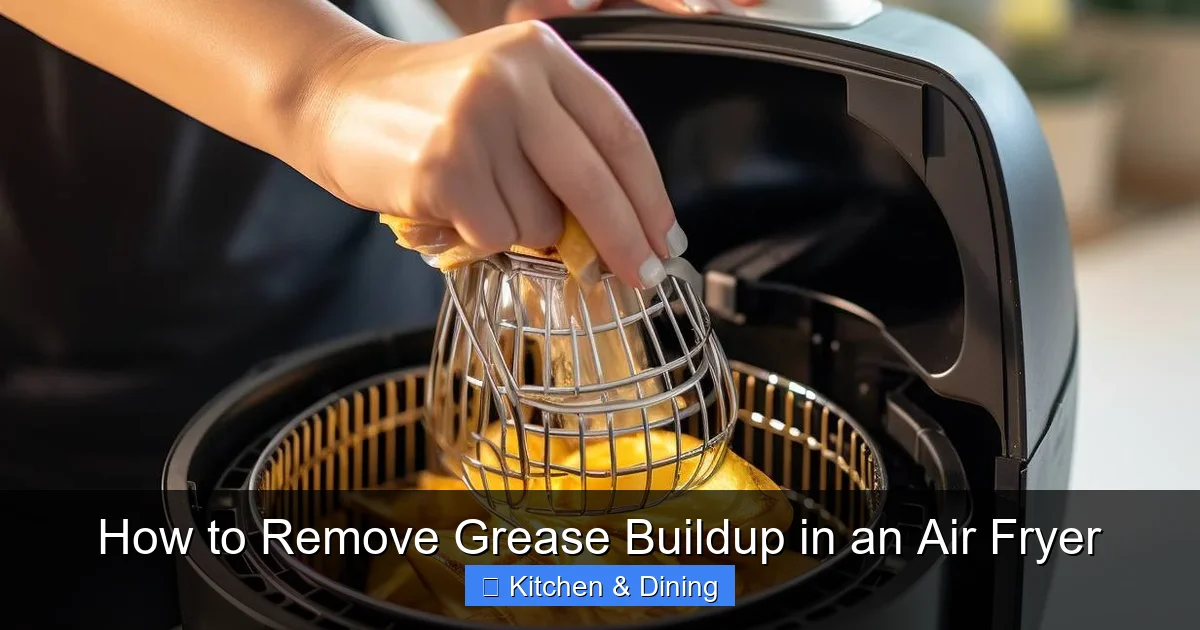
- Carefully remove the air fryer basket and the drip pan or crisper plate from the appliance.
- Place them on your sink or a clean surface where you can easily wash them.
If your air fryer model has other removable parts, consult your manual to see if they can be safely removed for cleaning.
Step 3: Soak the Removable Parts
For effective grease removal, a good soak is often the first step, especially if the grease is caked on.
- Fill your sink with warm water and add a generous squirt of mild dish soap.
- Submerge the air fryer basket and tray in the soapy water.
- Let them soak for at least 15-30 minutes. For very stubborn grease, you might need to soak them for longer, even up to an hour.
This soaking process will help to loosen the grease, making it much easier to scrub away.
Step 4: Scrub the Removable Parts
After soaking, it’s time to scrub away the loosened grease.
- Using a soft sponge or a non-abrasive cloth, begin to scrub the surfaces of the basket and tray.
- Work in gentle, circular motions. The grease should start to lift away quite easily.
- For any areas with particularly stubborn grease, you can try using a soft-bristled brush or an old toothbrush to get into the nooks and crannies.
Dealing with Tough Grease (If Soaking Isn’t Enough)
If the regular dish soap and water soak didn’t cut through all the grease, don’t despair. There are more powerful, yet still gentle, methods you can try.
Using White Vinegar for Tough Grease
White vinegar is a fantastic natural degreaser.
- After your initial soak and scrub, if grease remains, you can create a vinegar solution.
- Mix equal parts white vinegar and warm water in a spray bottle or directly in the sink.
- Spray or pour this solution onto the greasy areas of the basket and tray.
- Let it sit for another 10-15 minutes.
- Then, scrub again with your soft sponge or cloth. The acidity of the vinegar helps break down tough grease.
Using Baking Soda Paste for Stubborn Residue
Baking soda is a mild abrasive that can lift away stuck-on grime without scratching.
- Create a paste by mixing baking soda with a small amount of water. Aim for a consistency similar to toothpaste.
- Apply this paste directly to the greasy spots on the basket and tray.
- Let the paste sit on the grease for about 15-20 minutes.
- Gently scrub the area with a soft sponge or cloth. You might need to use a bit more elbow grease here.
- Rinse thoroughly.
This baking soda paste method is excellent for those truly baked-on bits that just won’t budge.
Step 5: Rinse the Removable Parts Thoroughly
Once you’ve scrubbed away all the visible grease, it’s essential to rinse all the cleaning agents off the removable parts.
- Rinse the basket and tray under warm running water.
- Make sure no soap, vinegar, or baking soda residue remains, as this could affect the taste of your food or the appliance’s performance.
Step 6: Clean the Air Fryer Interior
Don’t forget about the inside of the air fryer itself! This is where grease splatters and residue can accumulate over time.
- Ensure the air fryer is still unplugged and cool.
- Take a damp cloth (not dripping wet) and wipe down the inside walls, bottom, and heating element (if accessible and cool).
- For greasy spots inside, you can dampen your cloth with the warm, soapy water you used earlier or the vinegar-water solution.
- Be careful not to get too much water into any electrical components.
- If your air fryer has a removable crumb tray at the bottom, slide it out and clean it separately, as this is a common spot for grease and food debris.
Step 7: Clean the Air Fryer Exterior
The outside of your air fryer also needs a wipe-down.
- Dampen a soft cloth with warm, soapy water.
- Wipe down the exterior surfaces, including the control panel.
- Avoid spraying water directly onto the control panel or vents.
- Dry the exterior with a clean, dry microfiber cloth.
Step 8: Dry Everything Completely
This is a critical step that many people overlook. All parts must be completely dry before you put them back in the air fryer or store it.
- Shake excess water from the basket and tray.
- Pat them dry with a clean towel or let them air dry completely. You can also place them on a drying rack.
- Ensure the interior of the air fryer is also dry. You can use a dry cloth or leave the door ajar for a while to allow it to air dry.
Moisture left inside can lead to mold or mildew growth, which is unhygienic and can cause unpleasant odors.
Step 9: Reassemble and Store
Once all parts are thoroughly dry, reassemble your air fryer.
- Place the clean and dry basket and tray back into the air fryer.
- Ensure everything is seated correctly.
- Your air fryer is now clean and ready for its next use!
Preventing Future Grease Buildup
The best way to deal with grease buildup is to prevent it from becoming a major issue in the first place. Here are some tips:
- Clean After Every Use: A quick wipe-down of the basket and interior after each cooking session will save you a lot of work later.
- Use Parchment Paper or Liners: While not always recommended by manufacturers (check your manual!), perforated parchment paper or specific air fryer liners can catch grease and make cleanup much easier. Be cautious not to block airflow.
- Scrape Off Excess Fat: For particularly fatty foods, you can pat them dry or trim off excess fat before cooking.
- Don’t Overcrowd the Basket: Overcrowding can lead to food steaming rather than frying, and it can cause grease to splatter more.
- Run a “Cleaning Cycle”: Some people like to run their air fryer empty for a few minutes after cooking, or with a slice of lemon or a splash of vinegar inside (check your manual first!), to help loosen any fresh residue.
Consistent, small efforts make a huge difference in maintaining your appliance. For instance, if you’re cooking items that tend to be a bit messy, like chicken wings, you might find yourself cleaning more frequently. This is similar to how you might need to clean a cake pan if it’s used for a sticky recipe; understanding the best way to grease a cake pan helps, but cleaning afterwards is still essential.
Troubleshooting Common Air Fryer Cleaning Issues
* **”My air fryer still smells smoky after cleaning.”** This can happen if there’s residue burned onto the heating element or in hard-to-reach spots. Try running the air fryer empty for 5-10 minutes at a moderate temperature (e.g., 300°F / 150°C) after cleaning. You can also place a few lemon slices in a small oven-safe dish inside the air fryer during this cycle for a fresh scent. If the smell persists, there might be a deeper issue, and you may need to consult your manual or customer support.
* **”The non-stick coating is peeling.”** This is usually a sign of using abrasive cleaning tools or harsh chemicals. If the peeling is minor and only on the basket, it might still be usable, but always check for flaking material in your food. If it’s extensive or on other parts, it could be time to consider a replacement. Refer to reviews of specific models, like the Instant Pot Vortex Plus 6Qt Clearcook Air Fryer, to see how different models handle durability.
* **”I can’t remove a part of the basket.”** Some baskets have fixed components. Check your manual to ensure you’re removing parts correctly. If a part seems stuck due to grease, a longer soak might be necessary.
Conclusion
Keeping your air fryer clean is vital for its longevity, efficiency, and the quality of the food you cook. By following these steps, you can effectively remove grease buildup and maintain your appliance in pristine condition. Remember, regular cleaning is far easier than tackling a neglected, greasy mess. So, embrace these cleaning practices, and enjoy perfectly cooked, healthy meals from your sparkling clean air fryer time and time again! Happy air frying!