What Is a Santoku Knife Used for in the Kitchen
The Santoku knife is a versatile Japanese chef’s knife perfect for a wide range of kitchen tasks. Its name translates to “three virtues” – slicing, dicing, and mincing – reflecting its exceptional ability to handle these actions with ease. With its broad blade and Granton edge, the Santoku knife is an indispensable tool for both home cooks and professional chefs.
## What Is a Santoku Knife Used For in the Kitchen?
Welcome to the world of the Santoku knife! If you’ve ever wondered about this unique kitchen tool and its specific uses, you’re in the right place. Many home cooks are familiar with the classic Western chef’s knife, but the Santoku offers a distinct advantage with its specialized design and versatility. This guide will delve deep into what a Santoku knife is used for in the kitchen, exploring its features, benefits, and how to wield it like a pro. By the end, you’ll understand why this Japanese powerhouse deserves a spot in your knife collection.
### Understanding the Santoku Knife: A Japanese Marvel
Before we dive into its uses, let’s understand what makes a Santoku knife special. The name “Santoku” (三徳) literally translates from Japanese to “three virtues” or “three uses.” These virtues are slicing, dicing, and mincing. This name perfectly encapsulates the knife’s primary functions and its reputation as an all-purpose kitchen workhorse.
#### The Santoku’s Distinctive Design
A Santoku knife stands out from its Western counterparts due to several key design elements:
* Blade Shape: Santokus typically have a broader, flatter blade with a less pronounced curve than a Western chef’s knife. The spine of the blade often slopes dramatically down to the tip, creating a “sheep’s foot” or “ham-bone” shape. This shape makes it excellent for chopping straight down.
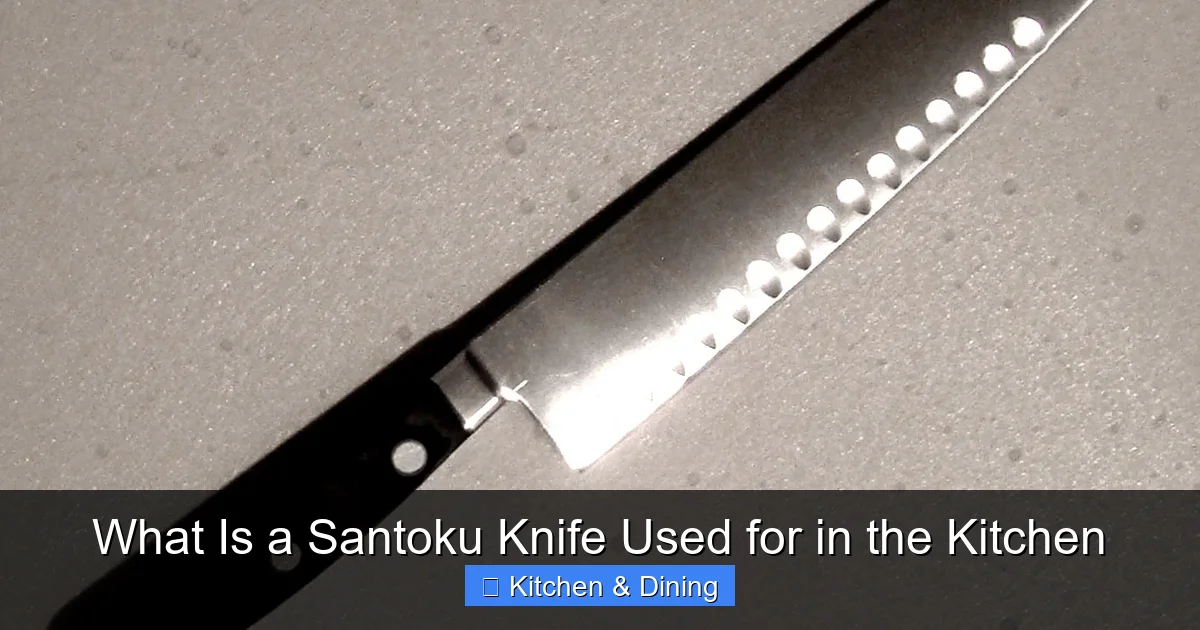
* Edge: While some Santokus have a straight edge, many feature a Granton edge. These are the characteristic hollows or dimples ground into the side of the blade. These grantons create air pockets between the blade and the food, reducing friction and preventing ingredients from sticking to the knife as you slice.
* Length: Santoku knives generally range from 5 to 8 inches, with 7 inches being a very common size. This length is manageable for most tasks.
* Weight and Balance: Santokus are often lighter and more nimble than some larger chef’s knives, offering excellent control.
These design elements combine to make the Santoku a highly efficient and user-friendly tool for a variety of culinary applications.
### The “Three Virtues” in Action: What a Santoku Knife Is Used For
Now, let’s explore the core functions that make the Santoku so beloved.
#### 1. Slicing: Effortless Precision
The Santoku knife is a superb slicer. Its broad, relatively straight edge allows for long, clean cuts. This is particularly useful for:
* Vegetables: Think of slicing cucumbers for a salad, tomatoes for sandwiches, or even large root vegetables like potatoes and carrots. The Santoku glides through them with minimal effort. The Granton edge is a lifesaver here, preventing thin slices of onion or zucchini from sticking to the blade and disrupting your rhythm.
* Fruits: Slicing melons, apples, or pears becomes a breeze. The broad blade helps support the weight of larger fruits as you cut.
* Cooked Meats: For slicing roast beef, chicken, or ham, the Santoku provides a consistent, clean cut without tearing the meat. It’s a great choice if you are looking for a reliable tool for carving.
Practical Tip: For the best slicing results, use a gentle, forward-and-down motion. Let the knife do the work. Avoid sawing back and forth excessively, which can crush delicate ingredients.
2. Dicing: Efficient Cubing
Dicing is another area where the Santoku excels. The combination of its broad blade and straighter edge makes it ideal for creating uniform cubes of ingredients.
* Onions and Aromatics: Dicing onions, garlic, and other aromatics is a fundamental cooking skill. The Santoku’s straight edge allows you to make precise vertical cuts, while the broad blade can scoop up the diced pieces easily.
* Vegetables for Stir-fries and Soups: Whether you’re dicing bell peppers, broccoli florets, or potatoes for a stew, the Santoku handles the task with efficiency. The ability to make straight cuts ensures consistent sizing, which leads to even cooking.
* Cheese: If you’re prepping cheese for a recipe or a cheese board, dicing it with a Santoku is quick and neat.
How to Dice with a Santoku:
Start by making your initial cuts to create flat surfaces. Then, use the Santoku’s edge to make even, straight slices to your desired thickness. Finally, bring the diced strips together and make crosswise cuts to achieve uniform cubes.
3. Mincing: Small, Precise Pieces
The “mincing” virtue of the Santoku refers to its ability to finely chop ingredients into very small pieces. This is crucial for building flavor in many dishes.
* Herbs: Mincing fresh herbs like parsley, cilantro, or basil is a common kitchen task. The Santoku’s sharp edge and controlled cutting motion allow you to achieve a fine mince without bruising the delicate leaves.
* Garlic and Ginger: For recipes that require finely minced garlic or ginger, the Santoku is excellent. You can chop them into tiny pieces quickly and efficiently.
* Meat for Tartare or Ground Meat: While not its primary function, a very sharp Santoku can be used to finely chop cooked or raw meat for certain preparations. However, for large quantities of ground meat, a dedicated meat grinder or a food processor might be more efficient.
Mincing Technique:
Hold the ingredient firmly with your non-knife hand, using a “claw” grip to protect your fingers. Use the tip of the Santoku as a pivot point and rock the blade up and down over the ingredient, making repeated small chops. Move the ingredient around as needed to achieve a uniform mince.
### Beyond the “Three Virtues”: Other Uses for a Santoku Knife
While the Santoku is celebrated for its slicing, dicing, and mincing capabilities, its utility extends further:
* Chopping Produce: Its broad blade makes it excellent for chopping larger items like cabbage for coleslaw or splitting a butternut squash.
* Cutting Through Soft Bones: For smaller poultry or fish, a sharp Santoku can often cut through smaller bones and cartilage. However, for heavy-duty deboning, a dedicated boning knife might be more appropriate. If you’re looking for specialized tools, a best boning knife for chicken can be a great addition.
* Scooping and Transferring: The flat, broad blade is perfect for scooping chopped ingredients from your cutting board into a pan or bowl. This saves you from making an extra pass with a bench scraper.
* Slicing Fish: While a specialized fillet knife is best for filleting, a Santoku can be used for slicing fish fillets into portions or for preparing sushi and sashimi. For those who frequently work with fish, exploring options like the best Japanese knife for filleting fish might be beneficial.
### When to Choose a Santoku Over Other Knives
The Santoku isn’t meant to replace every knife in your kitchen, but it’s a fantastic addition. Here’s when it often shines:
* Everyday Prep Work: For the bulk of your daily chopping, dicing, and slicing of fruits and vegetables, the Santoku is incredibly efficient and comfortable to use.
* When Sticking is an Issue: If you find your knife sticking to ingredients like potatoes, sweet potatoes, or even moist meats, the Granton edge of a Santoku can make a significant difference.
* For Those Who Prefer a Straighter Cut: If you find the rocking motion of a Western chef’s knife difficult or prefer a more direct chopping action, the Santoku’s blade profile is more accommodating.
* As a Versatile Starter Knife: If you’re looking to build a best knife set for kitchen or are considering Japanese cutlery, a Santoku is an excellent introduction to the style and often included in best Japanese kitchen knife set options.
### How to Care for Your Santoku Knife
To ensure your Santoku performs at its best and lasts for years, proper care is essential.
#### Maintaining the Edge
A sharp knife is a safe knife. Santoku knives, especially those made from high-quality Japanese steel, can hold an edge exceptionally well.
* Honing: Regularly hone your Santoku with a honing steel. This realigns the microscopic teeth of the blade, keeping it sharp between full sharpenings.
* Sharpening: When honing is no longer effective, it’s time to sharpen. This can be done with whetstones (for the most traditional and precise results) or an electric knife sharpener. If you’re new to sharpening, a best electric knife sharpener for kitchen knives can be a good investment.
Cleaning and Storage
* Hand Wash Only: Never put your Santoku in the dishwasher. The harsh detergents and high heat can damage the blade and handle, and the risk of chipping or dulling against other utensils is high. Wash it gently by hand with warm, soapy water immediately after use.
* Dry Thoroughly: Always dry your knife completely with a soft cloth to prevent rust, especially if it’s made from high-carbon steel.
* Proper Storage: Store your Santoku safely to protect the blade and prevent accidents. Options include a knife block, a magnetic strip, or blade guards. Avoid tossing it loose in a drawer.
### Troubleshooting Common Santoku Issues
* Food Sticking to the Blade: Ensure your Santoku has a Granton edge. If it doesn’t, or if the dimples are worn down, you might experience more sticking. Keeping the blade clean and dry between cuts also helps.
* Dullness: If your Santoku isn’t cutting cleanly, it’s time to hone and then sharpen it. Don’t wait until it’s completely dull; regular maintenance is key.
* Damage to the Blade: Avoid cutting through hard objects like bones (unless it’s a very specific task for a heavy-duty Santoku), frozen food, or directly on hard surfaces like glass or granite. This can chip or damage the delicate edge.
### Conclusion: The Santoku’s Indispensable Role
The Santoku knife is far more than just another kitchen tool; it’s a highly efficient and versatile instrument that can significantly improve your cooking experience. Its design, honed over generations, allows for precise slicing, quick dicing, and fine mincing, truly embodying its “three virtues.” Whether you’re a seasoned chef or just starting your culinary journey, understanding what a Santoku knife is used for will empower you to make the most of its capabilities. By mastering its unique cutting techniques and giving it proper care, your Santoku will become an indispensable companion in your kitchen, transforming everyday meal preparation into a more enjoyable and efficient process. Consider adding one to your collection, and you’ll likely find yourself reaching for it more often than you might expect.
- Versatile All-Rounder: The Santoku knife excels at slicing, dicing, and mincing, making it a go-to tool for most kitchen prep tasks.
- Unique Blade Design: Its broad, straighter edge and often Granton (dimpled) edge distinguish it from Western chef’s knives, aiding in clean cuts and preventing sticking.
- Ideal for Produce: While capable of handling meats and fish, the Santoku truly shines when preparing vegetables and fruits due to its efficient chopping motion.
- Gentle on Delicate Ingredients: The flat edge allows for a more controlled chop, making it suitable for delicate items without crushing them.
- Proper Technique is Key: Mastering the Santoku’s rocking and straight chopping motions ensures efficient and safe use.
- A Worthy Addition to Your Arsenal: Understanding its uses can elevate your cooking and streamline your kitchen workflow.