What Is Sharper a Kitchen Knife or a Pocket Knife
The question of whether a kitchen knife or a pocket knife is sharper isn’t straightforward, as it depends on several factors beyond just intended use. Both types can achieve exceptional sharpness, but their design, steel, and maintenance play crucial roles. This guide explores these differences to help you understand what makes a knife truly sharp.
## What Is Sharper: A Kitchen Knife or a Pocket Knife?
It’s a question that sparks debate among knife enthusiasts and home cooks alike: which is inherently sharper, a kitchen knife or a pocket knife? The simple answer is that **there’s no single definitive answer**. Both types of knives can be incredibly sharp, but their intended purposes, construction, and how they are maintained lead to different characteristics that influence their edge.
This guide will delve into the factors that contribute to a knife’s sharpness, helping you understand why one might feel sharper than another, and what you can do to ensure your own knives are always at their best. We’ll explore blade materials, edge geometry, sharpening techniques, and the practical considerations for each type of knife.
## Understanding Knife Sharpness: The Core Concepts
Before we can compare kitchen knives and pocket knives, it’s essential to understand what makes any knife sharp. Sharpness isn’t just about being able to cut through things; it’s a combination of factors that allow for clean, effortless cuts.
### Blade Steel: The Foundation of Sharpness
The steel used to forge a knife blade is the bedrock of its sharpness. Different types of steel have varying compositions of elements like carbon, chromium, vanadium, and molybdenum. These elements influence the steel’s hardness, toughness, corrosion resistance, and its ability to take and hold an edge.
* Carbon Content: Higher carbon content generally means a harder steel that can achieve a very fine edge. However, high-carbon steels can also be more brittle and prone to rust if not cared for properly.
* Alloying Elements: Elements like chromium increase corrosion resistance, making stainless steel knives easier to maintain. Vanadium and molybdenum enhance wear resistance and toughness, allowing the edge to stay sharper for longer.
* Hardness (Rockwell Scale): Steel hardness is often measured on the Rockwell scale (HRC). Generally, higher HRC ratings indicate harder steel, capable of holding a sharper edge. However, excessively hard steel can become brittle.
### Edge Geometry and Grinds
The shape and angle of a knife’s edge, known as its geometry or grind, are critical to its cutting performance.
* Angle: The angle at which the blade is sharpened determines how easily it cuts. A finer angle (e.g., 15 degrees per side) will feel sharper and slice more cleanly, but it’s also more prone to chipping or dulling. A wider angle (e.g., 20-25 degrees per side) is more durable but may require more force to cut.
* Grind Types: There are several common grinds:
* V-grind (or Flat Grind): A symmetrical bevel that tapers from the spine to the edge. This is common in many kitchen knives and offers a good balance of sharpness and durability.
* Hollow Grind: Characterized by concave facets on the blade, creating a very thin apex. This is often found on razors and some high-end kitchen knives for extreme sharpness.
* Scandi Grind: A single, flat bevel that goes all the way to the spine. Often found on survival and bushcraft knives, it’s robust and easy to sharpen.
* Chisel Grind: A bevel on only one side of the blade, common in some Japanese knives and chisels.
### Microscopic Imperfections: The Real Measure of Sharpness
True sharpness is ultimately measured at a microscopic level. A sharp edge has a fine, unbroken apex with minimal microscopic serrations or rolled-over metal. When you see a knife glide through a tomato with ease, it’s because its edge is so fine that it cleanly severs the tomato’s cells without crushing them.
## Kitchen Knives: Designed for Precision and Performance
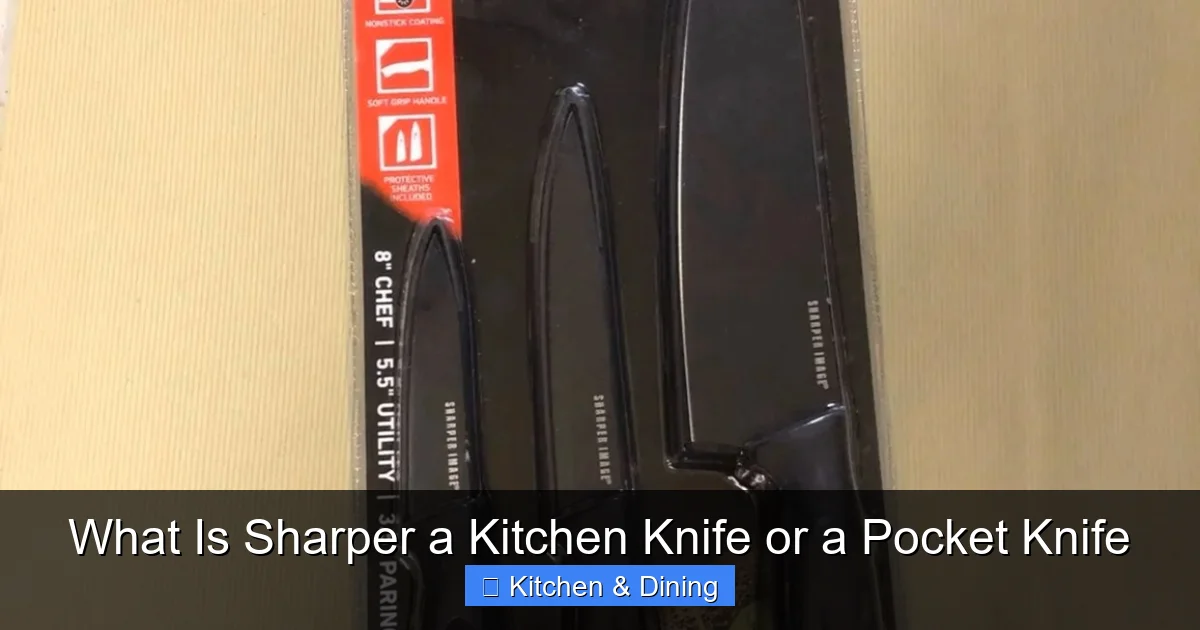
Kitchen knives are tools specifically designed for preparing food. Their sharpness is paramount for efficient chopping, slicing, dicing, and mincing.
### Typical Steel Types in Kitchen Knives
Many modern kitchen knives utilize high-carbon stainless steel alloys. This offers a good compromise between edge retention, corrosion resistance, and ease of maintenance. Brands often develop proprietary steel blends to achieve specific performance characteristics. For instance, many enthusiasts seek out Japanese knives for their exceptional sharpness, often found in the best Japanese kitchen knife set collections.
### Edge Geometry in Kitchen Knives
Kitchen knives typically feature a fine edge geometry, often in the 15-20 degree range per side. This is crucial for slicing through delicate ingredients like herbs or soft fruits without tearing. The specific grind can vary; chef’s knives might have a V-grind, while some specialized Japanese knives, like those used for filleting fish, might employ more acute angles or specialized grinds for unparalleled slicing ability. Looking for the best knife for filleting fish, for example, often leads to knives with very fine, specialized edges.
### Maintenance and Use of Kitchen Knives
Kitchen knives are expected to be used daily and sharpened regularly. They are often stored in knife blocks, magnetic strips, or on racks to protect their edges. The best kitchen knives are honed and sharpened with stones or electric sharpeners. A good best electric knife sharpener for kitchen knives can make a huge difference in maintaining that razor-sharp edge.
## Pocket Knives: Built for Durability and Versatility
Pocket knives, also known as folding knives or EDC (Everyday Carry) knives, are designed for a wide range of tasks, from opening packages to light utility work. Their design often prioritizes strength and the ability to withstand varied use.
### Steel Types in Pocket Knives
Pocket knives come with a vast array of steel options, from basic stainless steels to high-performance alloys. Some popular choices include:
* AUS-8: A good all-around stainless steel offering a balance of toughness, corrosion resistance, and ease of sharpening.
* 440C: A classic stainless steel known for its good hardness and corrosion resistance.
* VG-10: A premium Japanese stainless steel found in many high-quality production knives, known for its excellent edge retention.
* S30V, S35VN, S45VN: These are powdered metallurgy steels, known for their exceptional wear resistance, toughness, and ability to hold a very fine edge for extended periods.
### Edge Geometry in Pocket Knives
The edge geometry of a pocket knife is often a compromise between sharpness and durability. While some users may sharpen their pocket knives to a very fine edge, many production knives come with a slightly more robust edge (e.g., 20-25 degrees per side) to prevent chipping during harder use. However, some high-end pocket knives, particularly those designed for finer tasks, can achieve extreme sharpness. The choice of the best utility kitchen knife can sometimes overlap with pocket knife capabilities, but the former is optimized for food preparation.
### Maintenance and Use of Pocket Knives
Pocket knives are often subjected to more varied and sometimes rougher use than kitchen knives. They might be used for prying, scraping, or cutting tougher materials, which can dull or damage the edge more quickly. While many pocket knives can be sharpened at home, their compact size and sometimes complex mechanisms can make sharpening more challenging than a fixed-blade kitchen knife.
## Direct Comparison: Which is Generally Sharper?
When you encounter a brand-new, high-quality example of each, a chef’s knife designed for precision slicing might feel intuitively sharper than a robust folding pocket knife. This is often due to the finer edge angle and the specific grind geometry optimized for food preparation.
However, this is a generalization. You can find incredibly sharp pocket knives and dull kitchen knives. The **critical factors are the quality of the steel, the precision of the sharpening, and the intended use**.
* For Ultimate Sliceability: A well-sharpened chef’s knife or a specialized slicing knife, especially one from a reputable Japanese manufacturer (e.g., from a best Japanese knife for cutting meat or best Japanese knife for cutting vegetables), will likely offer superior slicing performance due to its finer edge and lighter construction.
* For Edge Retention Under Stress: A high-performance pocket knife made from advanced steel like S30V, properly sharpened, can maintain its sharpness through more demanding tasks than a typical kitchen knife might endure.
* Potential for Sharpness: Both can be sharpened to a razor’s edge. The difference lies in how easily and how long they maintain that edge, and what type of sharpening is required to achieve it.
## Factors That Influence Sharpness
Let’s break down the elements that truly dictate how sharp a knife will be, applicable to both kitchen and pocket knives.
### The Sharpening Process: Skill Matters
Perhaps the most significant factor is how the knife is sharpened.
* Manual Sharpening (Stones): Using whetstones (water stones, oil stones) allows for the most control over the edge angle and can achieve the finest apex. This method requires practice and skill but can result in exceptionally sharp knives, whether kitchen or pocket.
* Electric Sharpeners: These offer convenience but can sometimes remove too much metal or not achieve the ideal angle, potentially creating a less refined edge compared to manual sharpening. However, the best electric knife sharpener for kitchen knives can still produce very sharp edges quickly.
* Honing Rods: These are not for sharpening but for realigning a slightly rolled or bent edge. Regular honing is crucial for maintaining sharpness between actual sharpening sessions for any knife.
### Material Hardness and Toughness
The balance between hardness and toughness is key.
* Hardness: Allows the steel to resist deformation and abrasion, meaning it can be sharpened to a very fine point and hold it.
* Toughness: Refers to the steel’s ability to absorb shock and resist chipping or breaking. A steel that is too hard can be brittle, while a steel that is too tough might not hold a very fine edge.
* The sweet spot is a steel that is hard enough to take a fine edge but tough enough to withstand normal use without damage.
### Edge Retention
This refers to how long a knife’s edge stays sharp under use. High-quality steels and precise sharpening contribute to better edge retention. A knife with excellent edge retention will feel sharp for longer, even with consistent use.
## Maintaining Your Knives for Peak Sharpness
Regardless of whether you have a beloved chef’s knife from a best knife set for kitchen collection or a trusty everyday pocket knife, proper maintenance is non-negotiable for maintaining sharpness.
### Cleaning and Drying
Always wash your knives by hand with warm, soapy water immediately after use. Avoid dishwashers, as the harsh detergents and high heat can damage the blade and handle. Thoroughly dry your knives immediately to prevent rust and corrosion, especially for high-carbon steels.
### Storage
* Kitchen Knives: Use a knife block, magnetic strip, or in-drawer knife organizer. This protects the blades from chipping and prevents accidental cuts. A good best kitchen knife block set or a reliable best knife magnetic strip will safeguard your investment.
* Pocket Knives: Carry them in a pocket or pouch to protect the blade when closed and to prevent damage to the knife or your pockets.
### Regular Honing
Use a honing steel or ceramic rod regularly to realign the microscopic teeth of the blade. This simple process can dramatically extend the time between actual sharpening sessions and maintain a perceived sharpness.
### Periodic Sharpening
When honing is no longer sufficient, it’s time to sharpen. Learn the basics of sharpening with whetstones, or invest in a quality electric or manual sharpener. For kitchen knives, consider the specific needs; for example, if you have a best bread knife for sourdough, it requires a different sharpening approach than a chef’s knife.
## When is a Kitchen Knife Sharper?
A kitchen knife is generally designed and maintained for precision slicing. Therefore, when properly cared for, a kitchen knife will often be sharper than a typical, mass-produced pocket knife due to:
* Finer edge angles optimized for food.
* Softer use cases that don’t stress the edge as much.
* Regular maintenance by users focused on food prep performance.
For example, a chef’s knife from a best American made kitchen knife set or a best Damascus kitchen knife set is expected to perform at a high level of sharpness.
## When is a Pocket Knife Sharper?
A pocket knife can be sharper if:
* It’s made from a high-end, wear-resistant steel.
* It has been meticulously sharpened by an enthusiast or professional to a very fine edge.
* It is used for tasks where extreme sharpness is beneficial and the edge is not subjected to heavy abuse.
## Conclusion: It’s About Intent and Maintenance
Ultimately, the question of whether a kitchen knife or a pocket knife is sharper is less about the category and more about the individual knife and how it’s treated. Both can be honed to astonishing levels of sharpness.
* Kitchen knives are generally designed with sharpness for slicing and dicing food as their primary goal, often featuring finer edge geometries.
* Pocket knives often balance sharpness with durability and versatility, meaning their edges might be slightly more robust, though high-end models can be incredibly sharp.
The most crucial takeaway is that consistent care, proper sharpening techniques, and understanding the materials involved are what truly determine a knife’s sharpness, no matter its intended purpose.
- Blade Steel Composition: The type of steel used significantly impacts a knife’s ability to hold an edge and its potential sharpness.
- Edge Geometry and Grinds: Different blade shapes and angles, like V-grinds or hollow grinds, affect how a knife cuts and how easily it can be sharpened.
- Intended Use Dictates Design: Kitchen knives are often designed for precision slicing and dicing, while pocket knives prioritize durability and versatility.
- Maintenance and Sharpening: Regular and proper sharpening is vital for maintaining a keen edge on any knife, regardless of its type.
- Material Hardness: Harder steels can achieve a finer edge but can also be more brittle, influencing the overall sharpness and longevity of the edge.
- The Sharpening Process Itself: The skill and tools used during the sharpening process are paramount to achieving a truly sharp edge on either type of knife.