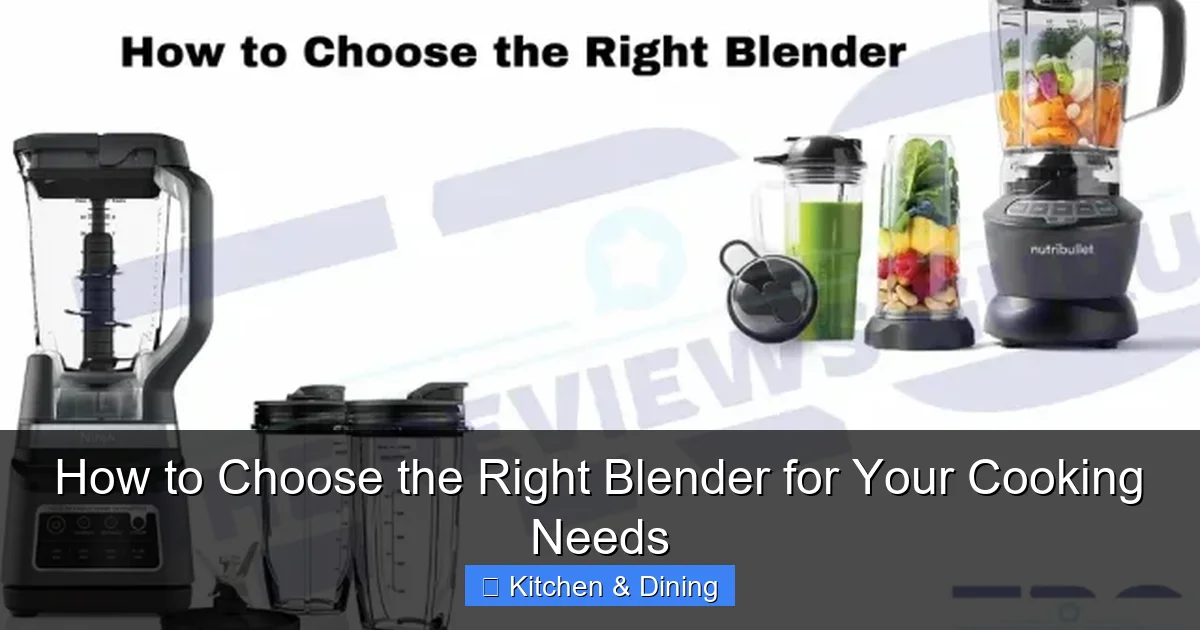
How to Choose the Right Blender for Your Cooking Needs
Choosing the right blender can transform your kitchen experience. This guide walks you through everything you need to consider, from the types of blenders available to power, capacity, and features. Learn to match a blender to your specific culinary needs, ensuring you make an informed purchase for delicious results every time.
Welcome to the world of effortless meal prep and delicious creations! Blenders are incredibly versatile kitchen tools that can whip up everything from silky smooth soups and vibrant smoothies to creamy dips and even homemade nut butters. But with so many options on the market, how do you pick the one that’s truly right for you? Don’t worry, we’re here to help!
This comprehensive guide will walk you through everything you need to know to choose the perfect blender for your cooking needs. We’ll explore the different types of blenders, the importance of power and features, and how to match a blender to your lifestyle and culinary ambitions. By the end of this guide, you’ll be confident in making a purchase that will elevate your kitchen game.
Key Takeaways
- Identify Your Primary Use: Determine whether you’ll mainly make smoothies, hot soups, nut butters, or other specific items.
- Understand Blender Types: Different blenders (countertop, personal, immersion) suit different tasks and storage capacities.
- Consider Power and Performance: Higher wattage generally means better blending, especially for tough ingredients.
- Evaluate Jar Material and Capacity: Glass is durable and doesn’t stain, while plastic is lighter. Choose a size that fits your household needs.
- Look for Key Features: Variable speed settings, pre-programmed cycles, and ease of cleaning enhance the user experience.
- Set Your Budget: Blenders range from affordable to high-end, so knowing your price range is crucial.
Step 1: Define Your Blending Needs
The first and most crucial step is to understand what you want your blender to do. Think about the types of recipes you plan to make most often. This will directly influence the type of blender and the features you should look for.
Smoothies and Shakes
If your primary goal is to create smooth, lump-free smoothies and protein shakes, you’ll need a blender that can effectively crush ice and frozen fruits. Personal blenders are often ideal for single servings, while larger countertop blenders can handle batches for the whole family.
Hot Soups and Sauces
For making hot soups directly in the blender, you’ll want a powerful model with a robust motor and a sturdy jar that can withstand heat. Some high-end blenders even have heating elements, allowing you to cook and blend ingredients in minutes. For creamy sauces, a good blending capability is essential to achieve a smooth texture.
Nut Butters and Dips
Making your own nut butters or thick dips like hummus requires a blender with significant power and a design that allows for easy scraping down the sides. You’ll need a motor that can run for longer periods without overheating and blades that can pulverize nuts into a smooth consistency.
Purees and Baby Food
If you’re preparing pureed foods for babies or making smooth purees for culinary creations, a blender with variable speed settings is beneficial. This allows you to control the texture precisely, moving from chunky to completely smooth with ease.
Chopping and Food Processing
While not their primary function, some powerful blenders can handle light chopping tasks, similar to a food processor. If you intend to use your blender for tasks like dicing onions or shredding vegetables occasionally, look for models with specific attachments or pulse functions designed for this.
Step 2: Explore Different Blender Types
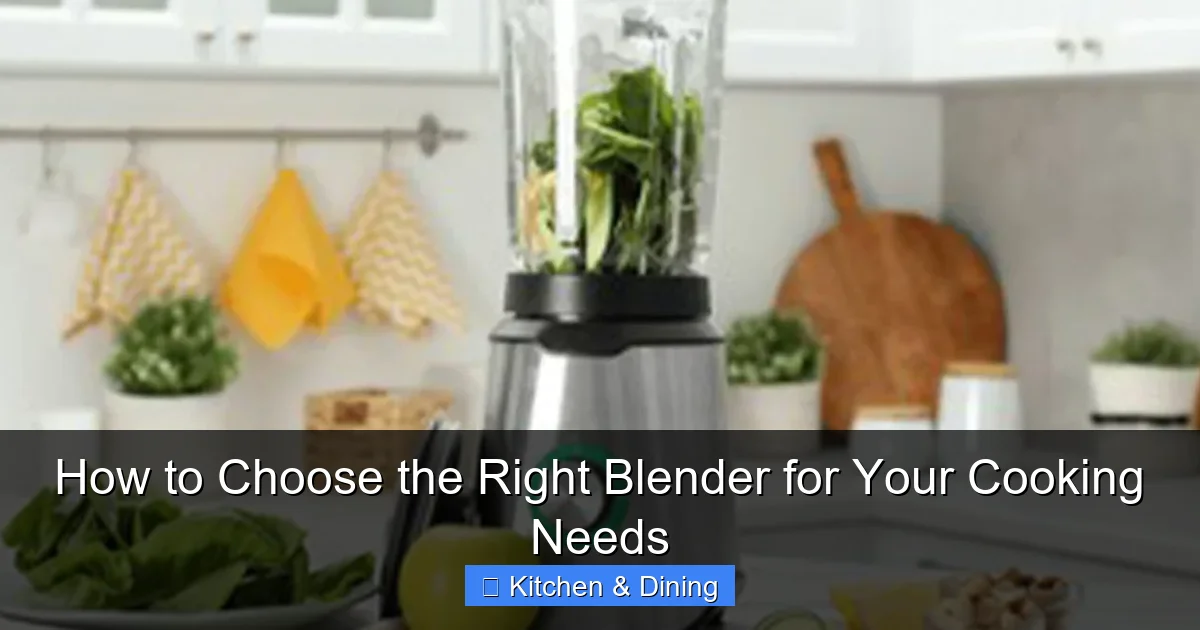
Visual guide about How to Choose the Right Blender for Your Cooking Needs
Image source: sinreen.com
There are several main types of blenders, each with its own advantages and ideal use cases. Understanding these will help you narrow down your choices.
Countertop Blenders
These are the classic, full-sized blenders you see in most kitchens. They typically have a base containing the motor and a removable jar that sits on top.
* Pros: Powerful motors, large capacities, versatile for a wide range of tasks, durable construction.
* Cons: Take up counter space, can be noisy, may be more expensive.
* Best For: Families, frequent use, making large batches, processing tough ingredients.
Personal Blenders
Also known as bullet blenders or single-serve blenders, these are compact and designed for making one or two servings at a time. You typically blend directly in a portable cup that can then be used as a drinking vessel.
* Pros: Compact, easy to store, quick and convenient for single servings, portable cups.
* Cons: Limited capacity, less powerful than countertop models, may struggle with tougher ingredients or large ice cubes.
* Best For: Individuals, small households, making smoothies and shakes on the go, limited kitchen space.
Immersion Blenders
Also called stick blenders or hand blenders, these are handheld devices that you immerse directly into your pot or container. They are great for blending soups and sauces directly in the pan, or for making small batches of mayonnaise or whipped cream.
* Pros: Extremely versatile, easy to store, no extra bowls or jars to wash, great for blending directly in cooking vessels.
* Cons: Less powerful than countertop models, can’t handle ice or frozen ingredients well, may require more effort for larger quantities.
* Best For: Blending hot liquids, making small batches of sauces or purees, quick tasks.
High-Performance Blenders
These are top-of-the-line countertop blenders that boast incredibly powerful motors, advanced blade systems, and often sophisticated control panels. They are designed to tackle virtually any blending task with exceptional results.
* Pros: Unmatched power, ability to create ultra-smooth textures, durable, often come with extensive warranties and accessories.
* Cons: Significantly more expensive, can be large and heavy.
* Best For: Serious home cooks, those who want the best possible results, making nut butters, grinding grains, creating velvety smooth soups.
Step 3: Evaluate Power and Performance
The motor’s power is a key indicator of a blender’s performance. This is usually measured in wattage.
Wattage Matters
* **Below 500 watts:** These blenders are generally best for softer ingredients like yogurt, milk, and protein powders. They might struggle with ice or frozen fruit.
* **500-1000 watts:** This range offers a good balance of power for most everyday tasks, including smoothies with frozen fruit and crushing ice.
* **1000+ watts:** High-performance blenders fall into this category. They have the power to pulverize tough ingredients like nuts, seeds, and fibrous vegetables, and can create incredibly smooth textures.
Blade Design and Material
The design and material of the blades also play a role. Stainless steel blades are standard and durable. Look for blades that are sharp and designed to create a vortex, pulling ingredients down towards them for efficient blending. Some high-performance blenders have specialized blade assemblies for specific tasks like grinding or kneading.
Step 4: Consider Jar Material and Capacity
The blender jar is where all the magic happens. Its material and size are important considerations.
Jar Materials
* **Glass:** Glass jars are durable, non-porous, and don’t absorb odors or stains. They are also easy to clean and don’t scratch easily. However, they are heavier and can break if dropped.
* **Plastic (BPA-free): Plastic jars are lighter and more shatter-resistant than glass. Ensure the plastic is BPA-free for your health and safety. Some plastics can scratch over time or absorb colors and odors from certain ingredients. Tritan is a popular, durable, and BPA-free plastic option.
* **Stainless Steel:** Less common for home blenders, but some high-performance models may feature stainless steel components or jars for extreme durability and thermal insulation.
Capacity
Consider how much you’ll be blending at once.
* **Personal blenders:** Typically have cups ranging from 16 to 24 ounces.
* **Countertop blenders:** Jars can range from 48 to 72 ounces or even larger. A 48-ounce jar is usually sufficient for a family of 3-4. If you frequently make large batches or entertain, a larger capacity might be beneficial.
Step 5: Look for Key Features and Controls
Beyond power and capacity, several features can significantly enhance your blending experience.
Speed Settings
* **Variable Speed Control:** This allows you to finely tune the blending speed for different textures, from a gentle stir to a high-speed puree.
* **Pulse Function:** The pulse button gives you short bursts of power, perfect for controlling texture, breaking down larger chunks before blending, or achieving a coarser chop.
Pre-Programmed Cycles
Many blenders come with pre-set programs for specific tasks like smoothies, ice crushing, soups, or dips. These can be very convenient, as the blender automatically adjusts speed and time for optimal results.
Ease of Cleaning
This is a big one! Look for blenders with dishwasher-safe parts (jar, lid, blades). Many blenders also have a self-cleaning function where you can add water and a drop of dish soap and run the blender on high speed for a quick clean. Removable blades are also a plus for thorough cleaning.
Noise Level
Blenders can be loud! If noise is a concern, especially in an open-plan living space or if you have young children, look for models that advertise noise-reduction technology or read reviews specifically mentioning sound levels. High-performance blenders tend to be louder due to their powerful motors.
Lid Design
A secure, leak-proof lid is essential. Some lids have removable center caps, which can be useful for adding ingredients while blending or for using tamper accessories.
Tamper
A tamper is a stick that fits through the lid opening and allows you to push ingredients down towards the blades without removing the lid. This is especially useful for very thick mixtures like nut butters or frozen desserts.
Step 6: Consider Your Budget
Blenders come at a wide range of price points. Setting a budget upfront will help you focus on the models that are within your reach.
* **Entry-Level (Under $50):** These are typically personal blenders or very basic countertop models. They’re suitable for simple tasks like blending powders with liquids or making very basic smoothies.
* **Mid-Range ($50 – $200):** This is where you’ll find most of the good quality countertop blenders. They offer good power, decent capacity, and useful features for everyday use. Many excellent personal blenders also fall into this category.
* **High-End ($200+):** This price range includes high-performance blenders known for their exceptional power, durability, and versatility. If you’re serious about cooking, make a lot of smoothies, or plan to tackle challenging blending tasks, investing in a high-end model can be worthwhile. For instance, if you’re looking to prepare ingredients efficiently, consider a powerful model that can even rival some food processors.
Troubleshooting Common Blender Issues
Even with the right blender, you might encounter a few hiccups. Here’s how to handle them:
* **Blender Not Starting:** Ensure the jar is properly seated on the base and that all safety locks are engaged. Check if the power cord is securely plugged in and if the outlet is working.
* **Ingredients Not Blending Smoothly:** If using a less powerful blender, try adding more liquid. For tough ingredients, cut them into smaller pieces. Ensure you’re not overfilling the jar. For thick mixtures, use the pulse function or a tamper to help move ingredients.
* **Motor Overheating:** If your blender has a thermal protection system, it might shut off if the motor gets too hot. Allow it to cool down before restarting. Avoid blending for excessively long periods with very thick or tough ingredients in less powerful models.
* **Leaking Jar:** Check that the lid is on securely and that the gasket (if present) is properly seated. Ensure the jar isn’t cracked or damaged.
Conclusion
Choosing the right blender is an investment in your kitchen and your culinary adventures. By carefully considering your primary blending needs, understanding the different types of blenders available, evaluating power and features, and setting a realistic budget, you can find a machine that will serve you well for years to come. Whether you’re a smoothie enthusiast, a soup maker, or a gourmet home chef, the perfect blender is out there waiting to help you create deliciousness with ease. Happy blending!