Can You Sharpen a Pocket Knife with a Kitchen Knife Sharpener
Wondering if your kitchen knife sharpener can handle your pocket knife? The answer is generally yes, but with a few important considerations. This guide will walk you through the process, explaining the types of sharpeners that work best, the steps involved, and crucial safety tips to ensure you get a sharp edge on your pocket knife without damaging it.
# Can You Sharpen a Pocket Knife with a Kitchen Knife Sharpener?
It’s a common question for anyone who owns both a trusty pocket knife and a set of kitchen knives. You reach for your pocket knife, only to find its edge has dulled with use. Your first thought might be: “Can I just use that kitchen knife sharpener I have in the drawer?” The good news is, in many cases, the answer is **yes!** You can indeed sharpen a pocket knife using a kitchen knife sharpener. However, it’s not a one-size-fits-all situation. There are important factors to consider, techniques to employ, and safety precautions to take to ensure you get a sharp edge on your pocket knife without damaging it or the sharpener.
This comprehensive guide will walk you through everything you need to know. We’ll cover which types of kitchen knife sharpeners are best suited for pocket knives, the step-by-step process for sharpening, essential tips for success, and how to troubleshoot any issues you might encounter. By the end of this guide, you’ll feel confident in your ability to keep your pocket knife razor-sharp using your existing kitchen tools.
## Understanding Your Sharpeners and Knives
Before you start sharpening, it’s essential to understand the tools you’re working with. Not all kitchen knife sharpeners are created equal, and neither are pocket knives.
### Types of Kitchen Knife Sharpeners and Their Suitability for Pocket Knives
*
Manual Pull-Through Sharpeners: These are the most common type found in kitchens. They typically have V-shaped slots with abrasive wheels or carbide inserts.
- Pros: Easy to use, quick, and widely available.
- Cons: Can be aggressive and may remove too much metal from smaller pocket knife blades. The fixed angle might not match your pocket knife’s bevel. Some models have very narrow slots that might not accommodate wider pocket knife blades.
- Suitability for Pocket Knives: Generally suitable for touch-ups on less expensive pocket knives, but use with caution and light pressure. Avoid using them on knives with delicate or complex blade profiles.
*
Electric Knife Sharpeners: These offer convenience and often have multiple sharpening stages. Many are designed to handle a range of knife types. If you’re looking for an efficient way to keep your kitchen knives in top shape, you might be interested in the best electric knife sharpener for kitchen knives.
- Pros: Fast, consistent results, and many have guided slots that help maintain the correct angle.
- Cons: Can be more expensive. Higher-end models are better suited for precision sharpening. Cheaper models might still be too aggressive.
- Suitability for Pocket Knives: Many electric sharpeners can work well, especially those with fine-grit stages and adjustable angle settings. Always check the manufacturer’s recommendations.
*
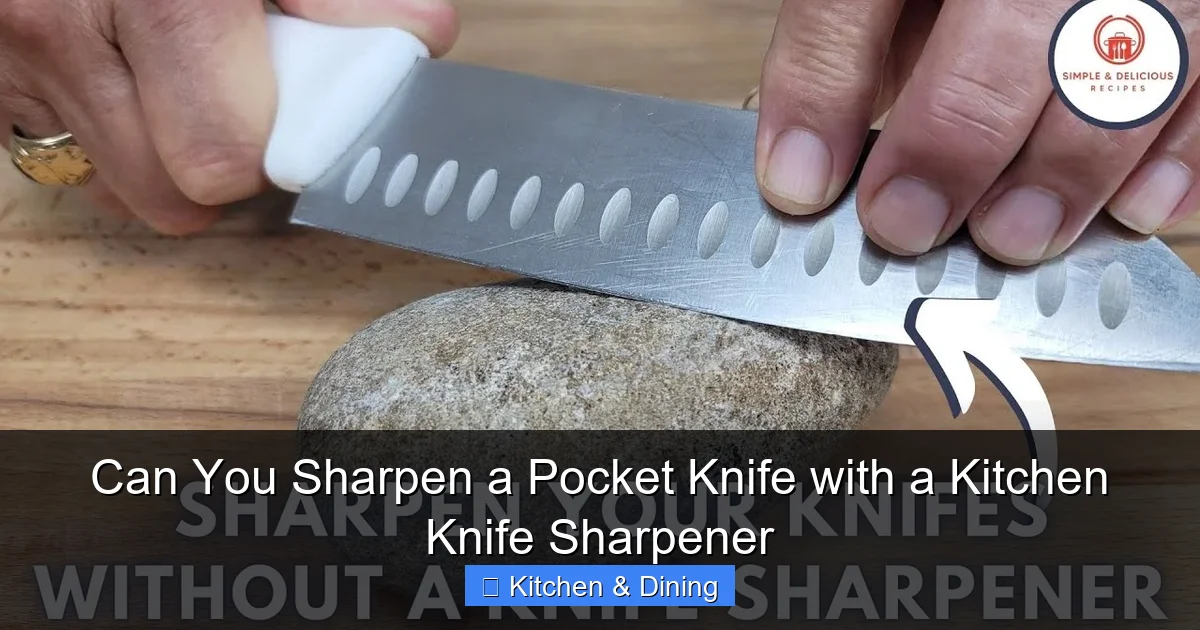
Sharpening Stones (Whetstones): These are traditional tools offering the most control and best results, but they require more skill and practice. They come in various grits, from coarse to very fine. If you’re building a comprehensive knife collection, a good set of stones is invaluable for maintaining anything from your Japanese kitchen knife set to your EDC blade.
- Pros: Provide the most control over the angle and grit, allowing for a customized and superior edge. Can sharpen almost any type of blade.
- Cons: Requires practice to master the technique and maintain a consistent angle.
- Suitability for Pocket Knives: Excellent choice for pocket knives, especially high-quality ones, as you can precisely control the edge you create.
*
Honing Steels (Sharpening Rods): While often confused with sharpeners, honing steels primarily realign the knife’s edge rather than removing metal. Some steels have diamond or ceramic coatings that can actually sharpen.
- Pros: Quick edge maintenance.
- Cons: Doesn’t truly sharpen a dull blade. Can be ineffective for significant dullness.
- Suitability for Pocket Knives: Good for maintaining an already sharp edge, but not for restoring a dull one.
### Understanding Your Pocket Knife Blade
*
Steel Type: Pocket knives are often made from harder steels than typical kitchen knives. This means they can hold a sharper edge but can also be more brittle. Aggressive sharpening can damage them.
*
Blade Geometry: Pocket knives often have a narrower bevel angle (the angle of the edge itself) than kitchen knives. Kitchen knives might be 15-20 degrees per side, while a pocket knife could be 10-15 degrees per side. Using a sharpener set for a wider angle will result in a weaker, less acute edge.
*
Blade Size and Shape: Small or unusually shaped pocket knife blades might be difficult to maneuver in some sharpeners. Ensure the sharpener’s slots or surfaces can accommodate your specific blade.
## Step-by-Step Guide: Sharpening Your Pocket Knife
This guide focuses on using common manual pull-through sharpeners and offers advice for other types.
### Method 1: Using a Manual Pull-Through Kitchen Knife Sharpener
This is the most accessible method for many.
#### Step 1: Prepare Your Workspace and Sharpener
*
Find a Stable Surface: Place the sharpener on a flat, stable surface. Some sharpeners have non-slip feet, which are ideal. If yours doesn’t, you might want to place a damp cloth underneath to prevent it from sliding.
*
Inspect the Sharpener: Ensure the abrasive slots are clean and free of debris from previous sharpening sessions. Wipe it down if necessary.
*
Identify Sharpening Stages: Most pull-through sharpeners have at least two stages: a coarse stage for repairing minor chips or reshaping the edge, and a fine stage for honing and polishing. Some have a third, even finer stage for micro-chamfering.
#### Step 2: Position Your Pocket Knife
*
Hold the Sharpener Securely: With one hand, hold the sharpener firmly in place.
*
Insert the Blade: With your other hand, grasp the handle of your pocket knife. Carefully insert the heel of the blade (the part closest to the handle) into the designated slot. Ensure the blade is centered and makes contact with the abrasive surfaces.
#### Step 3: Sharpen Using the Coarse Slot (If Needed)
*
Start with Light Pressure: If your pocket knife has significant dullness or minor chips, begin with the coarse slot. Apply only light, consistent pressure. You’re trying to reform the edge, not grind it down quickly.
*
Pull Through Gently: Pull the blade smoothly through the slot from heel to tip. Imagine you are slicing a thin layer off the abrasive material. Repeat this motion several times.
*
Count Your Passes: Aim for an equal number of passes on each side of the blade. Start with 3-5 passes per side and check the edge.
*
Check the Edge: Carefully feel the edge (away from your fingers!) or test it on a piece of paper. If it’s still not sharp, repeat the process with a few more passes. Avoid over-sharpening.
#### Step 4: Sharpen Using the Fine Slot
*
Move to the Fine Slot: Once the coarse stage has improved the edge, move to the fine slot. This stage refines the edge and removes any burr left by the coarse abrasives.
*
Use Even Lighter Pressure: Apply even lighter pressure than you did in the coarse stage. The goal here is to polish and align the microscopic teeth of the edge.
*
Perform More Passes: Perform 5-10 passes per side, alternating sides if your sharpener allows for it or if you feel it’s necessary. Again, pull smoothly and consistently from heel to tip.
#### Step 5: Test and Clean
*
Test the Sharpness: The best way to test is by trying to slice through a piece of paper. A sharp knife will slice cleanly with minimal effort. You can also carefully run your thumbnail across the edge (away from the cutting direction) to feel the sharpness.
*
Clean the Blade and Sharpener: Wipe the pocket knife blade thoroughly with a clean cloth to remove any metal filings. Clean the sharpener slots as well. This prevents contamination and keeps your sharpener effective.
### Method 2: Using an Electric Kitchen Knife Sharpener
If you have an electric sharpener, consult its manual first.
*
Read the Instructions: Different electric sharpeners have different designs and recommended angles. Follow the manufacturer’s guidelines carefully.
*
Select the Right Slot: Many electric sharpeners have numbered slots indicating grit coarseness or stage. Start with a coarser grit if needed, but be extra cautious with pocket knives. If your knife is only slightly dull, start with a finer grit.
*
Gentle and Steady Passes: Insert the pocket knife blade into the designated slot. Typically, you’ll pull the blade through slowly and steadily. Avoid forcing the knife. The motor does the work.
*
Alternate Sides if Possible: Some electric sharpeners automatically sharpen both sides. If yours requires manual alternating, do so with even passes.
*
Do Not Overdo It: Electric sharpeners can remove metal quickly. It’s better to make fewer passes and test than to over-sharpen.
*
Clean Thoroughly: As with manual sharpeners, clean the blade and the sharpener after use.
### Method 3: Using Sharpening Stones (Whetstones)
For the best results, especially with high-quality pocket knives, sharpening stones are superior.
*
Soak the Stone: If you’re using water stones, soak them in water until the air bubbles stop rising (usually 5-15 minutes).
*
Find Your Angle: This is the trickiest part. Research the typical bevel angle for your specific pocket knife (often 10-15 degrees per side). You can use angle guides or mark the bevel with a marker to see when it’s making full contact with the stone.
*
Start with a Coarser Grit: Begin with a lower grit stone (e.g., 400-1000) if the blade is dull or damaged. If it’s just a touch-up, a medium grit (1000-3000) might suffice.
*
Sharpen with Consistent Strokes: Hold the knife at your chosen angle and move the blade across the stone, covering the entire bevel. Alternate sides, performing an equal number of strokes on each. Use moderate pressure.
*
Progress to Finer Grits: Once you’ve achieved a sharp edge on the coarser stone, move to finer grit stones (e.g., 3000-8000+) to polish the edge to razor sharpness.
*
Deburr: After sharpening, you may need to remove a burr (a small wire edge) by making a few light, alternating strokes on the finest stone or a leather strop.
*
Clean Up: Thoroughly wash and dry the knife and stones.
## Practical Tips for Pocket Knife Sharpening
*
Light Pressure is Key: Pocket knives, especially those made of harder steels, don’t need aggressive sharpening. Too much pressure can overheat and damage the blade, or even chip it. Think gentle, consistent strokes.
*
Match the Angle: If your sharpener has a fixed angle, and it’s much wider than your pocket knife’s bevel angle, you might not get an optimal edge. For precision, stones are best. If using a pull-through, try to ensure the blade sits as flat as possible in the slot to utilize its existing angle.
*
Work in a Well-Lit Area: Good lighting helps you see what you’re doing, ensuring you’re making even contact and avoiding accidental slips.
*
Use the Right Sharpener for the Job: For high-end, specialized pocket knives (like premium Japanese folding knives, which have very specific edge geometry), a generic kitchen sharpener might not be ideal. In such cases, investing in a dedicated sharpening system or sending it to a professional is recommended. However, for everyday pocket knives, most common kitchen sharpeners can provide a usable edge.
*
Don’t Over-Sharpen: It’s easier to add more passes than to fix an over-sharpened or damaged blade. Stop when the knife passes the paper test.
*
Cleanliness Prevents Contamination: Always ensure your pocket knife is clean before sharpening and that you clean both the knife and sharpener thoroughly afterward. Metal filings can transfer to food if the knife is used in the kitchen, and grit can dull your sharpener.
## Troubleshooting Common Issues
*
Uneven Edge: If one side is sharper than the other, you might not have been pulling the blade through evenly. Try to be more consistent with your strokes and ensure the blade is centered in the slot.
*
Burr Remains: A persistent burr indicates the fine stage wasn’t sufficient. Try making a few more very light passes on the finest grit available, or use a honing steel. Sometimes a slight angle adjustment on the final passes can help knock off a stubborn burr.
*
Knife Still Not Sharp: Your sharpener might be worn out, or the blade may require a more aggressive approach (like starting with a coarse grit on a pull-through or using a lower grit stone). If using a pull-through, ensure you’re getting full contact from heel to tip.
*
Blade Feels Rough or Damaged: You may have used too much pressure or the sharpener’s abrasive was too coarse or damaged. For significant damage, you might need to use a sharpening stone to reshape the edge. For minor issues, try a few passes on a very fine grit.
## Conclusion
So, can you sharpen a pocket knife with a kitchen knife sharpener? The answer is a resounding **yes**, with the right knowledge and approach. While specialized tools offer the ultimate precision, most common kitchen knife sharpeners, particularly manual pull-through models and many electric sharpeners, can effectively restore a dull edge to your pocket knife.
The key is to be mindful of your knife’s blade geometry, use light pressure, and prioritize safety. For everyday pocket knives, a kitchen sharpener is a perfectly viable tool. For your most prized blades or if you seek absolute perfection, consider investing in sharpening stones or consulting professional services. By following the steps and tips in this guide, you can ensure your pocket knife remains a sharp and reliable companion for any task. Remember, a sharp knife is a safer knife!
Key Takeaways
- Compatibility is Key: Not all kitchen knife sharpeners are ideal for pocket knives. V-slot or guided sharpening systems are generally suitable, while some basic pull-through sharpeners might be too aggressive or lack the precision needed.
- Blade Angle Matters: Pocket knives often have a different bevel angle than kitchen knives. Understanding and matching this angle is crucial for effective sharpening and avoiding damage.
- Gentle Approach is Best: Pocket knife blades are usually smaller and made of harder steel. Use lighter pressure and fewer passes than you might for a kitchen knife.
- Safety First: Always prioritize safety. Ensure the knife is secure, use proper hand positioning, and work in a well-lit area to avoid accidents.
- Consider the Sharpener Type: Manual pull-through sharpeners, electric sharpeners designed for a range of knives, and sharpening stones can all be used, but each has nuances for pocket knife sharpening.
- Cleanliness is Crucial: After sharpening, thoroughly clean both the sharpener and the pocket knife to remove any metal particles or debris.