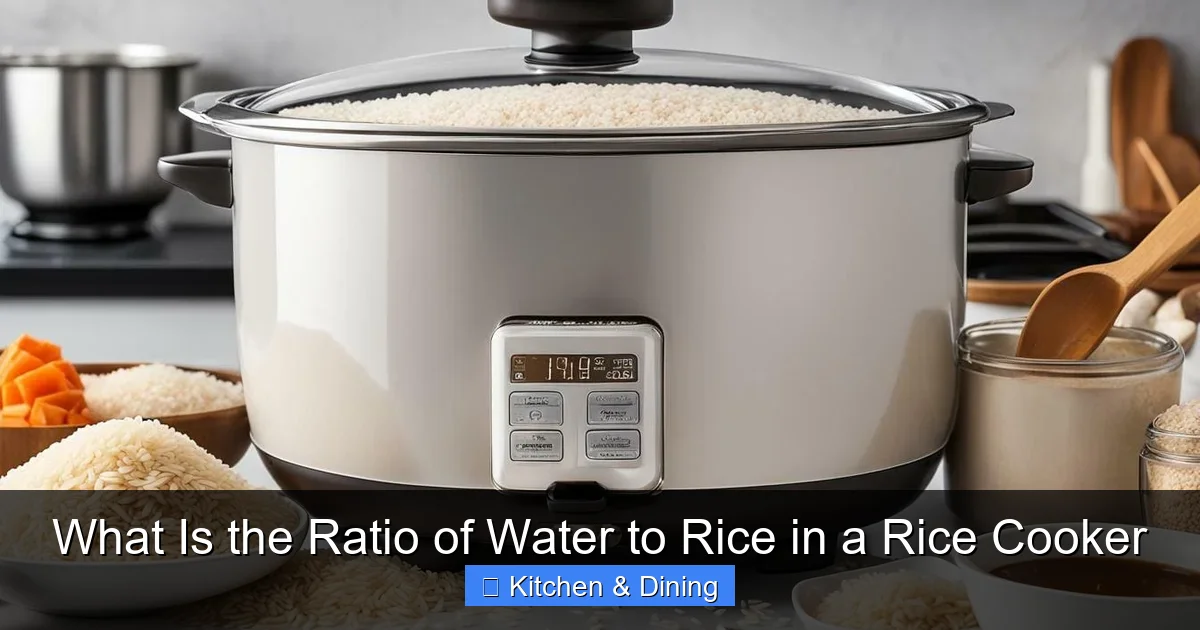
What Is the Ratio of Water to Rice in a Rice Cooker
Achieving perfectly cooked rice in a rice cooker hinges on getting the water-to-rice ratio right. This guide breaks down the common ratios for different rice types, explains how to adjust for factors like rice freshness and cooker type, and offers troubleshooting tips for common issues. Follow these steps for consistently fluffy and delicious rice.
# What Is the Ratio of Water to Rice in a Rice Cooker?
Rice is a staple food for billions worldwide, and for good reason! It’s versatile, filling, and can be incredibly delicious. While cooking rice on the stovetop can be a bit of an art form, rice cookers have made the process wonderfully simple and consistent. However, even with a rice cooker, one crucial element can make or break your rice: the water-to-rice ratio.
Getting this ratio wrong can lead to gummy, mushy rice or, worse, dry, undercooked grains. But don’t worry! This comprehensive guide will walk you through everything you need to know about the perfect water-to-rice ratio for your rice cooker, ensuring fluffy, perfectly cooked rice every single time.
## Understanding the Basics: Why the Ratio Matters
Before we dive into specific measurements, let’s understand why the water-to-rice ratio is so important. Rice grains are essentially starchy kernels. When cooked, they absorb liquid and swell up. The amount of liquid they absorb dictates their final texture.
* **Too Little Water:** The rice won’t cook completely. It will remain hard, dry, and potentially burnt on the bottom.
* **Too Much Water:** The rice will absorb too much liquid, leading to a mushy, gummy, or watery consistency.
A rice cooker simplifies this by providing a controlled cooking environment. It heats the water to a specific temperature and steams the rice until it’s cooked. Your job is to provide the right amount of water to facilitate this process for the specific type of rice you’re using.
## The Standard Ratio for White Rice
For most common varieties of long-grain white rice, such as American long-grain white rice, a **1:1 ratio of rice to water** is the golden rule when using a rice cooker.
This means for every cup of uncooked rice you put in, you’ll add one cup of water.
### How to Measure
1. **Measure Your Rice:** Use a standard dry measuring cup. Scooping rice directly from the bag can compact it, leading to inaccurate measurements. Instead, spoon the rice into your measuring cup and level it off with a straight edge (like the back of a knife or a spatula).
2. **Add Water:** Pour the same volume of *cold, clean water* into the rice cooker pot.
### Example:
* If you are cooking 1 cup of white rice, you will add 1 cup of water.
* If you are cooking 2 cups of white rice, you will add 2 cups of water.
Remember, this is a starting point. We’ll discuss factors that might require slight adjustments later.
## Adjusting for Different Rice Varieties
Not all rice is created equal! Different types of rice have varying densities, bran layers, and starch content, which affect how much water they need.
### Brown Rice
Brown rice is essentially white rice with the bran and germ intact. This means it’s denser and has more fiber, requiring more liquid and a longer cooking time to soften.
* **General Ratio:** For most brown rice varieties (short-grain, long-grain), a **1:2 ratio of rice to water** is a good starting point. Some might even prefer 1:2.5.
* **Why the Difference?** The bran layer absorbs more moisture and takes longer to break down.
### How to Measure for Brown Rice
1. **Measure Your Brown Rice:** Use a dry measuring cup, leveling it off.
2. **Add Water:** For every cup of brown rice, add 2 cups of water.
### Example:
* If you are cooking 1 cup of brown rice, you will add 2 cups of water.
* If you are cooking 1.5 cups of brown rice, you will add 3 cups of water.
### Specialty Rices (Basmati, Jasmine, Arborio, etc.)
Many specialty rice types have their own recommended ratios, often detailed on the packaging. As a general guide:
* **Basmati and Jasmine Rice:** These fragrant long-grain rices often cook well with a **1:1 to 1:1.25 ratio**. They tend to absorb water efficiently.
* **Arborio Rice (for Risotto):** While risotto is typically cooked on the stovetop, if you’re using a rice cooker for a simpler version, it generally needs more water. A good starting point might be **1:3 or 1:4**, but be prepared to add more liquid if it looks too dry. However, rice cookers are not ideal for traditional risotto texture.
* **Wild Rice:** Wild rice is technically a grass seed and requires significantly more water and a longer cooking time. Often, a **1:3 or 1:4 ratio** is recommended. It also benefits from soaking beforehand.
**Tip:** Always check the rice packaging for specific instructions.
## Factors That Can Affect the Water-to-Rice Ratio
While the 1:1 or 1:2 ratios are excellent starting points, several other factors can influence how much water your rice needs.
### 1. The Age and Freshness of Your Rice
* **Older Rice:** As rice ages, it loses moisture and becomes drier. Dry rice will absorb more water during cooking. If you’re using rice that’s been in your pantry for a long time, you might need to add an extra tablespoon or two of water per cup of rice.
* **Fresh Rice:** Newly milled rice tends to be moister and may require slightly less water.
### 2. Rinsing Your Rice
Rinsing rice is a common practice. It removes excess surface starch, which can prevent the rice from becoming overly sticky or clumpy.
* **If you rinse:** The rice grains might absorb water slightly differently. Some people find they need to reduce the water by about a tablespoon per cup of rice if they rinse thoroughly.
* **If you don’t rinse:** You might want to stick to the standard ratio or even add a touch more water if you prefer a softer texture, as the natural starch will contribute to a creamier result.
**Recommendation:** For the fluffiest rice, rinsing is generally recommended for most white rice types. For brown rice, rinsing is less critical for texture but can still remove impurities.
### 3. Your Rice Cooker Model
Different rice cooker designs can have slight variations in how they heat and retain steam.
* **Basic Rice Cookers:** These are usually straightforward. Follow the general ratios.
* **Advanced Rice Cookers (e.g., Induction Heating, Fuzzy Logic):** These often have built-in sensors and programming to adjust cooking cycles. They might have specific water lines marked inside the pot for different rice types. If your cooker has these markings, they are usually the most accurate guide. Many manufacturers of these advanced cookers will suggest a 1:1 ratio for white rice. For instance, you might find a guide for the best Korean rice cookers often recommends precise measurements based on their internal markings.
* **Older Cookers:** May have less precise temperature control, potentially requiring more careful attention to the ratio.
### 4. Personal Preference for Texture
This is entirely subjective!
* **Softer, Fluffier Rice:** If you prefer your rice to be very soft and almost melt-in-your-mouth, add a little extra water – maybe an extra tablespoon or two per cup.
* **Firmer, Al Dente Rice:** If you like a little more chew and definition in your grains, slightly reduce the water – a tablespoon less per cup can make a difference.
## Step-by-Step Guide to Perfect Rice in Your Rice Cooker
Let’s put it all together. Here’s how to get it right every time:
### Step 1: Choose Your Rice and Understand Its Needs
* Decide if you’re cooking white rice, brown rice, basmati, jasmine, or another type.
* Check the packaging for any specific water-to-rice ratio recommendations.
### Step 2: Measure Your Rice Accurately
* Use a dry measuring cup.
* Spoon rice into the cup and level off the top. Do not scoop directly from the bag.
### Step 3: Rinse Your Rice (Optional but Recommended for Most)
* Place the measured rice in a fine-mesh sieve or in the rice cooker pot if it’s suitable for rinsing.
* Run cold water over the rice, swirling it gently with your hand.
* Continue rinsing until the water runs mostly clear. This can take 3-5 rinses.
* Drain the rice thoroughly.
### Step 4: Add Water to the Rice Cooker
* **For White Rice:** Add an equal amount of cold water as rice (1:1 ratio). For example, if you have 1 cup of rice, add 1 cup of water.
* **For Brown Rice:** Add double the amount of water as rice (1:2 ratio). For example, if you have 1 cup of brown rice, add 2 cups of water.
* **For Specialty Rices:** Refer to packaging or use the ratios mentioned above as a starting point.
### Step 5: Place the Inner Pot and Close the Lid
* Ensure the inner pot is clean and dry on the outside before placing it in the cooker.
* Securely close the rice cooker lid.
### Step 6: Select the Correct Setting and Cook
* Turn on your rice cooker and select the appropriate setting. Most modern cookers have settings for “White Rice,” “Brown Rice,” “Sushi Rice,” etc.
* If you don’t have specific settings, use the standard “Cook” or “White Rice” function.
### Step 7: Let it Rest
* Once the rice cooker switches to “Keep Warm” or finishes its cycle, resist the urge to open the lid immediately!
* Let the rice rest for at least 10-15 minutes. This allows the steam to distribute evenly and finishes the cooking process. Opening too soon can release precious steam needed for fluffy grains.
### Step 8: Fluff and Serve
* After resting, open the lid.
* Use a rice paddle or fork to gently fluff the rice, separating the grains.
* Serve and enjoy your perfectly cooked rice!
## Troubleshooting Common Rice Cooker Problems
Even with the right ratio, sometimes things don’t go perfectly. Here’s how to troubleshoot:
### Problem: Rice is too mushy or gummy.
* **Possible Cause:** Too much water, or the rice was over-rinsed and then too much water was added.
* **Solution:** Next time, reduce the water slightly (by a tablespoon per cup of rice). Ensure you’re using the correct setting for your rice type. If you consistently get mushy rice, consider trying a cooker that offers more precise controls. Some people find that using a best rice cookers reviews can help choose a model known for consistent results.
### Problem: Rice is hard or undercooked.
* **Possible Cause:** Not enough water, rice cooker malfunction, or the rice is very old and dry.
* **Solution:** Increase the water amount slightly next time. Check if your rice cooker is heating properly. For very old rice, try adding an extra tablespoon or two of water. If the problem persists, the rice cooker might need servicing or replacement.
### Problem: Rice is burnt on the bottom.
* **Possible Cause:** Too little water, or the rice cooker’s heating element is too hot or not distributing heat evenly.
* **Solution:** Ensure you’re using the correct water ratio. If it’s a consistent issue, you might be using too much rice for the cooker’s capacity, or the cooker itself might be faulty. Some basic cookers can sometimes have hot spots.
### Problem: Rice sticks excessively to the bottom of the pot.
* **Possible Cause:** Not enough water, or the pot surface might be scratched or worn.
* **Solution:** Double-check your water ratio. If your rice cooker pot has a non-stick coating, avoid using abrasive utensils that can scratch it. If the coating is damaged, it might be time to replace the inner pot. Some find that adding a tiny bit of oil or butter to the water can help prevent sticking, though this can slightly alter the flavor.
## The Final Ratio: It’s More Art Than Exact Science (Sometimes!)
While we’ve provided clear guidelines, remember that cooking is also about understanding your ingredients and your equipment. The ideal water-to-rice ratio can be a starting point that you fine-tune over time based on your specific rice, your cooker, and your taste preferences.
Don’t be discouraged if your first few attempts aren’t absolutely perfect. With a little practice and by paying attention to these details, you’ll soon be a rice-cooking pro, consistently delivering fluffy, delicious rice with minimal effort thanks to your trusty rice cooker. Happy cooking!
- The Standard Ratio: For most white rice varieties, a 1:1 ratio of rice to water is a great starting point in a rice cooker.
- Brown Rice Needs More Water: Brown rice requires more hydration, typically a 1:2 or 1:2.5 ratio of rice to water.
- Rinsing Matters: Rinsing rice removes excess starch, which can lead to stickier rice. Some prefer not to rinse for fluffier grains.
- Cooker Variations Exist: Different rice cooker models may have slightly different optimal ratios. Always check your manual.
- Freshness Impacts Absorption: Older, dried-out rice will absorb more water than fresh rice.
- Adjust for Texture: If you prefer softer rice, add a little more water. For firmer rice, use slightly less.
- Beyond the Basics: Specialty rices like basmati or jasmine might have specific ratio recommendations.