How Do You Safely and Properly Carry a Sharp Knife in the Kitchen
Carrying a sharp kitchen knife requires respect and careful technique to prevent accidents. This guide outlines the proper methods for safely transporting knives, emphasizing blade pointing away and a secure grip. By following these simple, yet crucial steps, you can significantly reduce the risk of cuts and ensure a safer kitchen environment.
## How Do You Safely and Properly Carry a Sharp Knife in the Kitchen
The kitchen is a place of creativity and delicious meals. But it’s also a place where sharp tools are used daily. Knives, especially sharp ones, are essential for cooking. However, they can also be dangerous if not handled with care. Learning how to safely and properly carry a sharp knife in the kitchen is a fundamental skill that every cook should master. This guide will walk you through the essential techniques and best practices to keep you and everyone around you safe.
### The Importance of Safe Knife Handling
Why is it so important to carry a knife correctly? It’s simple: accidents happen. A moment of carelessness with a sharp blade can lead to a painful cut. These injuries can range from minor nicks to severe lacerations requiring medical attention. Proper knife carrying minimizes these risks. It’s not just about avoiding injury; it’s about respecting your tools and creating a culture of safety in your kitchen. Whether you’re reaching for your favorite chef’s knife from a block or moving a santoku across the counter, the principles remain the same. Understanding and implementing these safe practices ensures that your cooking experience is enjoyable and injury-free.
### Preparing to Carry a Knife
Before you even pick up a knife to move it, a few preparatory steps can make the process much safer. These are small things, but they make a big difference.
#### Assess Your Path
Before you move, take a quick look around. Is the floor clear? Are there other people moving around? Knowing your path and potential obstacles is key to avoiding collisions. If the kitchen is crowded, it might be better to wait for a moment when you have a clear path.
#### Identify Your Destination
Where are you taking the knife? Is it to the sink to be washed? To a knife block for storage? To the cutting board for immediate use? Knowing your destination helps you plan your route and ensures you’re not just wandering with a sharp object.
### The Proper Way to Carry a Chef’s Knife (and Most Other Knives)
The most common and safest way to carry a chef’s knife, and indeed most kitchen knives, is often referred to as the “culinary carry” or the “guiding hand” method. This method prioritizes keeping the sharp edge away from your body.
#### Step 1: Secure the Handle
The first and most crucial step is to get a firm grip on the knife’s handle.
##### Grip the Handle Firmly
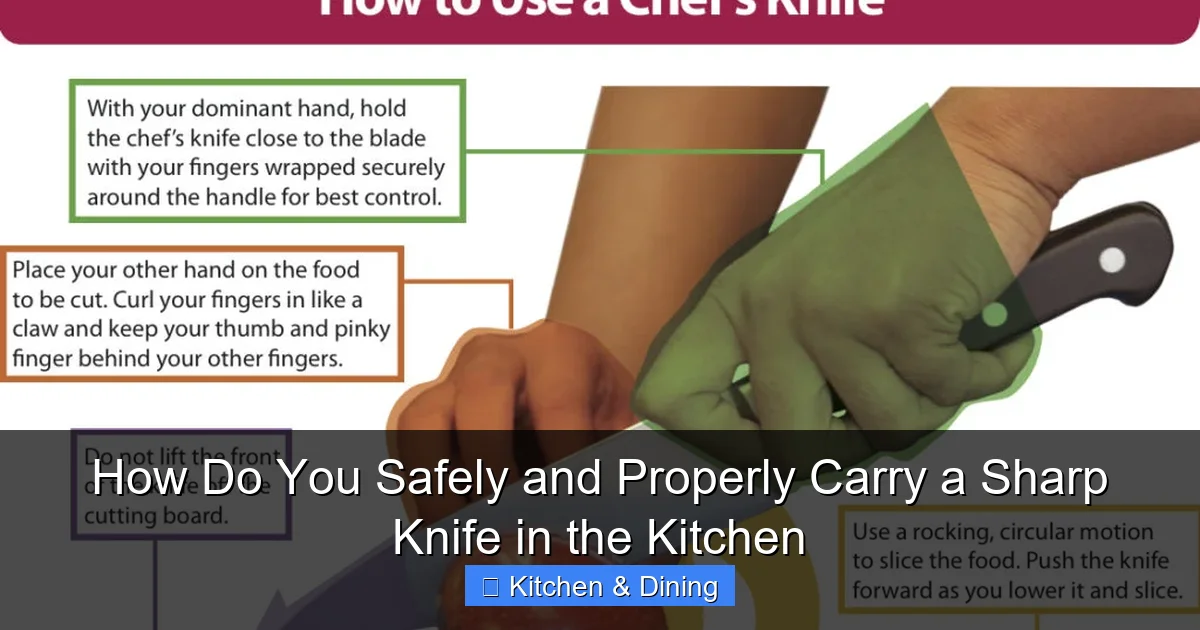
Wrap your fingers around the handle of the knife. Your thumb should rest on one side of the handle, and your fingers should curl around the other. Make sure your grip is secure enough that the knife won’t slip, but not so tight that your hand is tense. Tension can lead to a loss of control.
##### Keep Fingers Away from the Blade
Crucially, ensure that none of your fingers are near the blade itself. They should all be well behind the bolster (the part where the blade meets the handle) or on the handle itself.
#### Step 2: Position the Blade
This is where the blade’s direction becomes paramount.
##### Point the Blade Forward and Down
Hold the knife with the blade pointing forward, away from your body, and slightly downwards. Imagine you are carrying a sword in a parade, but at a much more manageable, safer angle for a kitchen. The sharp edge should face away from you, and the tip should be directed towards the floor or slightly forward. This prevents accidental cuts if you stumble or bump into something.
##### The “Guiding Hand” Position
Some people prefer to rest the flat of the blade against their forearm, with the sharp edge facing away from the arm. This is often called the “guiding hand” method. It offers an extra layer of security, as the forearm acts as a barrier. However, it requires good control and awareness. The most universally accepted and recommended method is pointing the blade forward and slightly down.
#### Step 3: Move Deliberately
Once you have a secure grip and the blade is properly oriented, it’s time to move.
##### Walk Slowly and Mindfully
Do not rush. Take slow, deliberate steps. Be aware of your surroundings. Watch where you are going. If you need to turn, do so smoothly.
##### Announce Your Presence
If there are other people in the kitchen, it’s good practice to announce that you are carrying a knife. A simple, “Knife coming through,” or “Careful, I have a knife,” can prevent collisions and alert others to your movement.
#### Step 4: Place the Knife Down Safely
When you reach your destination, place the knife down carefully.
##### Place on a Flat, Stable Surface
Set the knife down on a clean, dry, and stable surface. Ensure the blade is not pointing towards the edge of the counter or sink where it could be easily knocked off.
##### If Placing in a Block or Holder
If you are putting the knife into a knife block or a magnetic strip, do so carefully. Guide the blade into its slot or onto the magnet. Never throw or drop a knife into a holder.
### Carrying Specific Types of Knives
While the general principles apply to most knives, some types might require slight adjustments or additional considerations.
#### Paring Knives
Paring knives are small but still sharp. The same principles of pointing the blade away and securing the handle apply. Because they are small, it’s easy to get careless. Always treat them with the same respect as a larger chef’s knife.
#### Bread Knives
Bread knives have serrated edges. While the serrations can be less intimidating than a straight edge, they can still cause significant damage. Carry them with the blade pointing away and a secure grip on the handle.
#### Boning and Fillet Knives
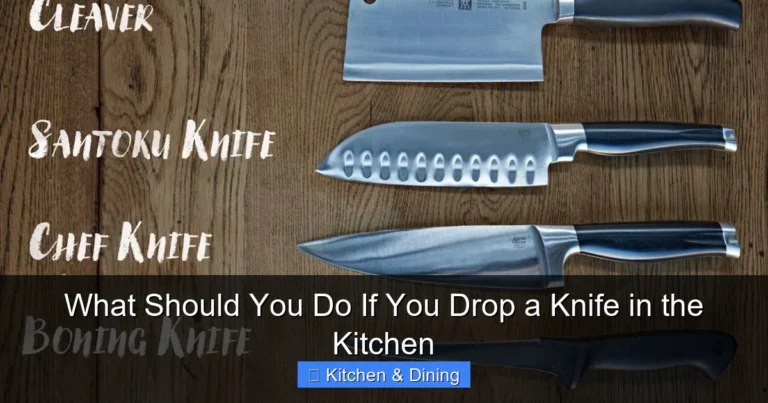
These knives are often thin and flexible. Their flexibility means they can bend and potentially contact you unexpectedly if not handled carefully. Always maintain a firm grip and ensure the blade is pointed away. If you’re considering a new set, exploring the best boning knife for chicken or the best fillet knife for saltwater fish can help you find the right tool for specific tasks, but safe handling is paramount for all.
#### Utility Knives
Utility knives are versatile and can have various blade shapes. Again, the core principle of pointing the blade away from your body and having a secure grip on the handle is your primary safety measure.
### What NOT to Do When Carrying a Knife
Understanding what to avoid is just as important as knowing what to do.
#### Never Carry a Knife Blade-Up
This is a cardinal sin of knife safety. Carrying a knife with the blade pointing upwards is an invitation to disaster. If you stumble, the knife can easily fall onto you.
#### Don’t Rush or Be Distracted
Multitasking is often necessary in the kitchen, but not when carrying a sharp knife. Avoid carrying a knife while talking on the phone, holding other items, or engaging in hurried movements. Focus on the task at hand.
#### Don’t Linger with a Knife in Hand
If you are carrying a knife to a destination, get there. Don’t stand around holding a knife for extended periods. Place it down safely as soon as you reach your intended spot.
#### Never Hand a Knife Blade-First
When passing a knife to someone else, always hand it to them handle-first. Present the knife with the handle facing them, allowing them to grasp it securely without touching the blade.
#### Avoid Juggling or Playing with Knives
Knives are tools, not toys. Never juggle, spin, or play with a knife. This is extremely dangerous and shows a lack of respect for the tool and for safety.
### Storing Knives Safely When Not in Use
While this guide focuses on carrying, safe storage is a critical companion to safe handling. Properly stored knives are less likely to cause accidental cuts. Consider a good knife block, a magnetic strip, or knife guards. If you are looking for new kitchen essentials, a well-curated best knife set for kitchen, perhaps from a reputable source like a best American-made kitchen knife set or a sophisticated best Damascus kitchen knife set, will often include safe storage solutions. Even a single, high-quality best utility kitchen knife needs a safe resting place.
### What If Someone Else is Carrying a Knife?
Your responsibility doesn’t end with your own actions. You also need to be aware of others.
#### Give Them Space
If you see someone carrying a knife, give them a wide berth. Don’t walk directly in front of them or try to squeeze past them in a tight space.
#### Be Aware of Their Movement
Pay attention to where they are going and what they are doing. This allows you to react if they seem unsteady or if there’s a potential hazard.
#### Communicate
If necessary, communicate. If you need to pass them, wait for a safe moment or ask if it’s okay.
### Troubleshooting Common Issues
Even with the best intentions, minor issues can arise.
#### Dropped Knife?
If you accidentally drop a knife:
* Do NOT try to catch it. This is crucial. You are far more likely to injure yourself trying to catch a falling knife than by letting it fall.
* Step back quickly and let it land.
* Once it has stopped moving, assess the situation. Pick it up carefully by the handle, ensuring the blade is pointing away from you.
#### Knife Slipping from Grip?
If you feel a knife starting to slip from your grip:
* Do NOT try to regain your grip on the blade.
* Let go of the handle and step back quickly.
* Allow the knife to fall and then retrieve it safely by the handle.
### Conclusion
Mastering the art of safely and properly carrying a sharp knife in the kitchen is a vital skill. It’s a practice rooted in respect for the tool and for yourself and others. By consistently applying the principles of pointing the blade away from your body, maintaining a secure grip on the handle, moving deliberately, and communicating your movements, you significantly reduce the risk of accidents. Remember, a sharp knife is a safe knife when handled correctly. Make these practices second nature, and enjoy a safer, more confident cooking experience.
Key Takeaways
- Always point the blade away from your body: The cutting edge should face forward, away from your hands and torso, during transport.
- Maintain a secure grip on the handle: Hold the knife firmly by its handle, ensuring your fingers are away from the blade.
- Walk slowly and deliberately: Avoid rushing when carrying a knife. Focus on your movement and your surroundings.
- Announce your movement: Let others in the kitchen know you are carrying a knife to avoid unexpected collisions.
- Use a sheath or proper storage: When not in immediate use, store knives safely in a sheath, block, or magnetic strip.
- Never juggle or play with knives: Treat all sharp tools with respect and never use them for anything other than their intended purpose.