How to Troubleshoot Low Pressure in Gas Power Washer
Experiencing low pressure from your gas power washer can be frustrating, but often it’s a fixable problem. This comprehensive guide will walk you through identifying and resolving the most common causes of reduced power, from clogged filters to pump issues. By following these simple, step-by-step instructions, you can restore your power washer to its optimal performance and tackle any cleaning job with confidence.
Key Takeaways
- Inspect the Basics First: Always start with simple checks like the water supply, garden hose, and nozzle for obstructions.
- Fuel and Air are Crucial: Ensure your gas engine is receiving the correct fuel mixture and has adequate air intake for optimal power.
- Keep Filters Clean: Clogged water inlet filters, fuel filters, and air filters are frequent culprits behind low pressure.
- Check the Unloader Valve: This vital component regulates pressure; a faulty or misadjusted unloader valve can significantly reduce output.
- Examine the Pump: Internal pump wear or damage can lead to persistent low pressure, often requiring repair or replacement.
- Nozzle Matters: The correct nozzle size and condition are essential for achieving the intended pressure output.
- Regular Maintenance is Key: Proactive care, including oil changes and filter replacements, prevents many common power washer problems.
How to Troubleshoot Low Pressure in Gas Power Washer
There’s nothing quite as satisfying as the powerful spray of a gas power washer tackling grime and dirt. But what happens when that mighty stream turns into a gentle dribble? Low pressure in a gas power washer can turn a quick cleaning job into a frustrating ordeal. Don’t worry! In this comprehensive guide, we’ll walk you through diagnosing and fixing the most common reasons your power washer isn’t performing at its best. We’ll cover everything from simple checks to more involved maintenance, empowering you to get your machine back to its powerful self.
Understanding How Power Washers Work
Before we dive into troubleshooting, let’s briefly touch on how your gas power washer generates that impressive pressure. It’s a combination of a gasoline engine and a pump. The engine powers the pump, which draws water from your supply and then forces it through a high-pressure hose and out of a specialized nozzle. The nozzle further restricts the water flow, increasing its velocity and thus its pressure. When any part of this system is compromised, you’ll likely notice a drop in pressure.
Step 1: The Simple Checks – Water Supply and Hoses
Often, the simplest solutions are the most overlooked. Before you start tinkering with engine parts, let’s ensure the water supply is adequate and unhindered.
Check Your Water Source
Your power washer needs a consistent and sufficient flow of water to operate correctly. If the water source is weak, the pump won’t be able to draw enough water to build up the necessary pressure.
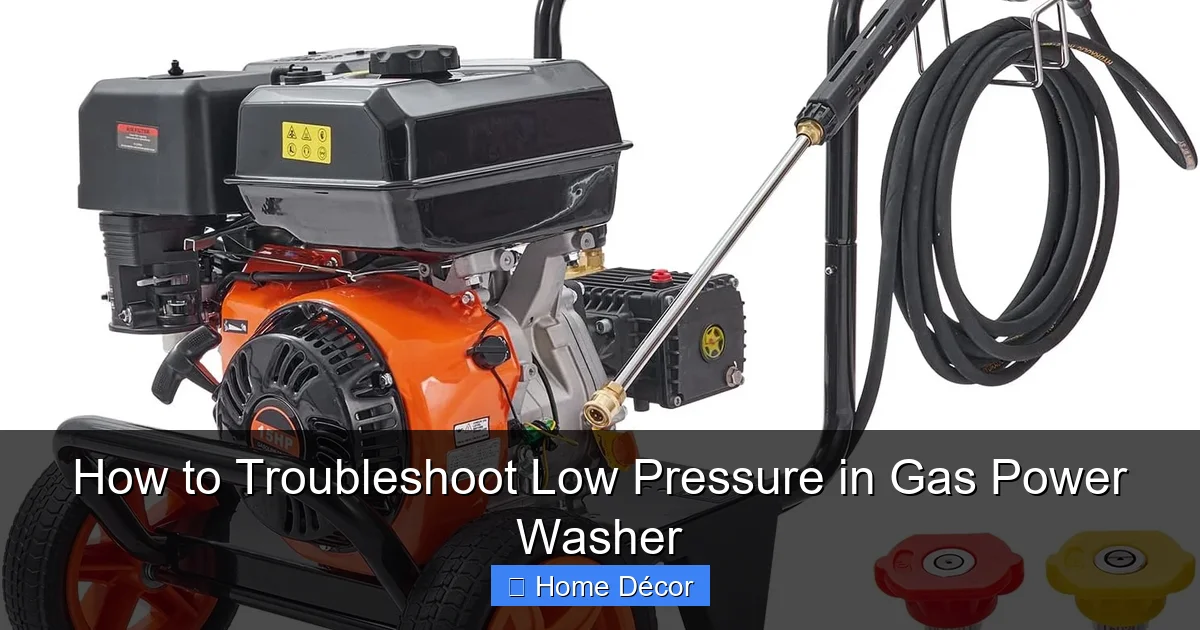
Visual guide about How to Troubleshoot Low Pressure in Gas Power Washer
Image source: m.media-amazon.com
- Turn on the Faucet Fully: Make sure the water faucet connected to your garden hose is turned on to its maximum setting. Even a slight reduction in flow can impact pressure.
- Tap Water Pressure: While power washers are designed to boost pressure, they still rely on a decent starting point. If your home’s general water pressure is unusually low, this will affect your power washer’s output. You can test your home’s water pressure with a simple gauge available at most hardware stores.
Inspect Your Garden Hose
The garden hose connecting your water source to the power washer is a potential bottleneck. Any kinks, blockages, or restrictions here will severely limit water flow to the pump.
- Straighten Out Kinks: Walk the length of your garden hose and ensure there are no kinks or sharp bends. Kinks are a very common cause of reduced water flow.
- Check for Blockages: Disconnect the garden hose from both the faucet and the power washer. Look inside both ends for any debris, sediment, or blockages. You can also try running water through the hose into a bucket to confirm a clear flow.
- Hose Diameter: For most gas power washers, a 5/8-inch diameter hose is recommended. A smaller diameter hose, like a 1/2-inch, can restrict water flow and lead to low pressure.
Step 2: Fuel and Air – The Engine’s Lifeline
A gas engine powers your power washer, and like any engine, it needs the right mix of fuel and air to run efficiently. If the engine isn’t performing optimally, it can’t drive the pump effectively.
Check the Fuel
The type and quality of fuel you use are critical for engine performance.
Visual guide about How to Troubleshoot Low Pressure in Gas Power Washer
Image source: dygtyjqp7pi0m.cloudfront.net
- Fresh Fuel: Stale gasoline can cause starting problems and reduced engine power. If the gas in your tank has been sitting for more than a month, it’s best to drain it and refill with fresh fuel.
- Correct Fuel Type: Always use the octane rating recommended in your power washer’s manual. Using a lower octane can lead to engine knocking and reduced power.
- Fuel Mix (if applicable): Some older or specific models might require a fuel-oil mixture. Ensure you’re using the correct ratio as specified by the manufacturer.
Inspect the Air Filter
A clogged air filter starves the engine of oxygen, hindering its ability to produce power.
- Locate the Air Filter: The air filter is usually housed in a plastic or metal casing on the side of the engine.
- Remove and Inspect: Carefully remove the air filter. If it looks dirty, dusty, or clogged with debris, it needs cleaning or replacement.
- Cleaning or Replacing: For paper filters, tap out any loose dirt. If it’s heavily soiled, it’s best to replace it with a new one. Foam filters can often be washed with soap and water, then thoroughly dried before reinstallation. Refer to your manual for specific instructions.
Step 3: Filter and Strainer – The First Line of Defense
Power washers have several filters designed to protect the pump and engine from debris. A clogged filter is one of the most common culprits for low pressure.
Clean the Water Inlet Filter/Strainer
This is often the first point of filtration for water entering the pump. It’s crucial for protecting the pump’s internal components.
- Locate the Filter: The water inlet filter is usually a small, mesh screen located where the garden hose connects to the power washer. It might be a separate component or integrated into the inlet fitting.
- Remove and Clean: Unscrew or pull out the filter. Rinse it thoroughly under running water. Use a soft brush to gently scrub away any sediment or debris. For stubborn buildup, you might soak it in a mild detergent solution.
- Inspect for Damage: While cleaning, check the filter for any tears or damage. A damaged filter won’t effectively prevent debris from entering the pump.
- Reinstall Properly: Ensure the filter is completely dry before reinserting it. Make sure it’s seated correctly to prevent bypass.
Check the Fuel Filter (if applicable)
Some power washers have an inline fuel filter between the fuel tank and the carburetor. This prevents dirt in the fuel from reaching the engine’s delicate parts.
- Locate the Filter: This is typically a small, cylindrical component in the fuel line.
- Inspect and Replace: If you suspect fuel-related issues and your model has one, inspect the fuel filter. If it appears dirty or clogged, it’s best to replace it. Fuel filters are inexpensive and easy to change.
Step 4: Nozzle and High-Pressure Hose – The Exit Strategy
The nozzle is what shapes and directs the water stream, and the high-pressure hose delivers it. Issues here can directly impact the perceived pressure.
Inspect and Clean the Nozzle
The nozzle at the end of your spray wand is crucial for creating high pressure. If it’s clogged, the water stream will be weak and erratic.
- Remove the Nozzle: Detach the nozzle from the spray wand. Most nozzles simply pull out or have a quick-connect fitting.
- Check for Blockages: Look into the nozzle tip for any visible debris, such as sand, dirt, or mineral deposits.
- Clear the Obstruction: Use a fine-wire, a toothpick, or the tool often provided with your power washer to carefully dislodge any blockages. You can also try flushing it with water from a regular hose. For stubborn clogs, a descaling solution might be needed.
- Use the Correct Nozzle: Ensure you’re using the appropriate nozzle for the job. A wider-angle nozzle (e.g., 40-degree) will produce less pressure than a narrower-angle nozzle (e.g., 15-degree or 0-degree). Consult your power washer’s manual for recommended nozzle sizes.
Examine the High-Pressure Hose
Damage to the high-pressure hose can lead to leaks, which will dramatically reduce the pressure reaching the wand.
- Look for Leaks: Carefully inspect the entire length of the high-pressure hose for any signs of damage, such as cuts, abrasions, bulges, or frayed sections. Pay close attention to the fittings at both ends.
- Check Connections: Ensure the hose is securely connected to both the power washer’s pump outlet and the spray wand. Loose connections can cause leaks.
- Replace Damaged Hoses: If you find any damage, the hose must be replaced. A compromised high-pressure hose is a safety hazard and will severely impact performance.
Step 5: The Unloader Valve – The Pressure Regulator
The unloader valve is a critical component that bypasses water back to the pump’s inlet or the low-pressure side when you release the trigger on the spray gun. If it’s stuck, misadjusted, or faulty, it can cause low pressure.
Understanding the Unloader Valve
Think of the unloader valve as the traffic controller for water pressure. When the trigger is released, it diverts the flow to prevent damage to the pump. When the trigger is squeezed, it allows the water to go through the high-pressure hose.
Signs of an Unloader Valve Problem
- Engine Revs Differently: If the engine revs very high when the trigger is released, the unloader valve might be stuck open.
- Low Pressure Even at Full Throttle: If you’re getting consistently low pressure, even with a clean engine and supply, the valve might be partially stuck or misadjusted.
Troubleshooting the Unloader Valve
- Check Adjustment: Some unloader valves have an adjustment screw or knob. Consult your manual to see if yours is adjustable and how to adjust it. Often, adjustments are small incremental changes. Be careful not to over-tighten or loosen it excessively.
- Look for Leaks: Leaks around the unloader valve assembly can indicate a problem.
- Cleaning and Lubrication: In some cases, the unloader valve might be salvageable by cleaning out debris or applying a lubricant recommended by the manufacturer. This often involves disassembly, which can be tricky.
- Replacement: If the valve is damaged, seized, or cannot be adjusted to restore proper pressure, it will need to be replaced. This is a more involved repair and might require professional help.
Step 6: The Pump – The Heart of the System
If you’ve gone through all the previous steps and are still experiencing low pressure, the issue might lie with the pump itself. The pump is the component that actually pressurizes the water.
Signs of Pump Issues
- Consistent Low Pressure: Despite a good water supply, clean filters, and a properly functioning engine, the pressure remains low.
- Unusual Noises: Grinding, knocking, or whining sounds coming from the pump area can indicate internal damage.
- Water Leaks from the Pump: Visible leaks from the pump housing or seals are a clear sign of internal wear or damage.
- No Pressure at All: If there’s virtually no pressure, even with the engine running at full speed.
Pump Maintenance and Repair
- Check Pump Oil: Many power washer pumps have a dedicated oil reservoir. Low or old oil can affect pump performance and longevity. Check your manual for the type of oil and the correct procedure for checking and changing it.
- Inspect Seals and O-rings: The seals and O-rings within the pump are crucial for maintaining pressure. If these are worn or damaged, they will cause leaks and pressure loss.
- Internal Wear: Over time, the internal components of the pump (pistons, valves, seals) can wear out. This is a common cause of age-related pressure decline.
- Repair or Replacement: Depending on the model and the extent of the damage, pump issues can sometimes be repaired by replacing seals or specific components. However, in many cases, especially with extensive wear or damage, replacing the entire pump unit might be the most cost-effective solution. This is a significant repair and often best left to a professional service center unless you have experience with pump mechanics.
Step 7: Detergent System (If Applicable)
If your power washer has a detergent siphon or tank, a clogged detergent line can sometimes be mistaken for low water pressure, or it can affect the overall output if it’s drawing air.
Check the Detergent Siphon Tube
- Inspect the Tube: Ensure the siphon tube is submerged in your detergent solution and that there are no kinks or blockages in the tube itself.
- Clean the Filter: Many detergent siphon tubes have a small filter at the end. Remove and clean this filter if it appears clogged.
Preventative Maintenance for Optimal Performance
The best way to avoid low pressure is to maintain your power washer regularly.
- Regular Oil Changes: Change the pump oil and engine oil according to your owner’s manual’s recommendations.
- Clean Filters Frequently: Make it a habit to clean the water inlet filter after each use. Clean the air filter regularly, especially if you operate in dusty conditions.
- Flush the System: After using your power washer, especially if you used detergents, flush the system with clean water to prevent clogs.
- Store Properly: If storing the power washer for extended periods (over winter), follow the manufacturer’s instructions for draining fuel and protecting the pump from freezing.
Conclusion
Troubleshooting low pressure in your gas power washer doesn’t have to be a daunting task. By systematically working through these steps, starting with the simplest checks and moving towards more complex components, you can pinpoint the cause of the problem. Most often, issues are related to water supply, clogged filters, or nozzle blockages, which are easily resolved with a little attention. For more complex issues involving the unloader valve or the pump itself, don’t hesitate to consult your owner’s manual or seek professional assistance. With a well-maintained power washer, you can confidently tackle any cleaning project and enjoy the satisfaction of a powerful, effective spray.