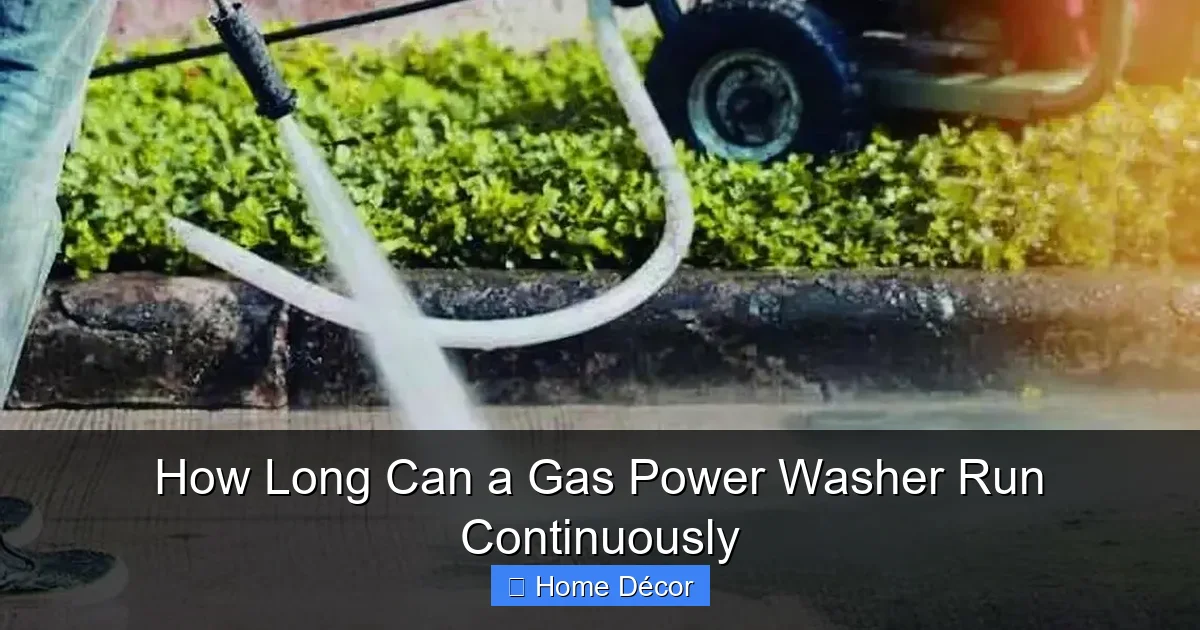
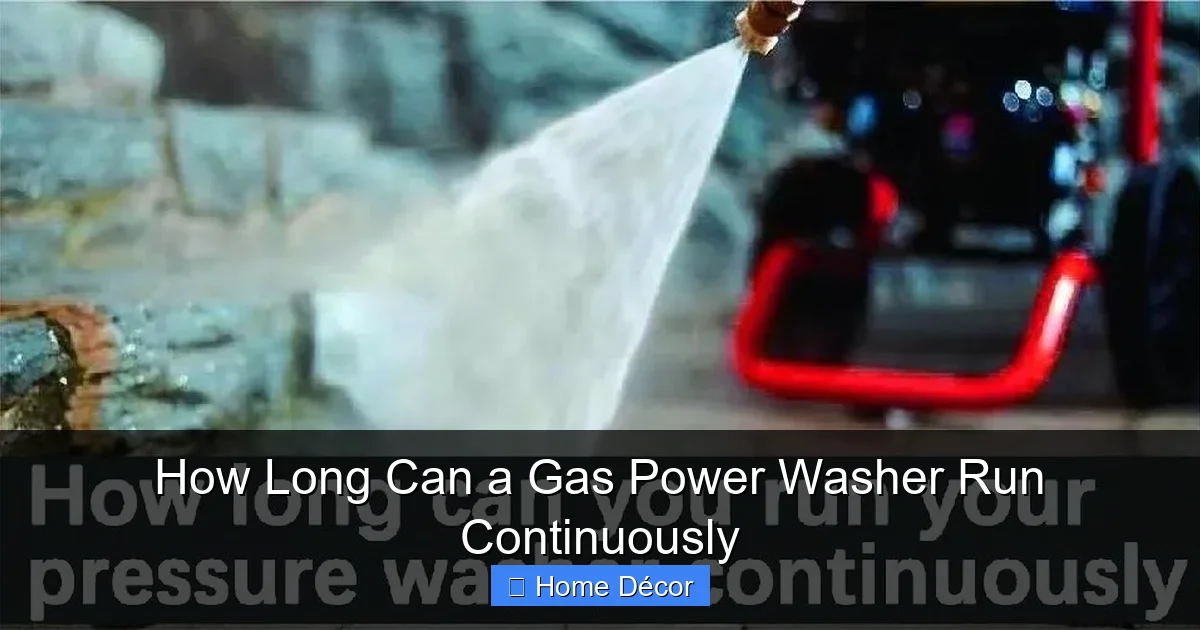
How Long Can a Gas Power Washer Run Continuously
Wondering about your gas power washer’s endurance? This guide dives deep into factors that determine how long a gas power washer can run continuously. We’ll explore engine types, fuel tank capacity, and essential maintenance practices to ensure you get the most out of your machine for every cleaning project. Proper usage and care are key to extended runtimes and a longer-lasting power washer.
How Long Can a Gas Power Washer Run Continuously?
You’ve got a tough cleaning job ahead. Whether it’s tackling stubborn grime on your driveway, sprucing up your deck, or washing your car, a gas power washer is a fantastic tool. But as you’re getting ready, a crucial question might pop into your head: “How long can I actually run this thing without stopping?” It’s a common and important question, and the answer isn’t a simple number. Several factors come into play, influencing your gas power washer’s continuous running time.
In this comprehensive guide, we’ll break down everything you need to know. We’ll explore the key components that affect how long your gas power washer can operate, discuss the role of maintenance, and provide practical tips to help you get the most out of your machine while keeping it in top condition. By the end, you’ll have a clear understanding of your power washer’s limitations and how to maximize its efficiency for any project.
Key Takeaways
- Fuel Tank Capacity is Primary: The most direct factor limiting continuous operation is the size of the fuel tank. Larger tanks mean longer runtimes.
- Engine Size and Efficiency Matter: Smaller, more fuel-efficient engines will generally run longer on the same amount of fuel than larger, more powerful ones.
- Operating Pressure Affects Demand: Running at higher pressures or with wider nozzle tips draws more power from the engine, consuming fuel faster.
- Pump Load Impacts Runtime: A heavily strained pump, perhaps due to a clogged filter or a kinked hose, can put extra stress on the engine, affecting fuel consumption and heat buildup.
- Overheating is a Major Concern: While fuel is a limit, overheating is a critical safety and longevity factor. Most gas power washers are not designed for continuous, non-stop operation beyond a few hours without a break.
- Regular Maintenance is Crucial: Keeping air filters clean, oil levels correct, and the engine tuned up ensures optimal performance and can indirectly affect how long the machine can operate efficiently.
- Planned Breaks Are Essential: Even with sufficient fuel, allowing the engine and pump to cool down periodically is vital for preventing damage and ensuring longevity.
Understanding the Factors Affecting Continuous Run Time
The duration your gas power washer can run without interruption is a delicate balance of several variables. Think of it like running a car; how long it goes between fill-ups depends on the tank size, engine efficiency, how hard you’re pushing the pedal, and even the terrain. Your power washer works similarly.
1. Fuel Tank Capacity: The Obvious Limit
This is the most straightforward factor. Every gas power washer comes with a fuel tank of a specific size. This directly dictates how long the engine can run before it needs refueling.
* Typical Tank Sizes: You’ll find tanks ranging from around 0.7 gallons for smaller, portable units to over 3 gallons for larger, professional-grade machines.
* Calculating Approximate Runtime: While it’s hard to give an exact figure without knowing the specific engine’s fuel consumption, a general rule of thumb can help. A typical small to medium engine might consume about 0.25 to 0.5 gallons per hour. So, a 1-gallon tank could theoretically last between 2 and 4 hours. However, this is under ideal, consistent load conditions, which are rarely met in real-world use.
* Factors that Increase Fuel Consumption: Running the engine at full throttle, using higher pressure settings, or employing a wider nozzle (which allows more water flow) will all increase the rate at which fuel is consumed.
2. Engine Size and Fuel Efficiency
The heart of your power washer is its engine. The size and type of engine significantly impact its fuel consumption and, therefore, its runtime.
* Engine Displacement (CCs): Larger engines (higher CCs) generally require more fuel to operate than smaller ones. A 200cc engine will typically burn through fuel faster than a 150cc engine.
* Engine Design and Technology: Modern engines often incorporate fuel-saving technologies. Look for features like overhead valve (OHV) designs, which tend to be more efficient and run cooler than older side-valve designs.
* Horsepower Rating: While horsepower is a measure of power output, it’s closely tied to fuel consumption. Higher horsepower engines often require more fuel.
3. Operating Pressure and Water Flow (GPM – Gallons Per Minute)
The “work” your power washer is doing directly influences how hard the engine has to work and, consequently, how much fuel it uses.
* Pressure (PSI – Pounds per Square Inch): Higher pressure settings require the pump to work harder, which in turn demands more power from the engine. Running at 3000 PSI will consume fuel faster than running at 2000 PSI.
* Flow Rate (GPM): The amount of water being expelled per minute is also critical. A higher GPM means the pump is moving more water, putting more strain on the engine. This is often determined by the nozzle you’re using. A wider, fan-shaped nozzle allows more water to pass through than a narrow, 0-degree nozzle, even at the same pressure.
* Choosing the Right Nozzle: For longer tasks, selecting a nozzle that provides sufficient cleaning power without being excessively aggressive can help conserve fuel and extend your working time.
4. Pump Load and Condition
The pump is responsible for pressurizing the water, and it’s a major component that can affect engine performance.
* Pump Strain: A pump that is clean, well-lubricated, and free of blockages will operate more efficiently. If the pump is struggling (e.g., due to a clogged inlet filter, a kinked hose, or worn seals), it puts extra strain on the engine, leading to increased fuel consumption and potential overheating.
* Regular Maintenance: Ensuring your pump is properly maintained, including regular oil changes (if applicable) and checking for leaks, is crucial for optimal performance and fuel efficiency.
5. Engine Temperature and Cooling
While fuel is the primary limiter for how long you *can* run, the engine’s operating temperature is often the factor that dictates how long you *should* run.
* **Air Cooling:** Most gas power washers use air-cooled engines. These rely on airflow generated by a fan (often attached to the flywheel) and the engine’s fins to dissipate heat.
* **Overheating Risks:** If the engine is run for extended periods without adequate airflow or under extreme load, it can overheat. Overheating can lead to reduced performance, damage to engine components, and even catastrophic failure.
* **Design for Intermittent Use:** It’s important to remember that most consumer-grade gas power washers are designed for intermittent use, not continuous operation for many hours on end like a generator.
Maximizing Your Gas Power Washer’s Continuous Runtime
Visual guide about How Long Can a Gas Power Washer Run Continuously
Image source: bison-machinery.com
Knowing the factors is one thing; applying that knowledge to your cleaning projects is another. Here’s how to get the most out of your power washer while respecting its operational limits.
1. Plan Your Cleaning Project
Before you even start the engine, a little planning goes a long way.
* **Assess the Area:** Determine the size of the area you need to clean and the type of grime you’re dealing with. This helps you choose the right nozzles and pressure settings.
* **Break Down Large Tasks:** For very large areas, consider dividing the job into smaller sections. This allows for natural breaks to refuel and let the machine cool down.
* **Gather Supplies:** Have your cleaning solutions, extension cords (for water supply), and any safety gear ready beforehand. This minimizes downtime once you’ve started.
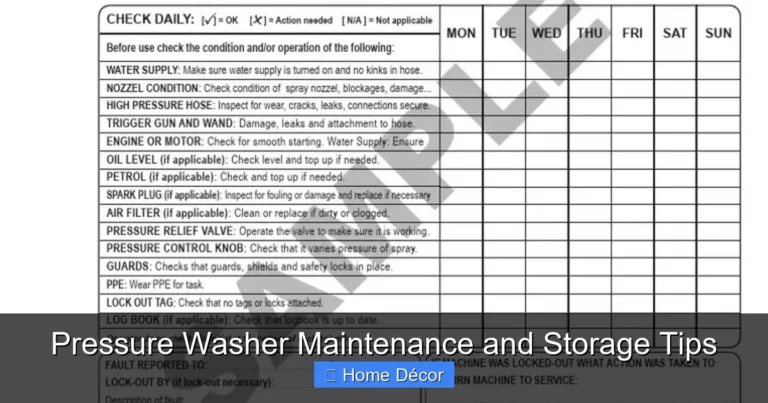
2. Perform Regular Maintenance
A well-maintained power washer runs more efficiently, uses fuel more effectively, and is less prone to overheating.
* **Check Oil Levels:** Always ensure the engine oil is at the correct level before each use. Low oil can cause overheating and engine damage.
* **Clean or Replace Air Filters:** A clogged air filter restricts airflow to the engine, making it work harder and consume more fuel. Check and clean or replace your air filter regularly, especially in dusty conditions.
* **Inspect Spark Plugs:** A fouled or worn spark plug can lead to inefficient combustion, poor performance, and increased fuel consumption.
* **Clean Fuel Filters:** A dirty fuel filter can restrict fuel flow to the engine, causing it to sputter or run poorly.
* **Check Pump Oil:** If your pump has a separate oil reservoir, ensure it’s at the correct level and change it according to the manufacturer’s recommendations.
* **Flush the System:** After each use, especially if you’ve used detergents, flush the system with clean water to prevent clogs and corrosion.
3. Optimize Your Usage Techniques
How you operate the power washer significantly impacts its runtime.
* **Use the Right Nozzle:** Select a nozzle that provides the necessary cleaning power without being over the top. A 25-degree (green) nozzle is often a good all-around choice for general cleaning, while a 15-degree (yellow) might be needed for tougher spots. Avoid the 0-degree (red) nozzle unless absolutely necessary, as it concentrates pressure and can damage surfaces.
* **Throttle Management:** While most power washers require you to run the engine at or near full throttle to achieve full pressure, try to avoid unnecessarily high revs if you’re not actively cleaning.
* **Trigger Control:** When moving between cleaning areas or taking short pauses, release the trigger. This stops the flow of water, reducing strain on the pump and engine, and saving fuel. Some power washers have a “low-idle” feature that reduces engine RPM when the trigger is not engaged.
* **Maintain Proper Distance:** Hold the wand at an appropriate distance from the surface. Holding it too close can lead to damage, while holding it too far away may require more time and effort, indirectly increasing runtime.
4. Be Mindful of Overheating
This is arguably the most critical aspect of continuous operation.
* **Listen to Your Engine:** Pay attention to any changes in engine sound – sputtering, uneven running, or a significant drop in power can indicate overheating or a fuel issue.
* **Feel the Engine:** Carefully touch the engine block (if safe to do so, and after a brief pause). If it feels excessively hot, it’s time to stop.
* **Observe Performance:** If the pressure seems to be dropping or the engine is struggling, it might be a sign of overheating or another issue.
* **Take Regular Breaks:** Even if you have plenty of fuel, it’s good practice to take short breaks (5-10 minutes) every 30-60 minutes of operation. This allows the engine and pump to cool down slightly. This is especially important on hot days or when tackling demanding jobs.
* **Ensure Adequate Airflow:** Never operate the power washer in an enclosed space or lean anything against the engine that could block airflow.
5. Refueling Safely and Efficiently
When your fuel tank is low, it’s time to refuel.
* **Turn Off the Engine:** Always turn off the engine and allow it to cool down for a few minutes before refueling. Gasoline is highly flammable, and refueling a hot engine is dangerous.
* **Use Fresh Fuel:** Always use fresh, clean gasoline. Stale fuel can cause starting problems and affect engine performance.
* **Avoid Overfilling:** Do not overfill the fuel tank. Leave some space for expansion.
* **Clean Up Spills:** Wipe up any spilled fuel immediately.
Troubleshooting: What If It Stops Running?
Visual guide about How Long Can a Gas Power Washer Run Continuously
Image source: eveagetool.com
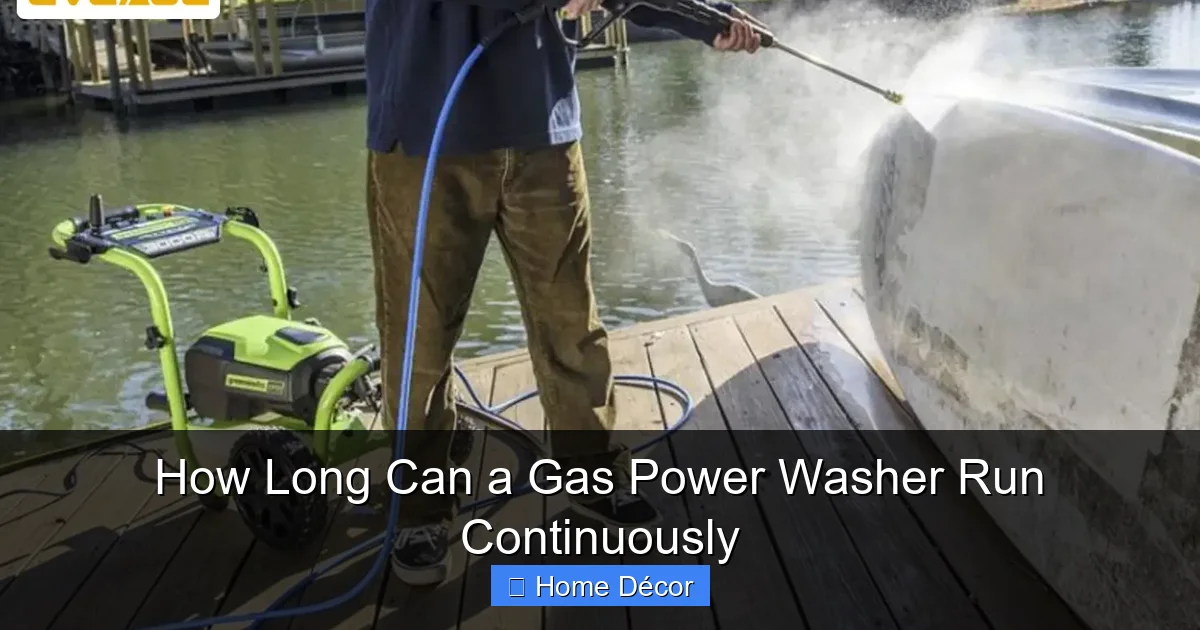
If your gas power washer stops running before you expect it to, don’t panic. Here are a few common reasons and what to check:
* Out of Fuel: The most obvious reason. Check your fuel level.
* Clogged Fuel Filter or Lines: If the engine sputters and dies, or has trouble starting after a run, the fuel system might be blocked.
* Dirty Air Filter: A very dirty air filter can starve the engine of air, causing it to run poorly or stop.
* Overheating: The engine might have an automatic shut-off feature to prevent damage. Let it cool down completely before trying to restart.
* Spark Plug Issues: A fouled or loose spark plug can cause intermittent operation or complete failure.
* Pump Cavitation: If the pump is not receiving a consistent supply of water (e.g., due to a kinked hose, low water pressure, or an air leak), it can “cavitate” and stop working, potentially causing damage. Ensure a strong, steady water supply.
Conclusion
Visual guide about How Long Can a Gas Power Washer Run Continuously
Image source: swiftequipment.com
So, how long can a gas power washer run continuously? The honest answer is: it depends. There’s no single, definitive time that applies to every machine. It’s a combination of its fuel tank size, engine efficiency, how you’re using it, and crucially, its thermal limits.
For most consumer-grade gas power washers, running for several hours with brief intermissions for refueling and cooling is generally achievable. However, prolonged, non-stop operation beyond a couple of hours without a break is usually not recommended and can lead to premature wear or damage.
By understanding the interplay of fuel capacity, engine performance, operational demands, and the importance of regular maintenance and prudent usage, you can confidently use your gas power washer for all your cleaning needs. Remember, proper care not only extends its runtime but also its overall lifespan, making it a reliable tool for years to come. Always refer to your owner’s manual for specific recommendations for your model.